 1 / 11
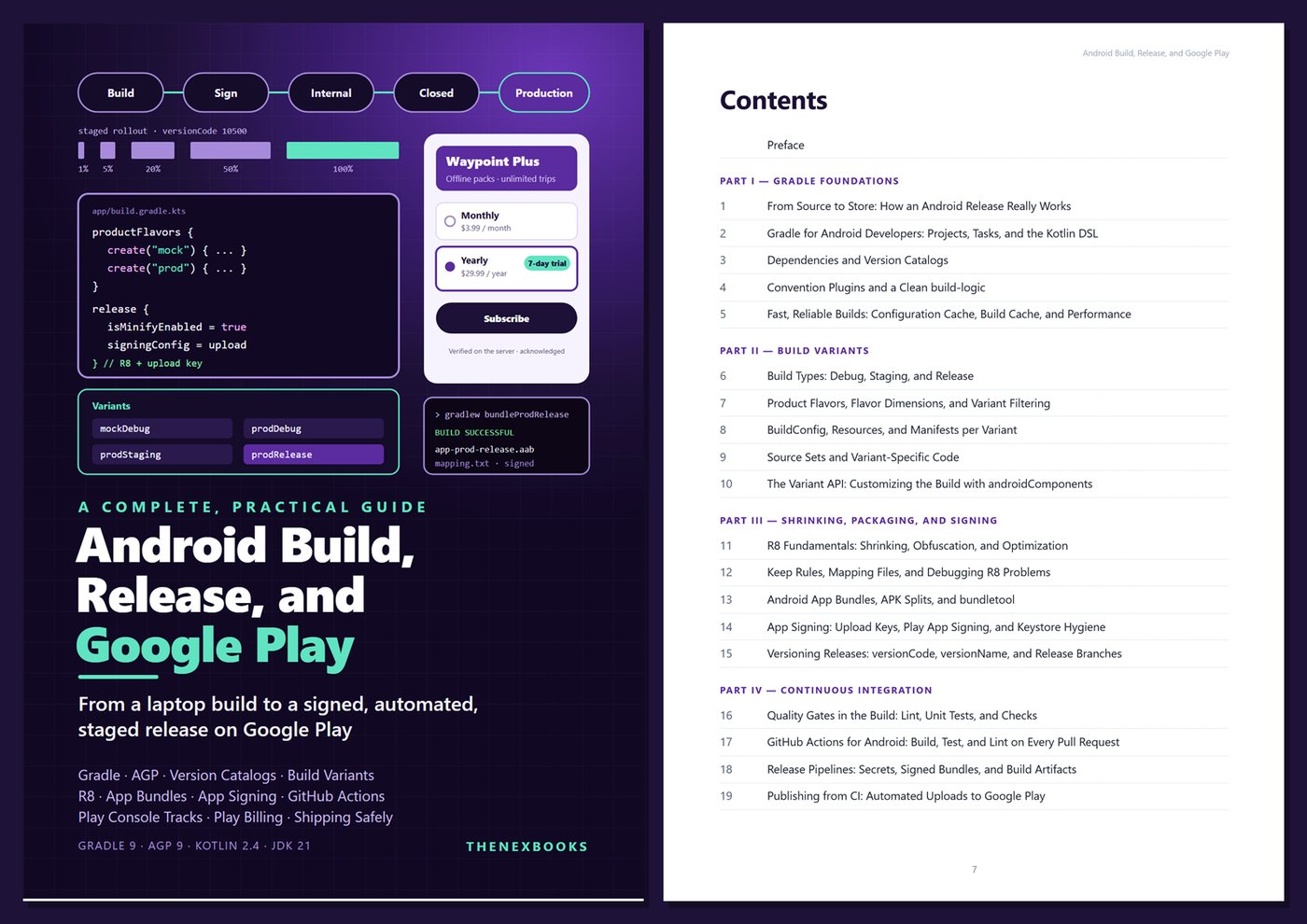
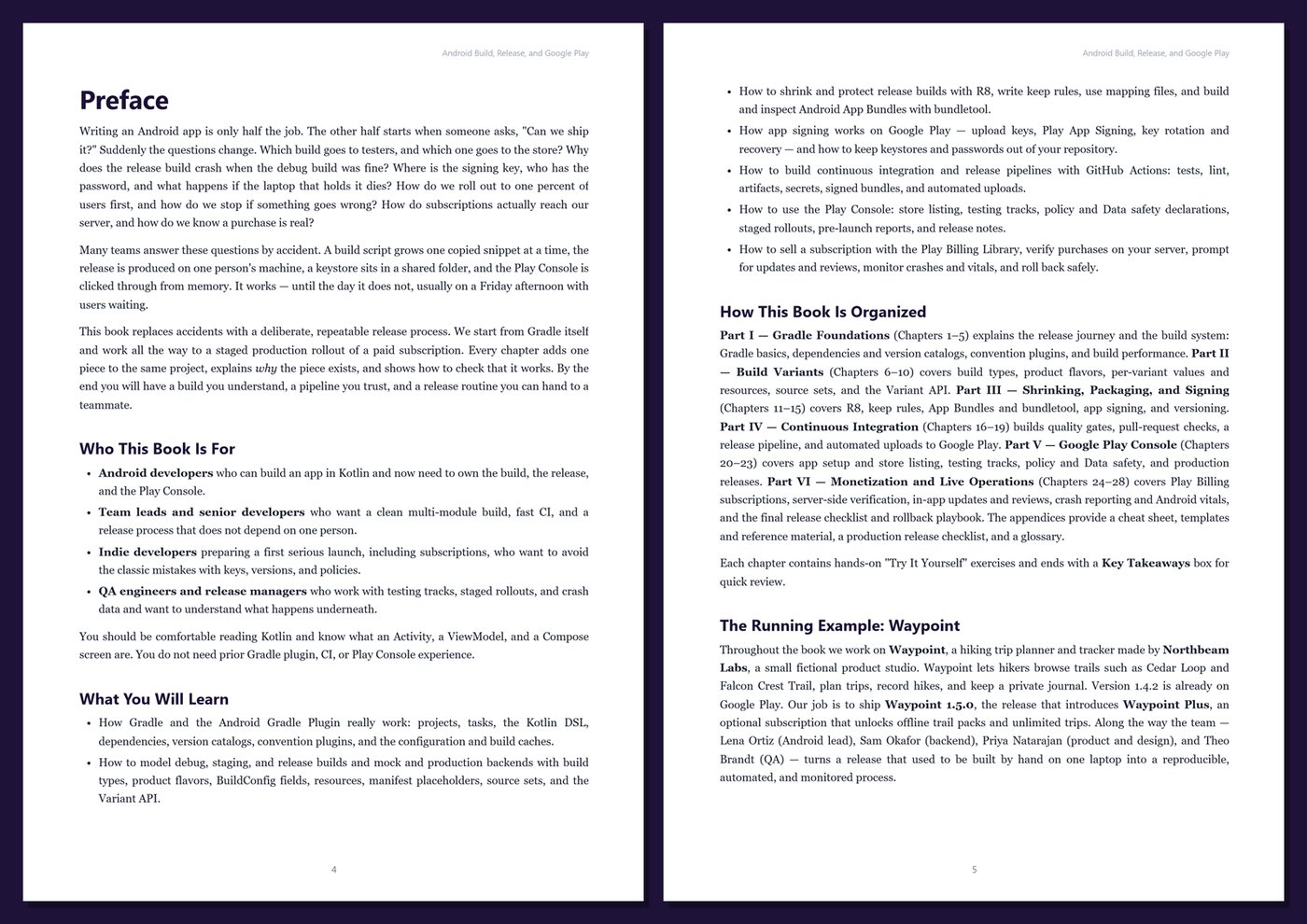
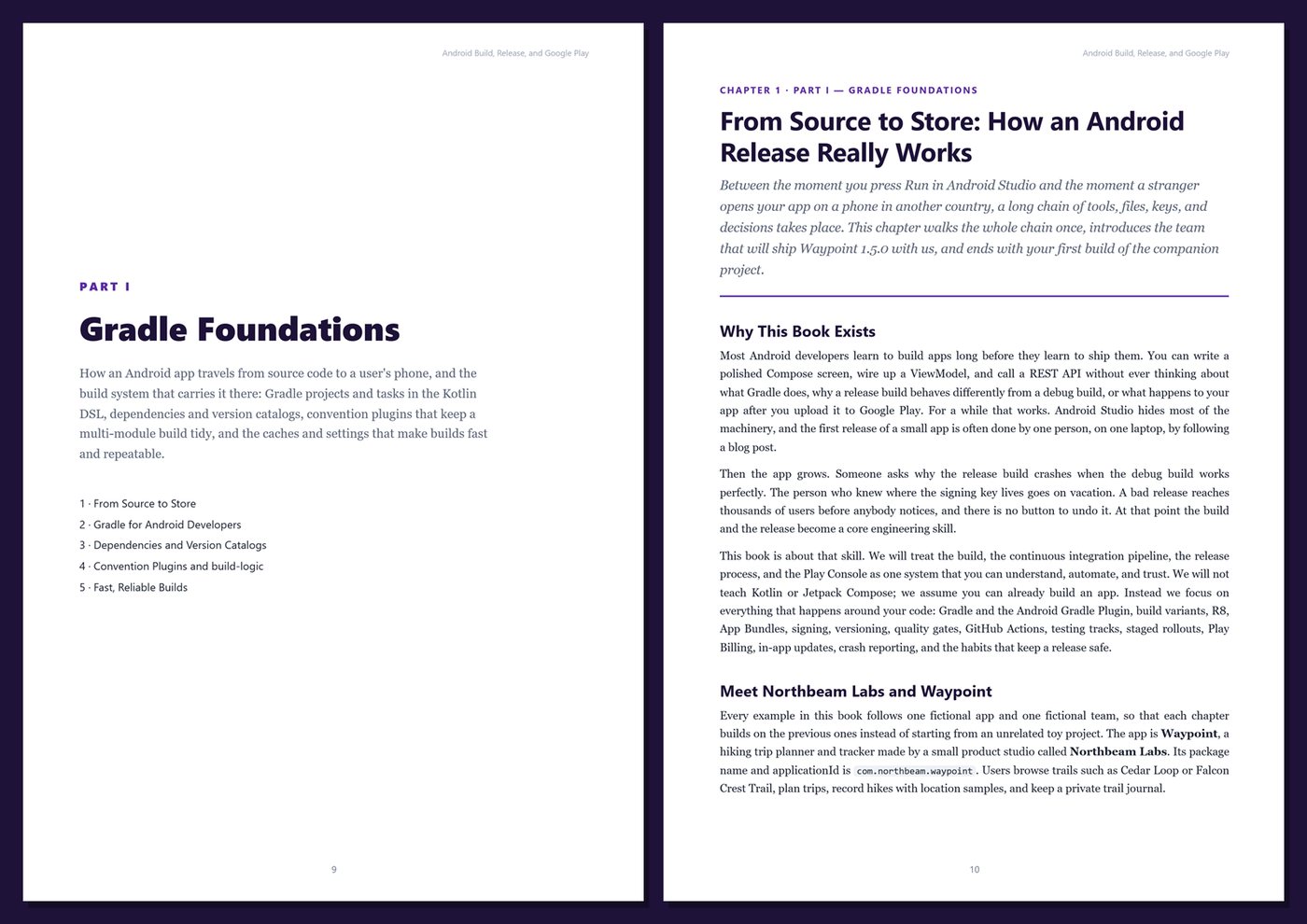
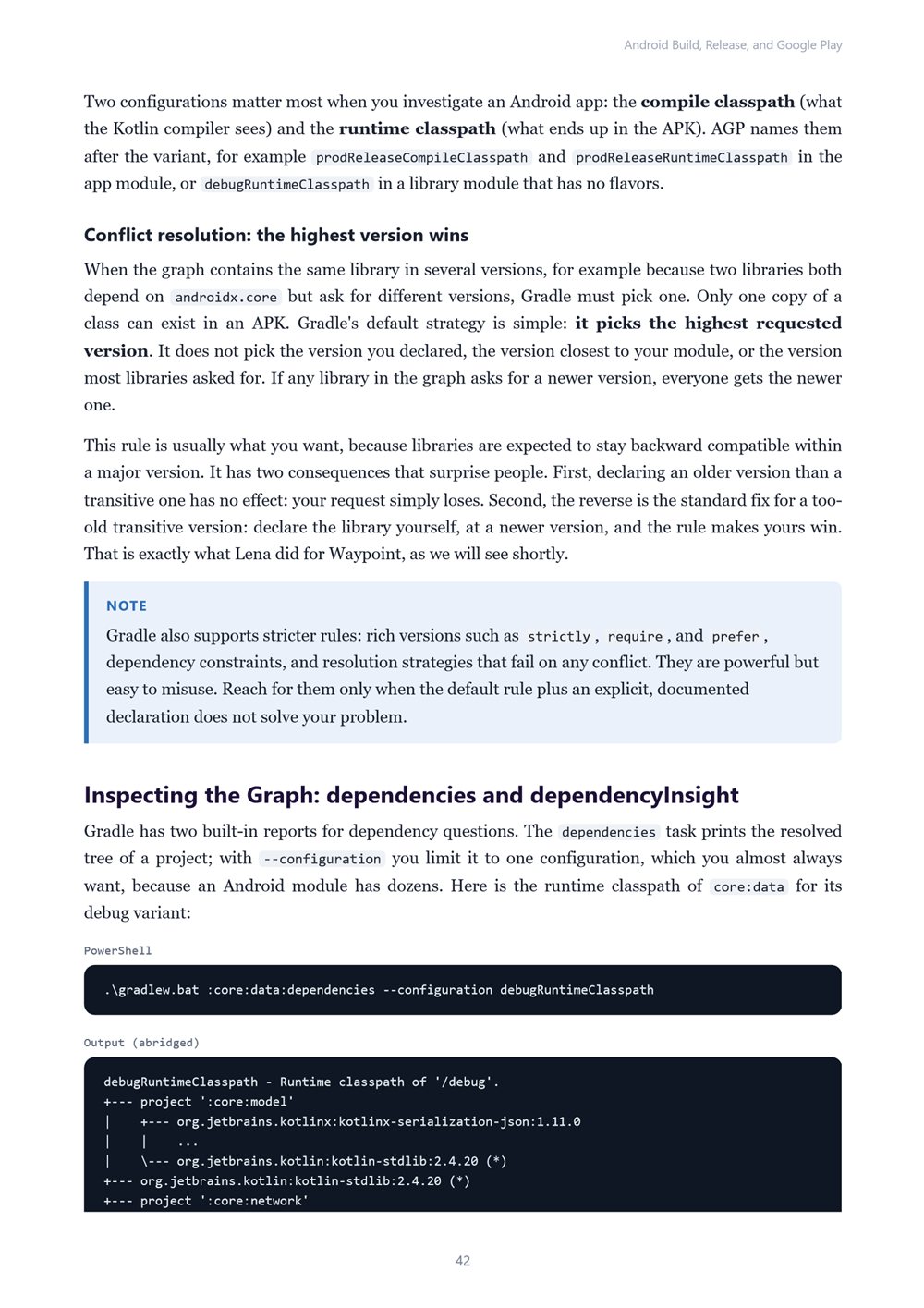
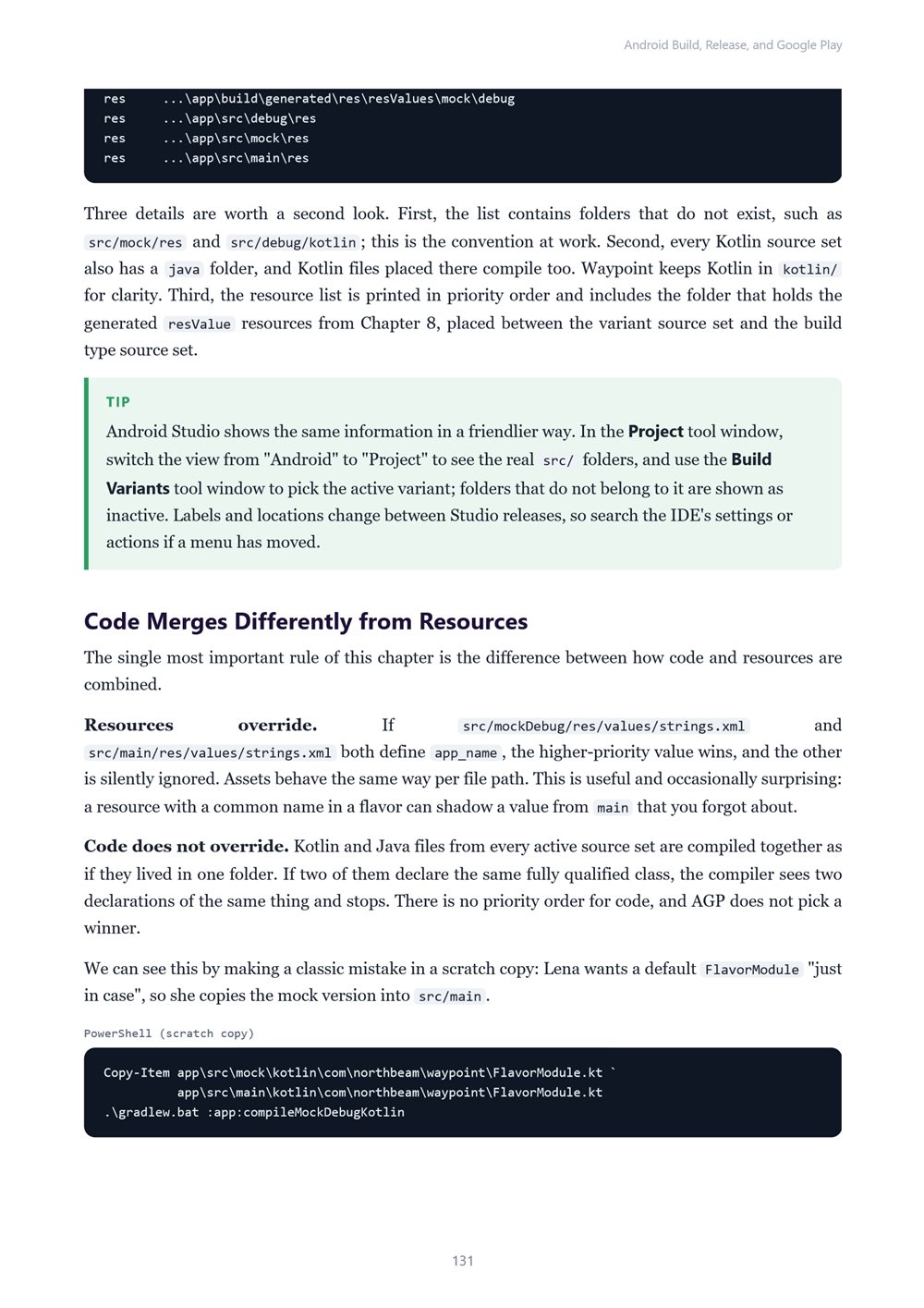
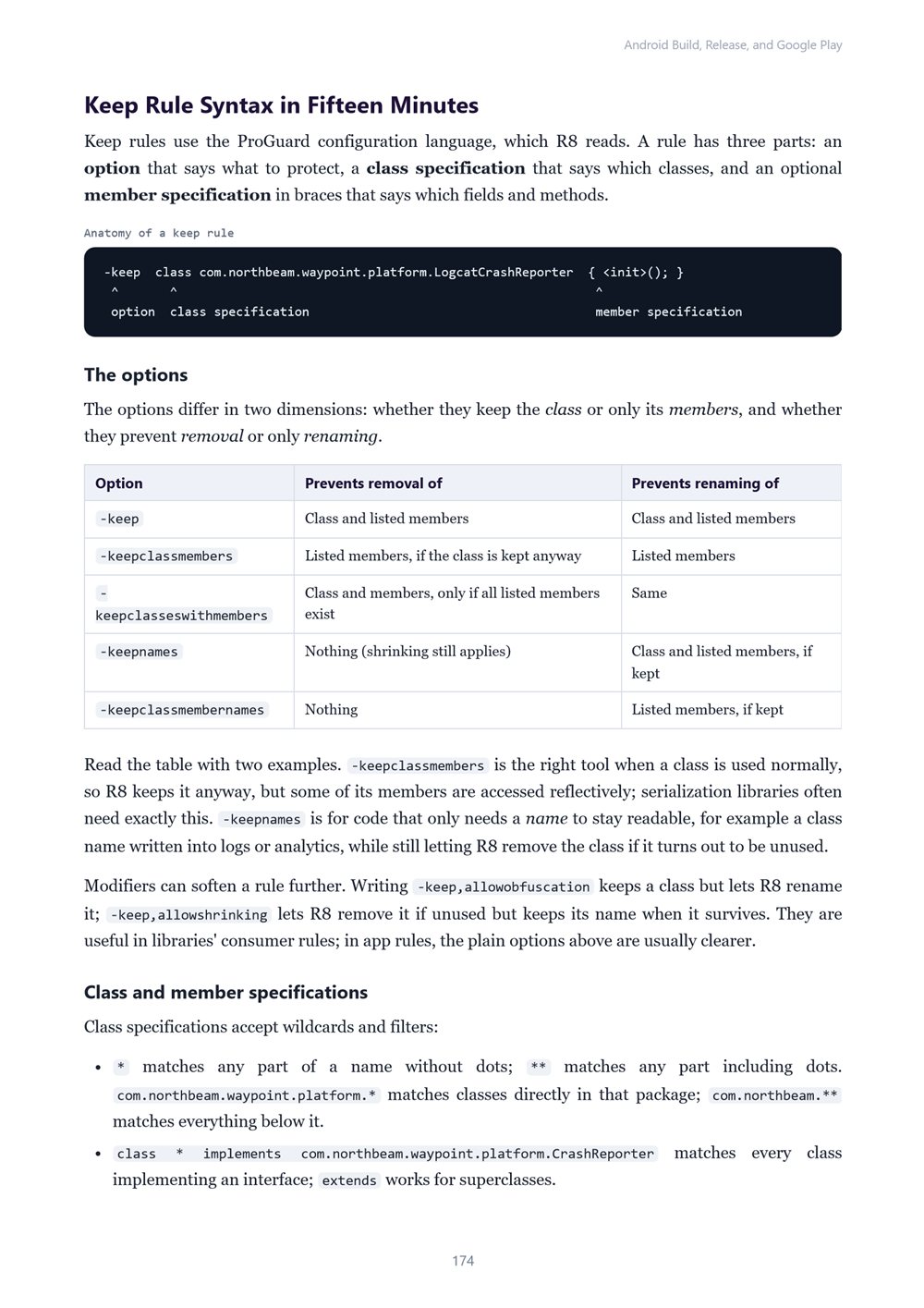
Take an Android app from a laptop build to a signed, automated, staged release on Google Play: Gradle and the Android Gradle Plugin, version catalogs and convention plugins, build performance, build types and product flavors, BuildConfig and per-variant resources, the Variant API, R8 and keep…
Gradle and AGP, Build Variants, Signing, CI/CD, Play Console Tracks, In-App Billing, and Shipping Safely
Read before you buy: the PDF here is a free sample — the first 20 pages of the 425-page book (payments, sales and reviews on this demo site are sample data). Get the full e-book at thenexbooks on Gumroad.
Ship Android apps on purpose, not by accident.
Writing the app is only half the job. The other half starts with "Can we ship it?" Which build goes to testers and which goes to the store? Why does the release build crash when debug was fine? Where is the signing key, and what happens if the laptop that holds it dies? How do you roll out to one percent of users first, and stop when something goes wrong? How do subscription purchases reach your server, and how do you know they are real?
This book replaces guesswork with a deliberate, repeatable release process. It starts from Gradle itself and goes all the way to a staged production rollout of a paid subscription. Every chapter adds one piece to the same project, explains why it exists, and shows how to check that it works.
What's inside
- How an Android release really works, from source code to APK and App Bundle, signing, testing tracks, staged rollout, and Android vitals
- Gradle for Android developers: projects, tasks, the Kotlin DSL, the wrapper, dependencies, BOMs, and version catalogs
- Convention plugins in a build-logic included build, and fast builds with the configuration cache, build cache, and parallel execution
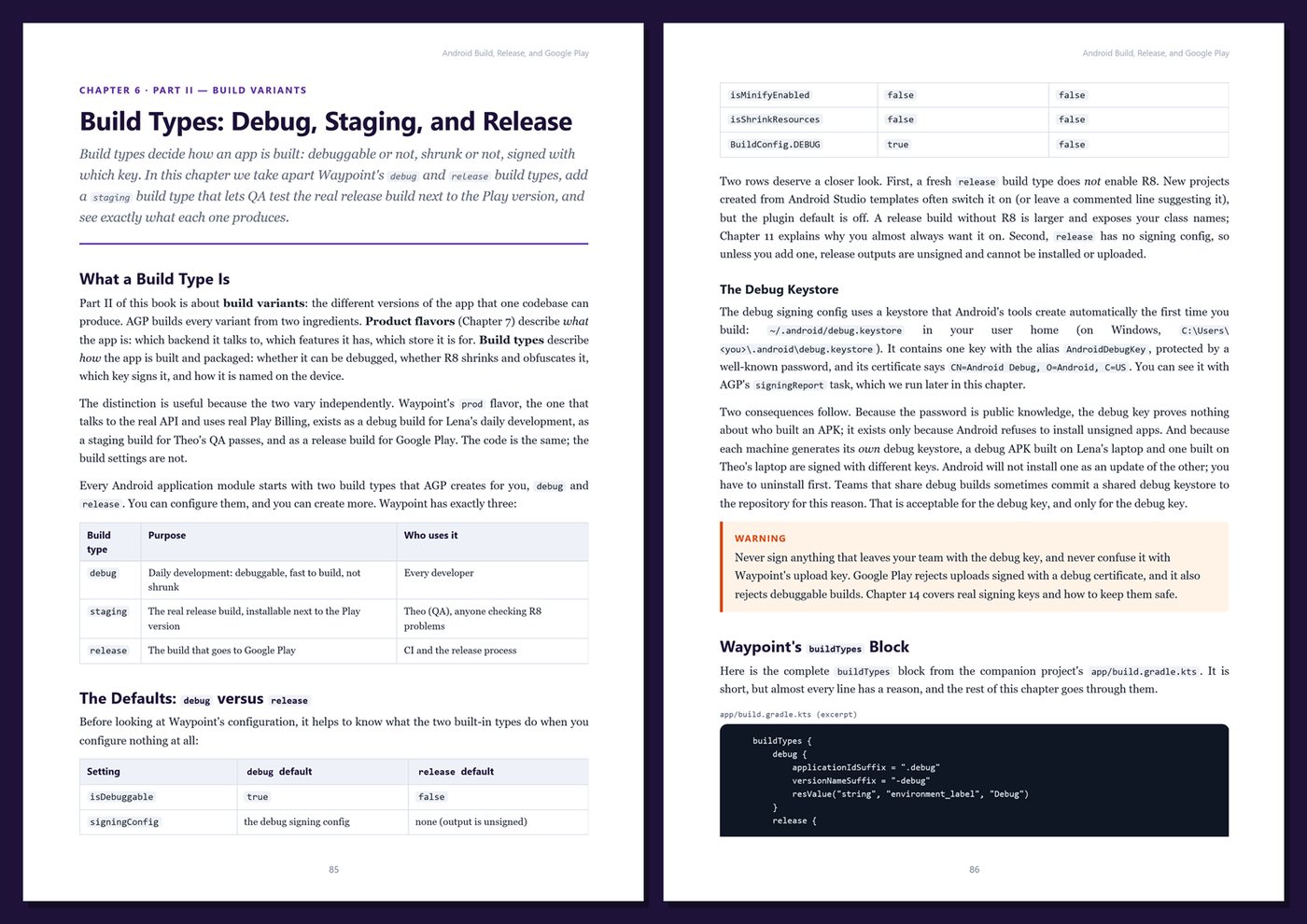
- Build types (debug, staging, release), product flavors and flavor dimensions, variant filtering, BuildConfig fields, resources and manifest placeholders per variant, and variant-specific source sets
- The Variant API with androidComponents: generating files and wiring custom, cacheable tasks
- R8 shrinking, obfuscation, and optimization, keep rules, mapping files, and debugging release-only crashes
- Android App Bundles, split APKs, and bundletool: build-apks, universal APKs, device specs, and download sizes
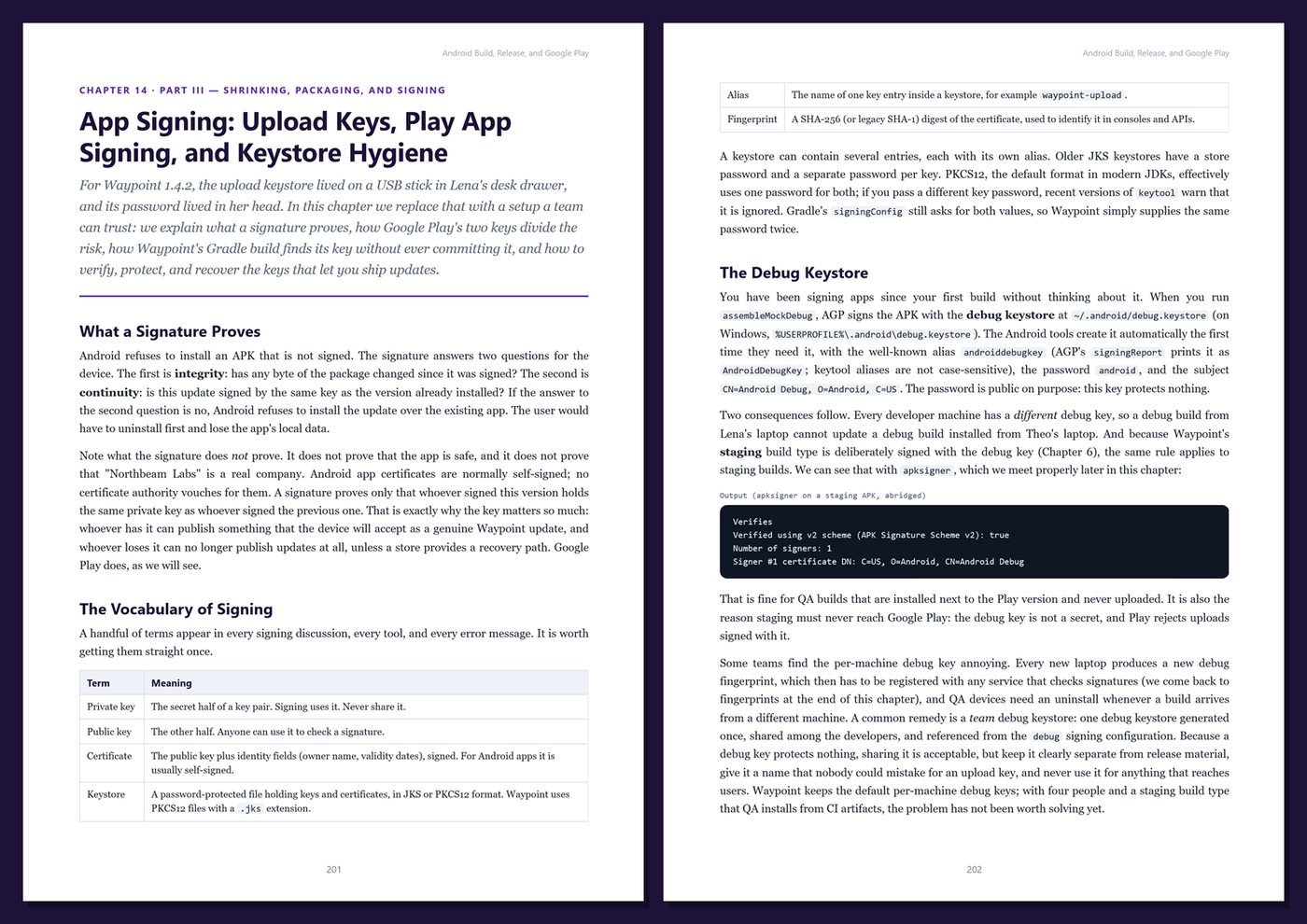
- App signing explained: upload keys vs Play App Signing, keystore hygiene, signature schemes, and what to do if a key is lost
- Versioning schemes, release branches, tags, and hotfixes
- Quality gates with lint and unit tests, GitHub Actions workflows for pull requests, tag-driven release pipelines with secrets, and automated uploads to the internal testing track
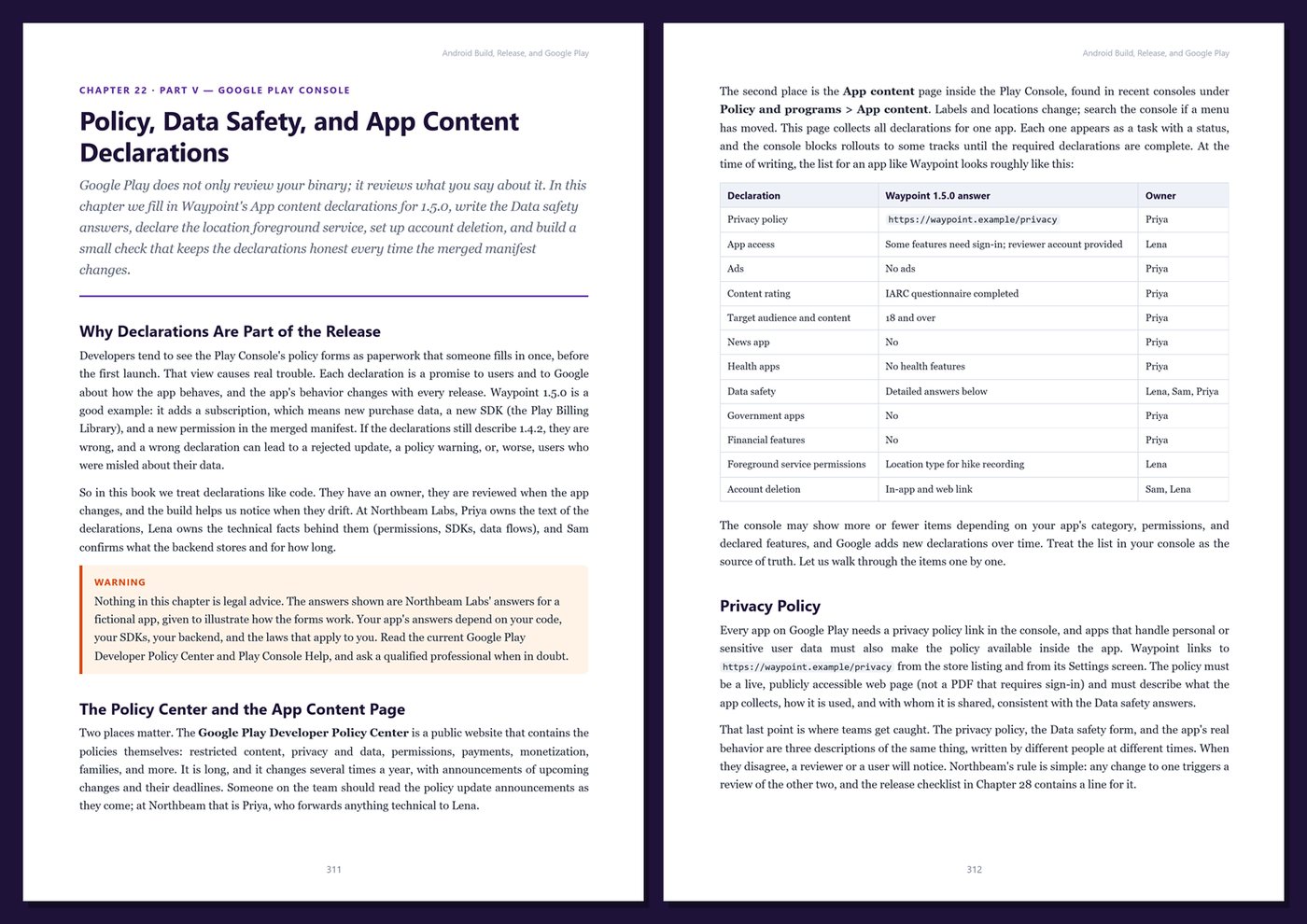
- The Play Console: app setup, store listing, internal, closed, and open testing, policy declarations, the Data safety form, pre-launch reports, release notes, and staged rollouts
- Play Billing subscriptions: base plans and offers, the BillingClient purchase flow, pending purchases, acknowledgement, server-side verification, and real-time developer notifications
- In-app updates and in-app reviews with clear, testable policies
- Vendor-neutral crash reporting, Android vitals, rollout gates, halting a rollout, and shipping a hotfix
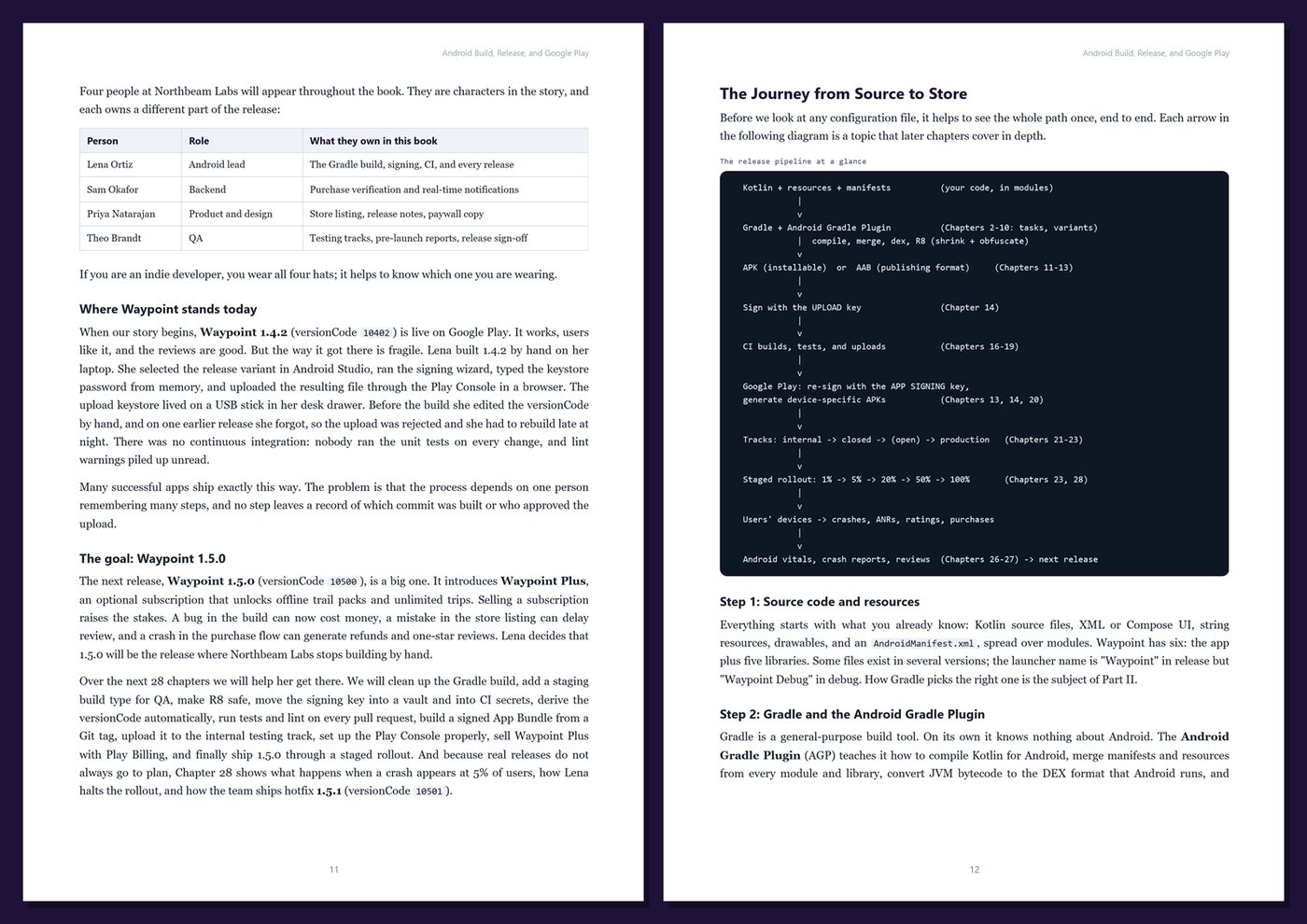
One running example, start to finish. You ship Waypoint, a hiking trip planner made by Northbeam Labs, a small fictional product studio. Version 1.4.2 is live and was built by hand on one laptop. Over the book, the team turns that into a clean multi-module Gradle build with four variants, R8, a properly managed upload key, CI on every pull request, a signed release pipeline, testing tracks, and a staged rollout of Waypoint 1.5.0 — the release that introduces the Waypoint Plus subscription — including a halted rollout and a 1.5.1 hotfix. The companion project uses a mock backend, so you can build every variant, run every test, shrink with R8, and sign a bundle with a throwaway key on your own machine.
Current and honest. The examples were checked with Gradle 9, the Android Gradle Plugin 9 with built-in Kotlin, Kotlin 2.4, and JDK 21, current stable releases at the time of writing. Play Console screens, policies, requirements, and fees change often, so the book describes them as they were at the time of writing, never quotes fees as facts, and points you to the official documentation. Steps that need a real Google Play account are shown as what you should expect to see. There are no invented benchmarks or statistics. Every chapter includes hands-on steps, code and commands, Tips, Notes, Warnings, exercises, and Key Takeaways, and the appendices give you a cheat sheet, templates, a production release checklist, and a glossary.
Format: PDF, 425 pages (A4), linked table of contents and bookmarks. English. First Edition, 2026. Published by thenexbooks. Includes the Waypoint starter project (Gradle, Kotlin) used throughout the book. Requires JDK 21 and the Android SDK (Android Studio recommended) to build the code. This book is independent and is not affiliated with, sponsored by, or endorsed by Google LLC, Gradle, Inc., JetBrains, or GitHub, Inc. Android and Google Play are trademarks of Google LLC.
Table of Contents
Part I — Gradle Foundations
- Ch 1 · From Source to Store: How an Android Release Really Works
- Ch 2 · Gradle for Android Developers: Projects, Tasks, and the Kotlin DSL
- Ch 3 · Dependencies and Version Catalogs
- Ch 4 · Convention Plugins and a Clean build-logic
- Ch 5 · Fast, Reliable Builds: Configuration Cache, Build Cache, and Performance
Part II — Build Variants
- Ch 6 · Build Types: Debug, Staging, and Release
- Ch 7 · Product Flavors, Flavor Dimensions, and Variant Filtering
- Ch 8 · BuildConfig, Resources, and Manifests per Variant
- Ch 9 · Source Sets and Variant-Specific Code
- Ch 10 · The Variant API: Customizing the Build with androidComponents
Part III — Shrinking, Packaging, and Signing
- Ch 11 · R8 Fundamentals: Shrinking, Obfuscation, and Optimization
- Ch 12 · Keep Rules, Mapping Files, and Debugging R8 Problems
- Ch 13 · Android App Bundles, APK Splits, and bundletool
- Ch 14 · App Signing: Upload Keys, Play App Signing, and Keystore Hygiene
- Ch 15 · Versioning Releases: versionCode, versionName, and Release Branches
Part IV — Continuous Integration
- Ch 16 · Quality Gates in the Build: Lint, Unit Tests, and Checks
- Ch 17 · GitHub Actions for Android: Build, Test, and Lint on Every Pull Request
- Ch 18 · Release Pipelines: Secrets, Signed Bundles, and Build Artifacts
- Ch 19 · Publishing from CI: Automated Uploads to Google Play
Part V — Google Play Console
- Ch 20 · Play Console Essentials: Developer Account, App Setup, and Store Listing
- Ch 21 · Testing Tracks: Internal, Closed, and Open Testing
- Ch 22 · Policy, Data Safety, and App Content Declarations
- Ch 23 · Production Releases: Staged Rollouts, Pre-Launch Reports, and Release Notes
Part VI — Monetization and Live Operations
- Ch 24 · Play Billing Fundamentals: Subscriptions, Base Plans, and Offers
- Ch 25 · Selling Waypoint Plus: Purchase Flow, Acknowledgement, and Server-Side Verification
- Ch 26 · In-App Updates and In-App Reviews
- Ch 27 · Crash Reporting, Monitoring, and Android Vitals
- Ch 28 · Shipping Safely: Release Checklist, Rollback, and the Waypoint 1.5.0 Launch
Appendices
A · Build and Release Cheat Sheet
B · Templates and Reference
C · Production Release Checklist
D · Glossary
Book details
| Detail | |
|---|---|
| Pages | 425 |
| Format | PDF (A4) + Waypoint starter project (Gradle) |
| Language | English |
| Level | Intermediate |
| Edition | 1st Edition (2026) |
| Download on this site | Free sample, first 20 pages (PDF) |
| Publisher | thenexbooks |
ไฟล์ที่คุณจะได้รับ
ยังไม่มีรีวิว เฉพาะผู้ซื้อเท่านั้นที่รีวิวได้
สินค้าอื่นจาก thenexbooks