 1 / 11
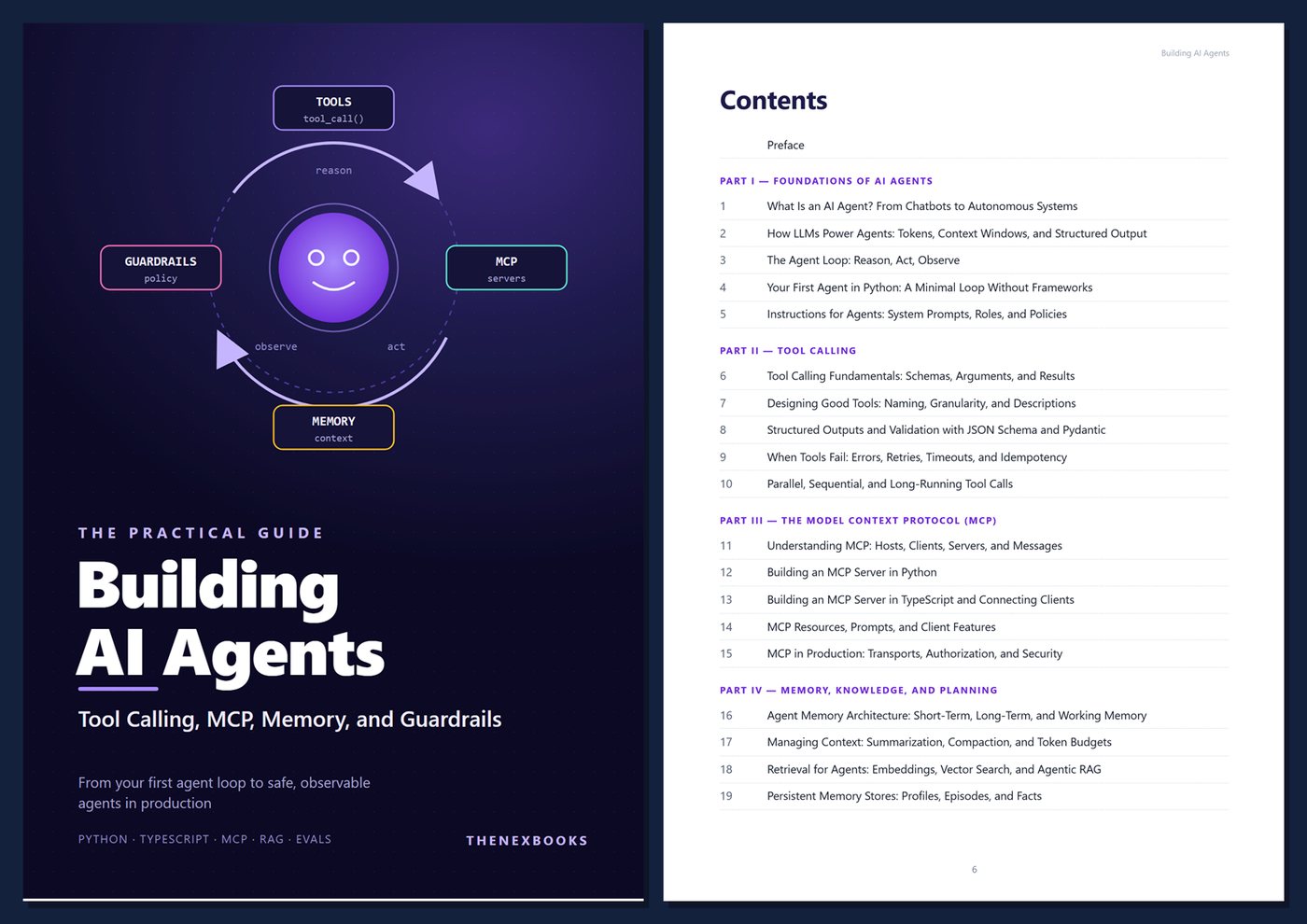
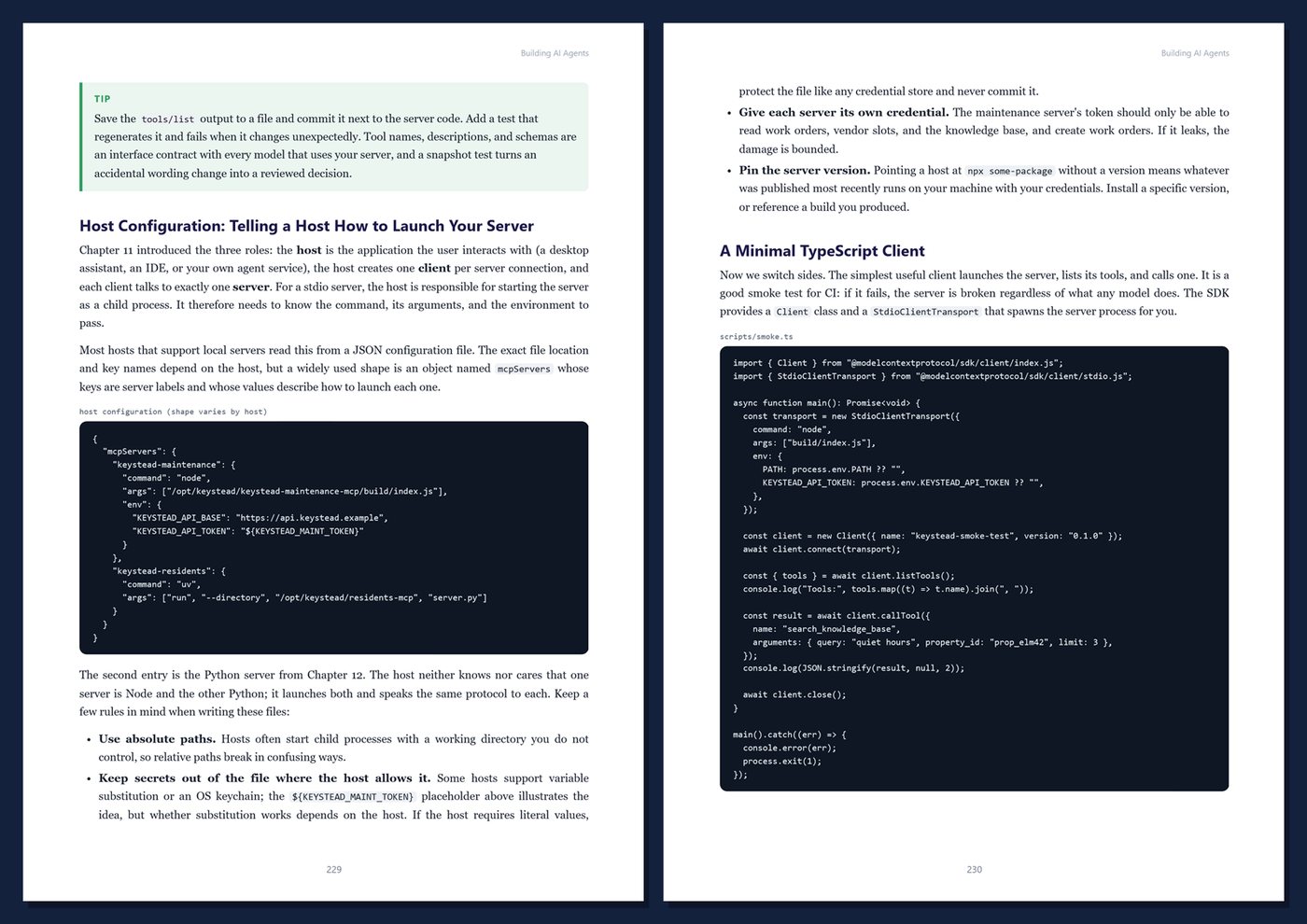
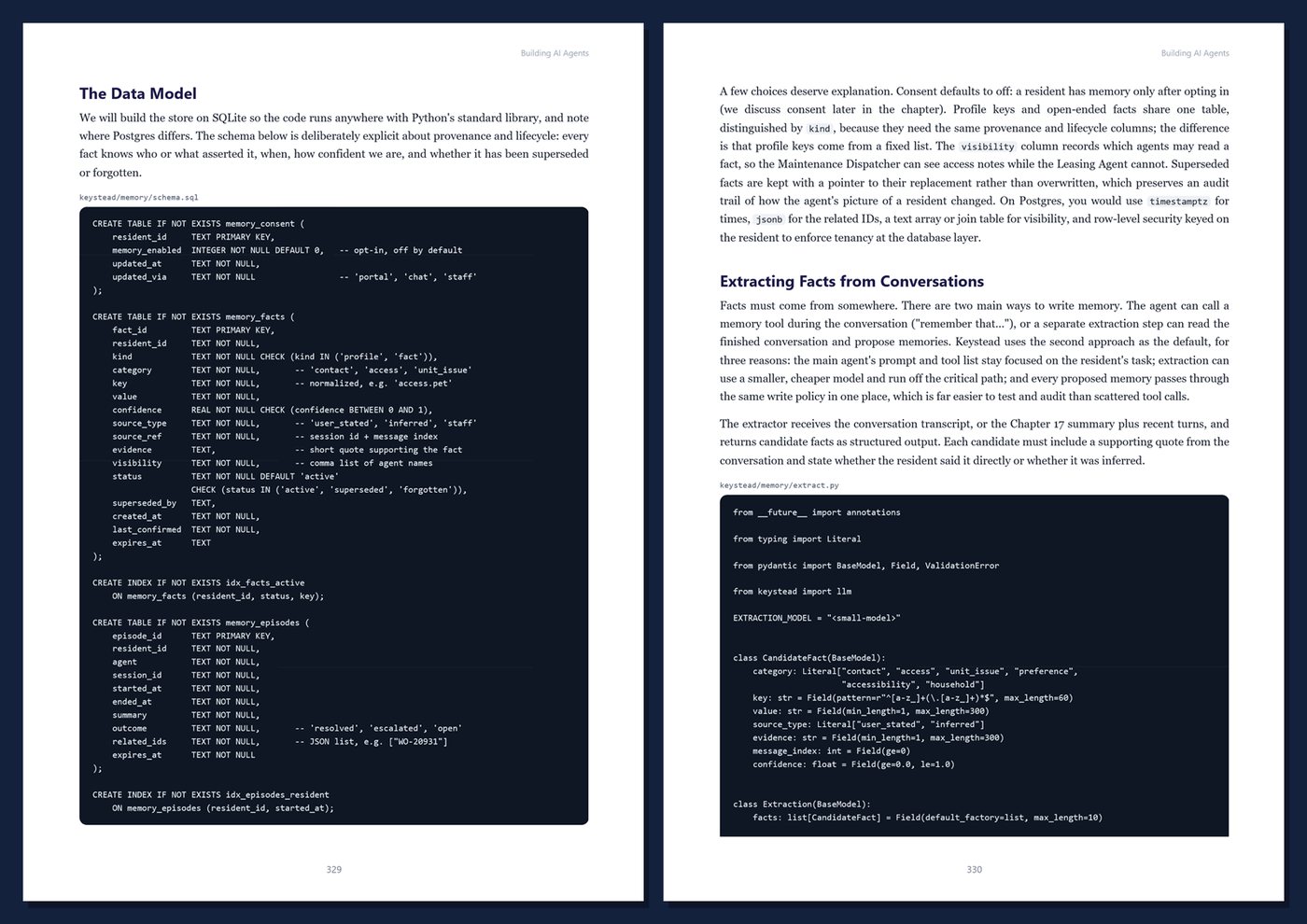
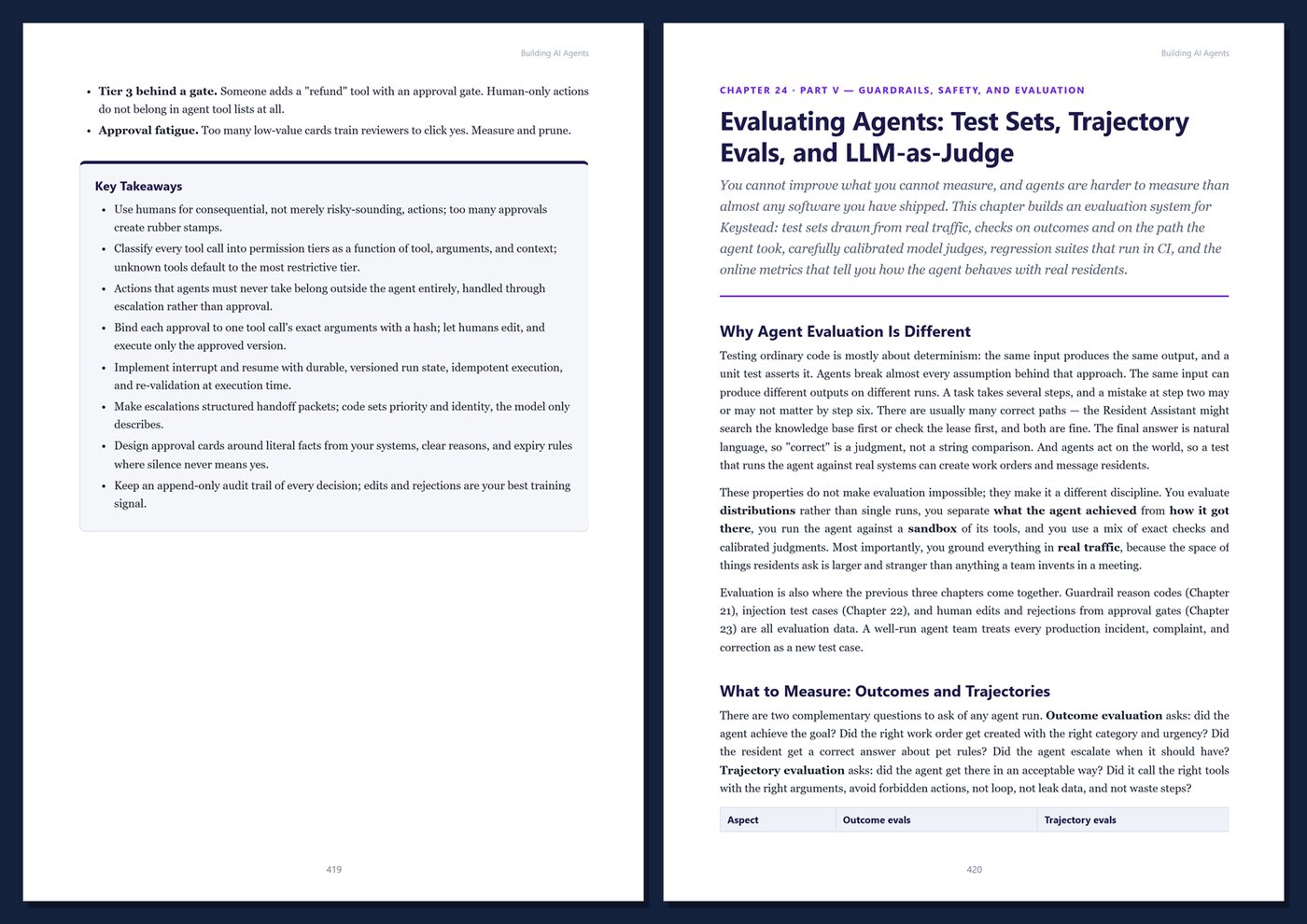
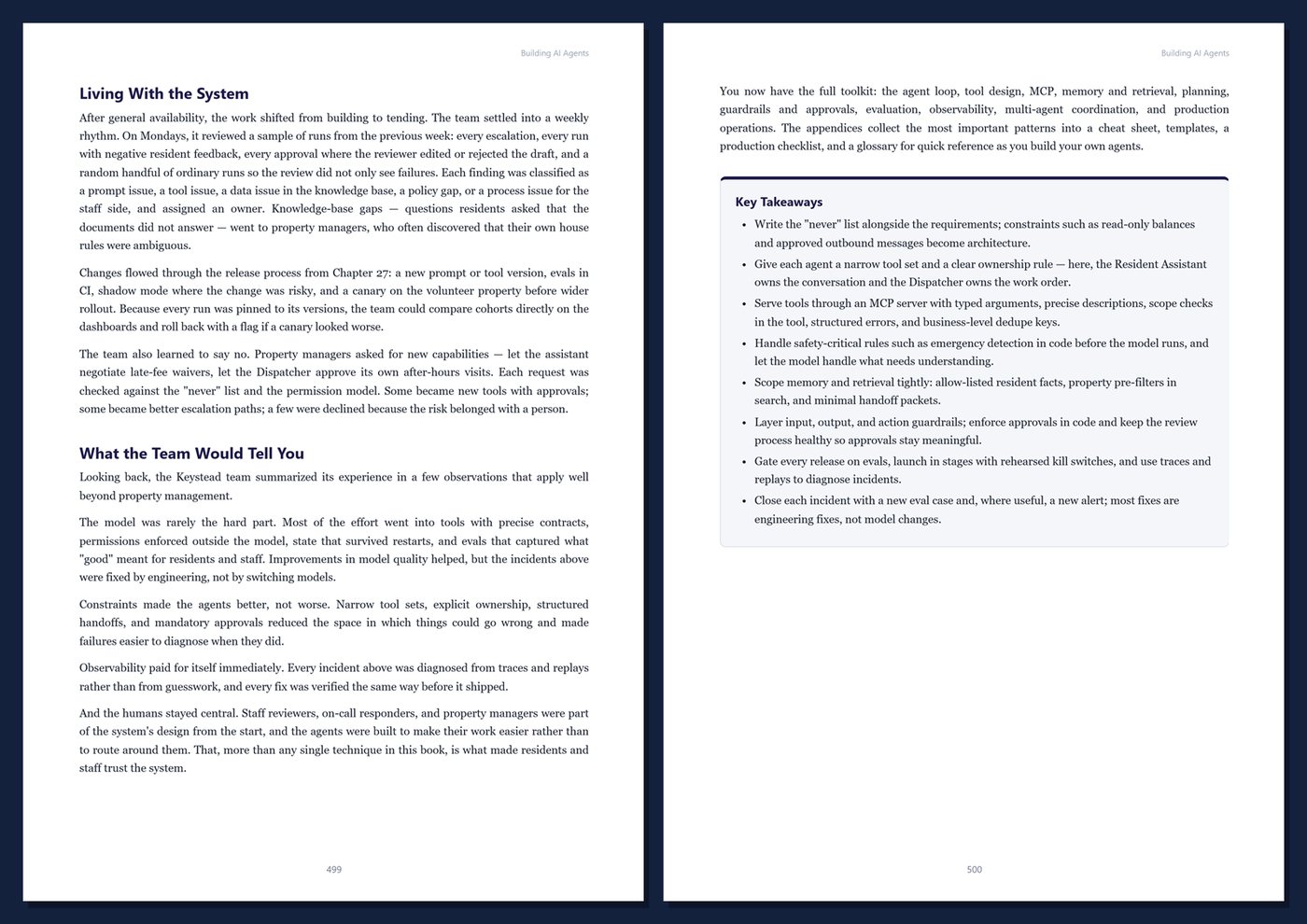
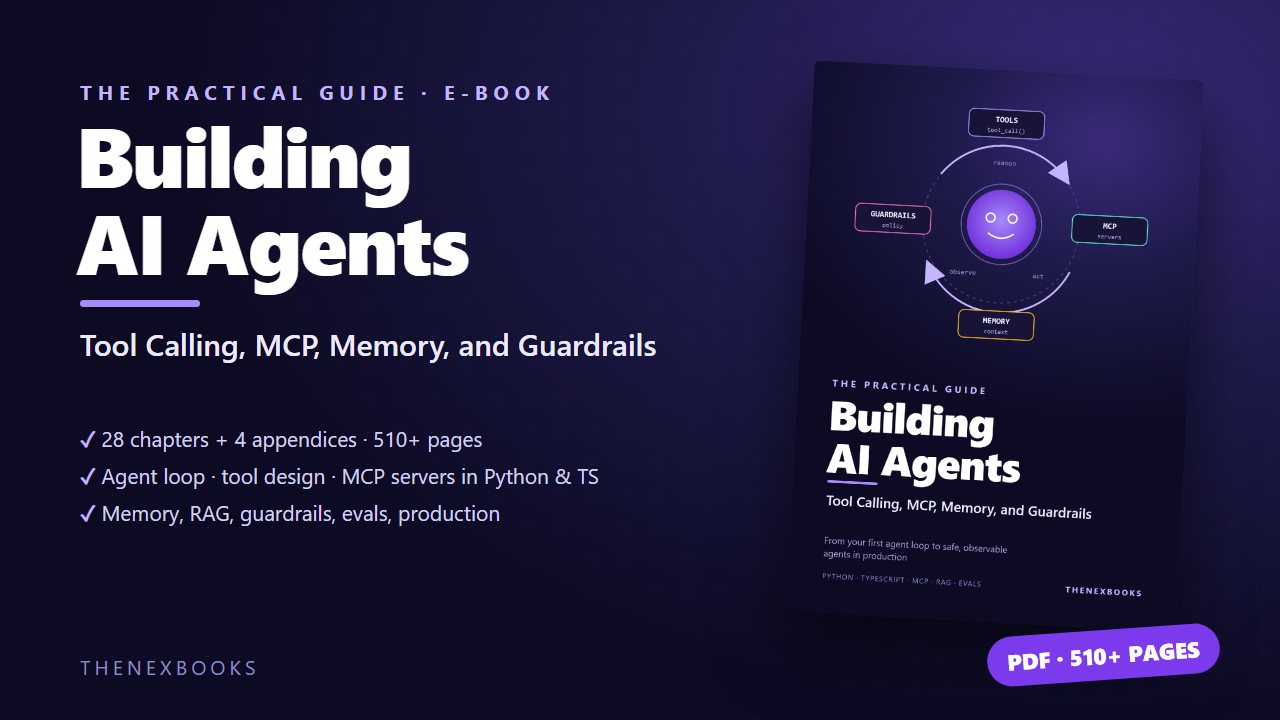
A 512-page, hands-on guide to building reliable AI agents with tool calling, the Model Context Protocol, memory, guardrails, evaluation, and production operations.
A Practical Guide to Tool Calling, MCP, Memory, and Guardrails
Read before you buy: the PDF here is a free sample — the first 20 pages of the 512-page book (payments, sales and reviews on this demo site are sample data). Get the full e-book at thenexbooks on Gumroad.
Agents don't just answer — they act.
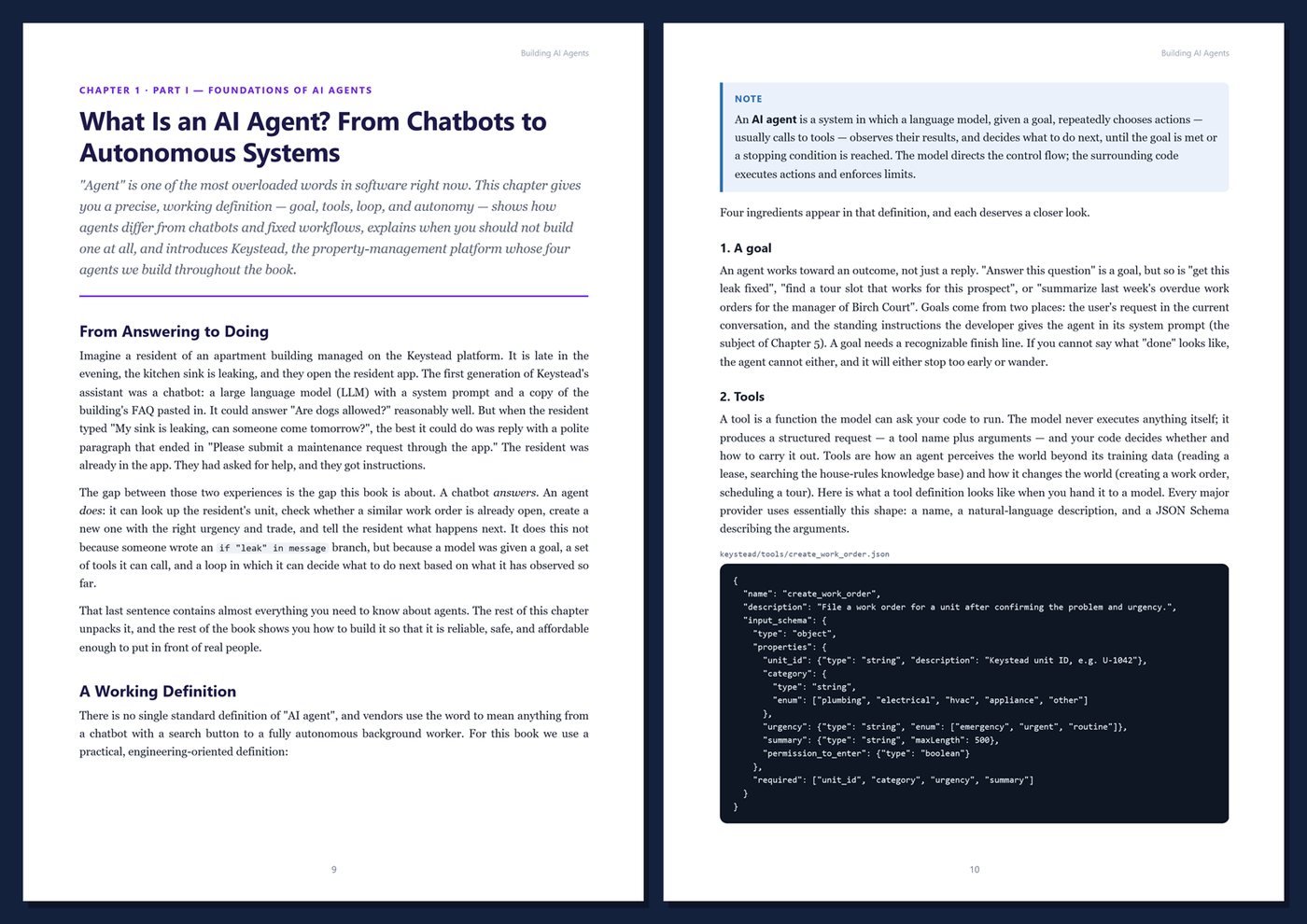
Give a language model tools, a loop, and a goal, and it can look up records, file requests, schedule work, and report back. That power is exactly what makes agents hard to build well: they can call the wrong tool, loop forever, leak data, or follow instructions hidden in a document. Demos are easy. Reliable, secure, observable agents in production are not.
This book shows you how to build the second kind — vendor-neutral and framework-neutral, from first principles to production.
- 512 pages · 28 chapters + 4 appendices
- Build a working agent loop in plain Python before touching any framework
- Tool calling in depth: schemas, tool design, structured outputs, errors, retries, parallel calls
- Model Context Protocol: MCP servers in Python and TypeScript, clients, transports, and security
- Memory and context: token budgets, summarization, retrieval (agentic RAG), and persistent memory
- Guardrails: input, output, and action controls, prompt-injection defenses, human-in-the-loop approvals
- Evaluation, tracing, cost control, multi-agent systems, and production architecture
- One realistic running example (a property-management platform) and a complete end-to-end case study
- No hype: no invented benchmarks, and model names as placeholders so the code outlives today's models
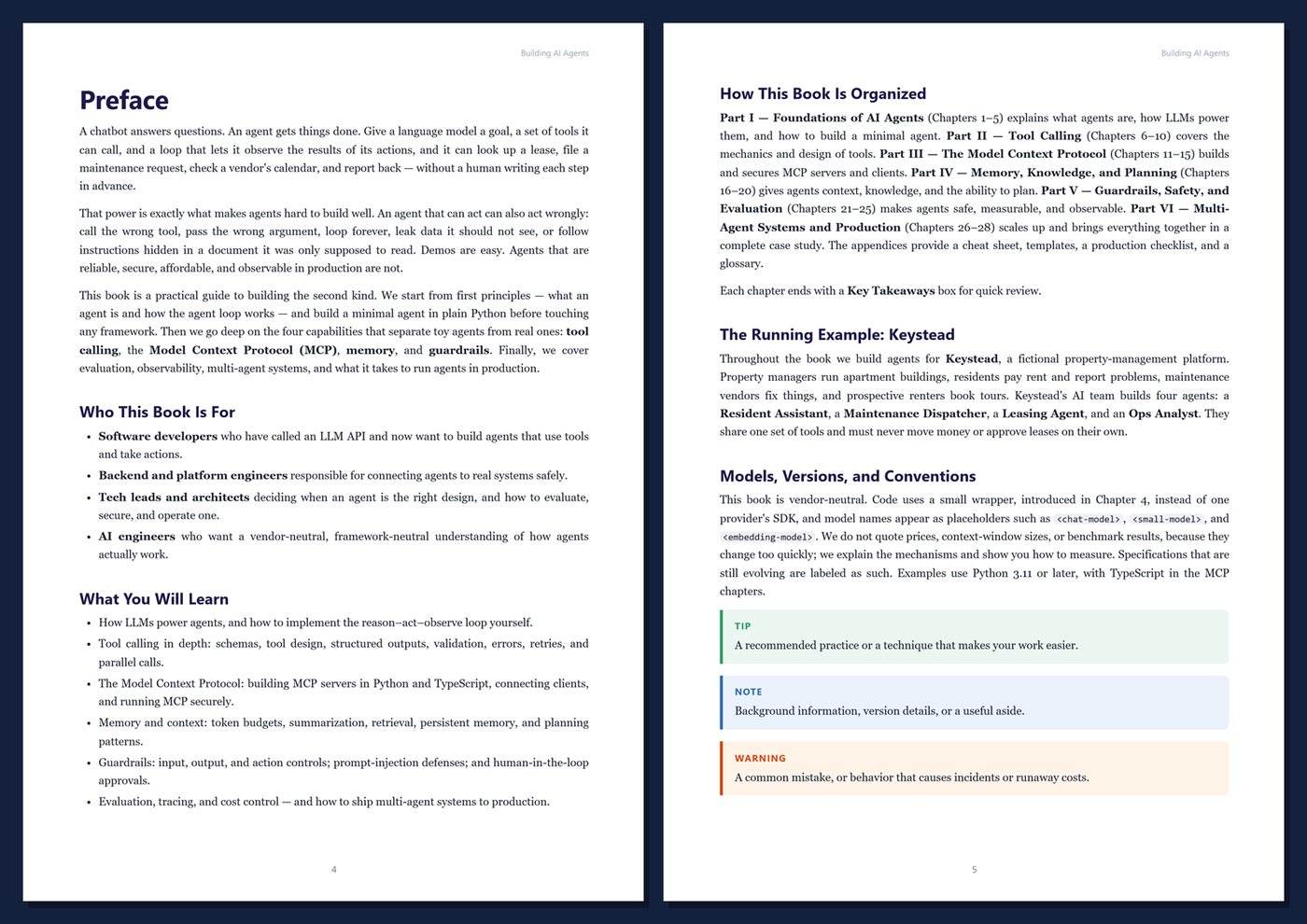
Table Of Contents
Part I — Foundations of AI Agents
- Ch 1 · What Is an AI Agent? From Chatbots to Autonomous Systems
- Ch 2 · How LLMs Power Agents: Tokens, Context Windows, and Structured Output
- Ch 3 · The Agent Loop: Reason, Act, Observe
- Ch 4 · Your First Agent in Python: A Minimal Loop Without Frameworks
- Ch 5 · Instructions for Agents: System Prompts, Roles, and Policies
Part II — Tool Calling
- Ch 6 · Tool Calling Fundamentals: Schemas, Arguments, and Results
- Ch 7 · Designing Good Tools: Naming, Granularity, and Descriptions
- Ch 8 · Structured Outputs and Validation with JSON Schema and Pydantic
- Ch 9 · When Tools Fail: Errors, Retries, Timeouts, and Idempotency
- Ch 10 · Parallel, Sequential, and Long-Running Tool Calls
Part III — The Model Context Protocol (MCP)
- Ch 11 · Understanding MCP: Hosts, Clients, Servers, and Messages
- Ch 12 · Building an MCP Server in Python
- Ch 13 · Building an MCP Server in TypeScript and Connecting Clients
- Ch 14 · MCP Resources, Prompts, and Client Features
- Ch 15 · MCP in Production: Transports, Authorization, and Security
Part IV — Memory, Knowledge, and Planning
- Ch 16 · Agent Memory Architecture: Short-Term, Long-Term, and Working Memory
- Ch 17 · Managing Context: Summarization, Compaction, and Token Budgets
- Ch 18 · Retrieval for Agents: Embeddings, Vector Search, and Agentic RAG
- Ch 19 · Persistent Memory Stores: Profiles, Episodes, and Facts
- Ch 20 · Planning and Reasoning Patterns: ReAct, Plan-and-Execute, and Reflection
Part V — Guardrails, Safety, and Evaluation
- Ch 21 · Guardrails Fundamentals: Input, Output, and Action Controls
- Ch 22 · Prompt Injection and Tool Security
- Ch 23 · Human-in-the-Loop: Approvals, Permissions, and Escalation
- Ch 24 · Evaluating Agents: Test Sets, Trajectory Evals, and LLM-as-Judge
- Ch 25 · Observability, Tracing, and Cost Control
Part VI — Multi-Agent Systems and Production
- Ch 26 · Multi-Agent Systems: Orchestrators, Handoffs, and Agent-to-Agent Protocols
- Ch 27 · Shipping Agents to Production: Architecture, Frameworks, Scaling, and Reliability
- Ch 28 · Case Study: The Keystead Resident and Maintenance Agents End to End
Appendices
- App A · AI Agent Cheat Sheet
- App B · Templates and Reference
- App C · Production Checklist
- App D · Glossary
WHO IT IS FOR
Software developers, backend and platform engineers, AI engineers, and tech leads who have called an LLM API and now want to build agents that use tools and take actions — safely, measurably, and in production. Examples use Python, with TypeScript in the MCP chapters.
FORMAT
PDF (A4), 512 pages, English, clickable table of contents and PDF bookmarks. 1st Edition, 2026. Published by thenexbooks.
Book details
| Detail | |
|---|---|
| Pages | 512 |
| Format | PDF (A4) |
| Language | English |
| Level | Intermediate to Advanced |
| Edition | 1st Edition, 2026 |
| Download on this site | Free sample, first 20 pages (PDF) |
| Publisher | thenexbooks |
ไฟล์ที่คุณจะได้รับ
ยังไม่มีรีวิว เฉพาะผู้ซื้อเท่านั้นที่รีวิวได้
สินค้าอื่นจาก thenexbooks