 1 / 11
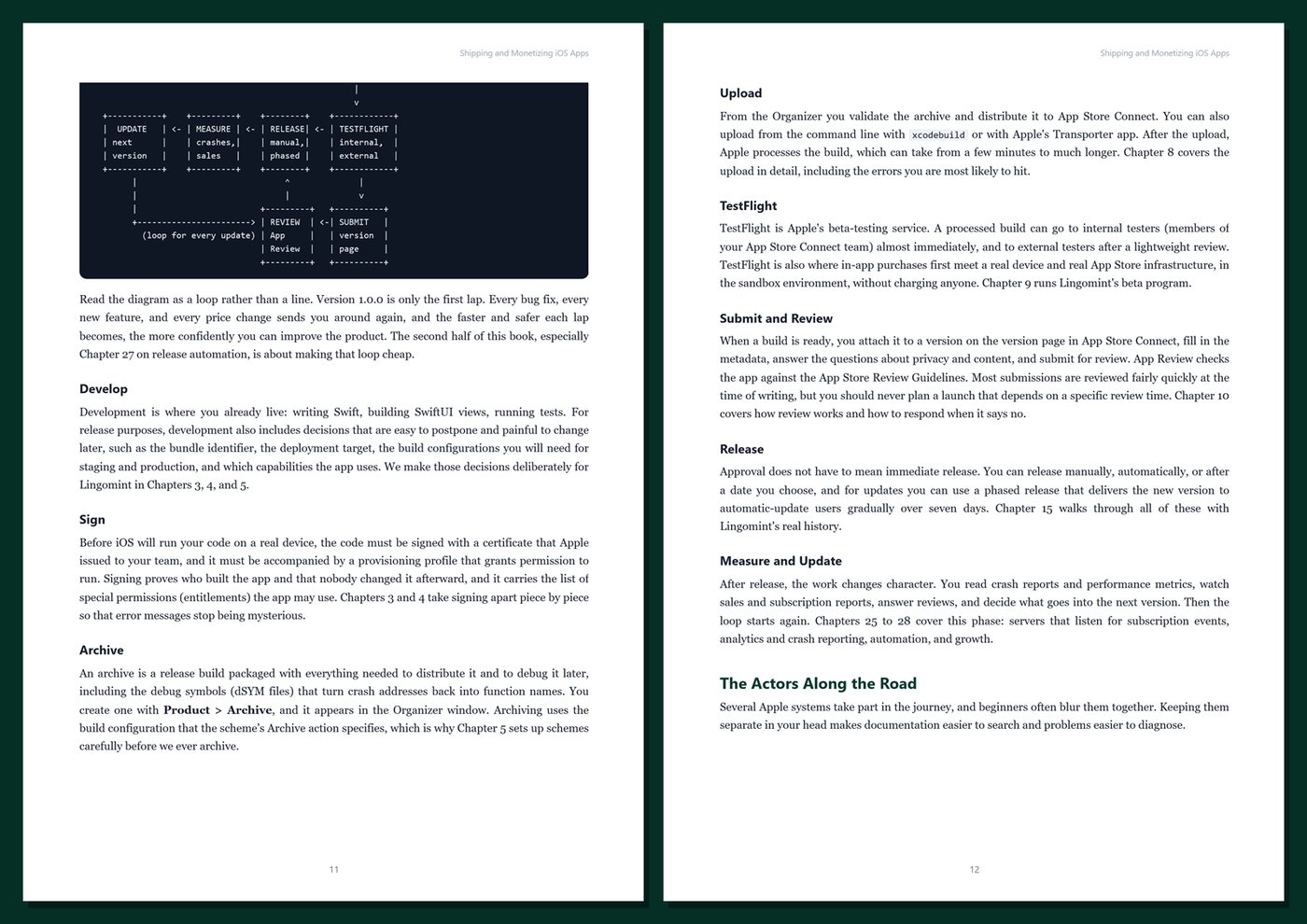
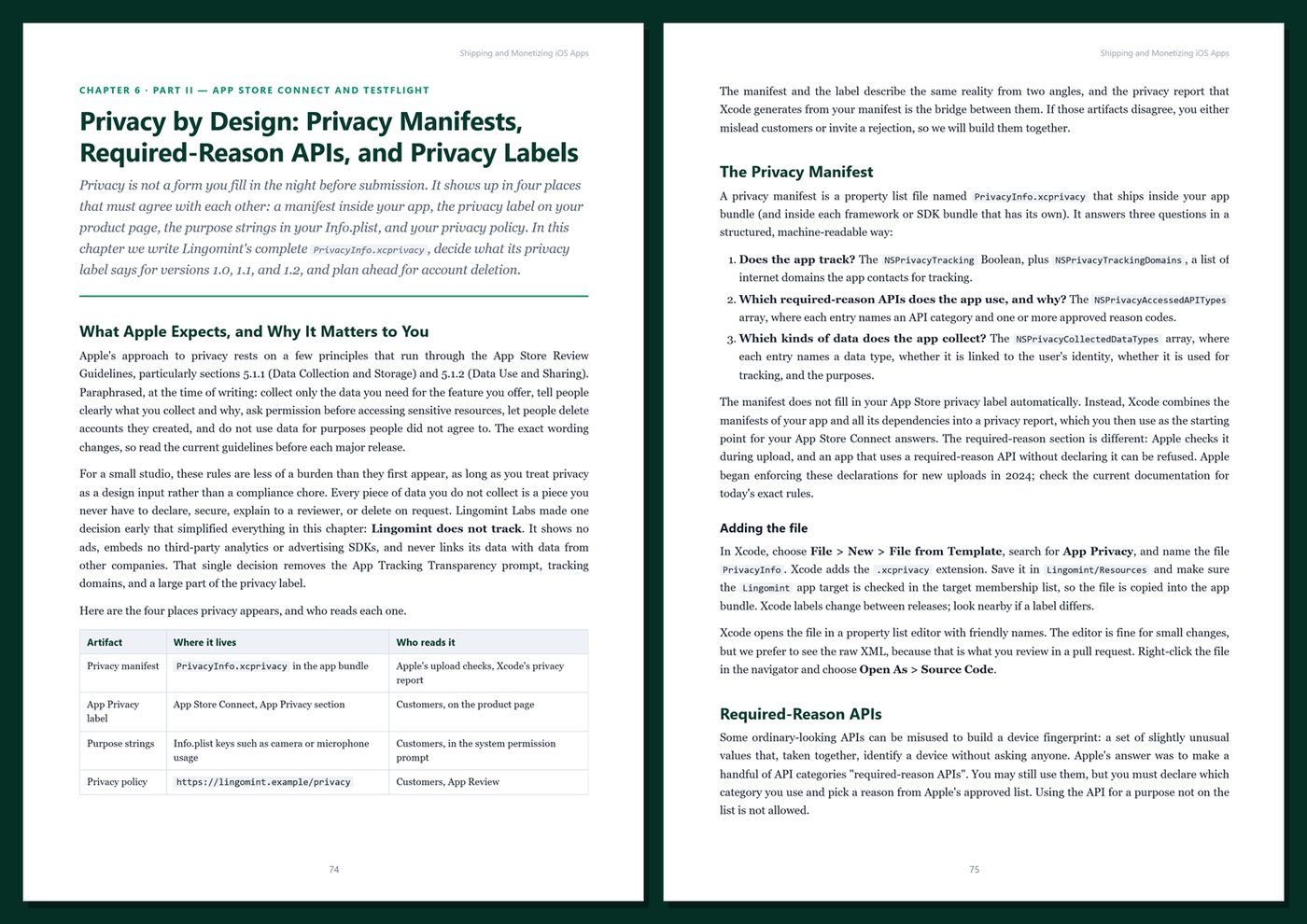
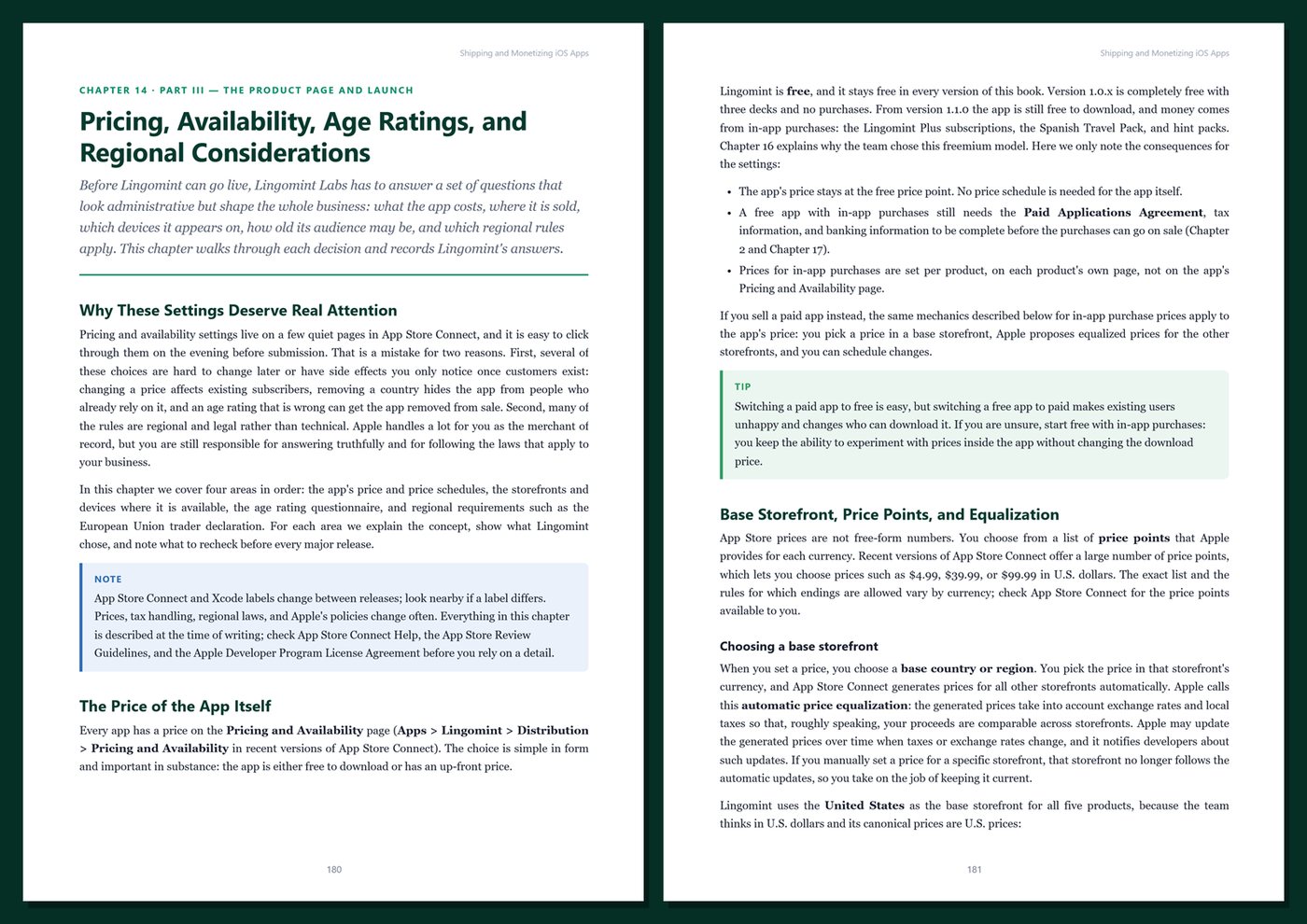
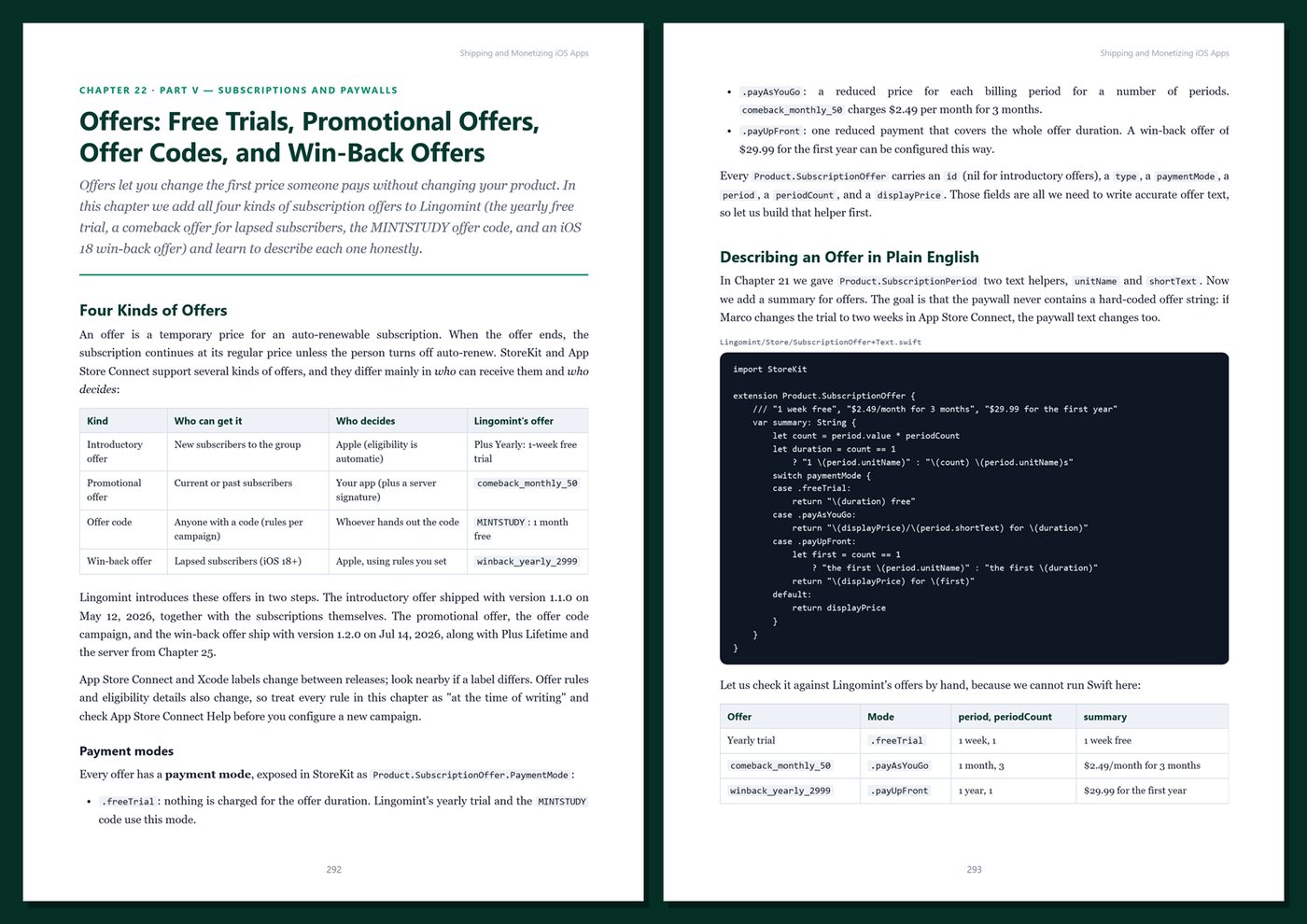
Ship your iOS app and earn from it: Apple Developer Program and team roles, code signing and provisioning, build configurations and versioning, privacy manifests, App Store Connect, TestFlight, App Review, product page and ASO, pricing and phased release, StoreKit 2 in-app purchases…
Code Signing, TestFlight, App Store Review, StoreKit 2 In-App Purchases and Subscriptions, and Growth After Launch
Read before you buy: the PDF here is a free sample — the first 20 pages of the 425-page book (payments, sales and reviews on this demo site are sample data). Get the full e-book at thenexbooks on Gumroad.
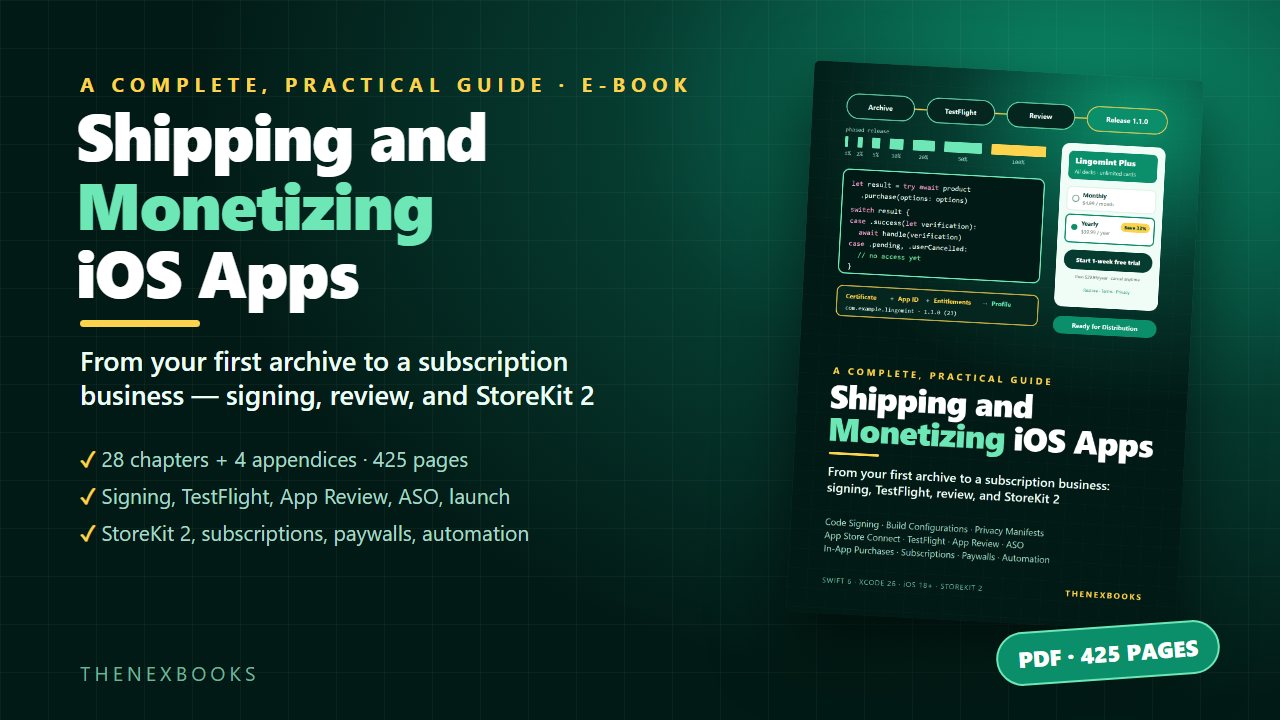
Building the app is half the job. This book covers the other half: shipping it, selling it, and keeping it healthy.
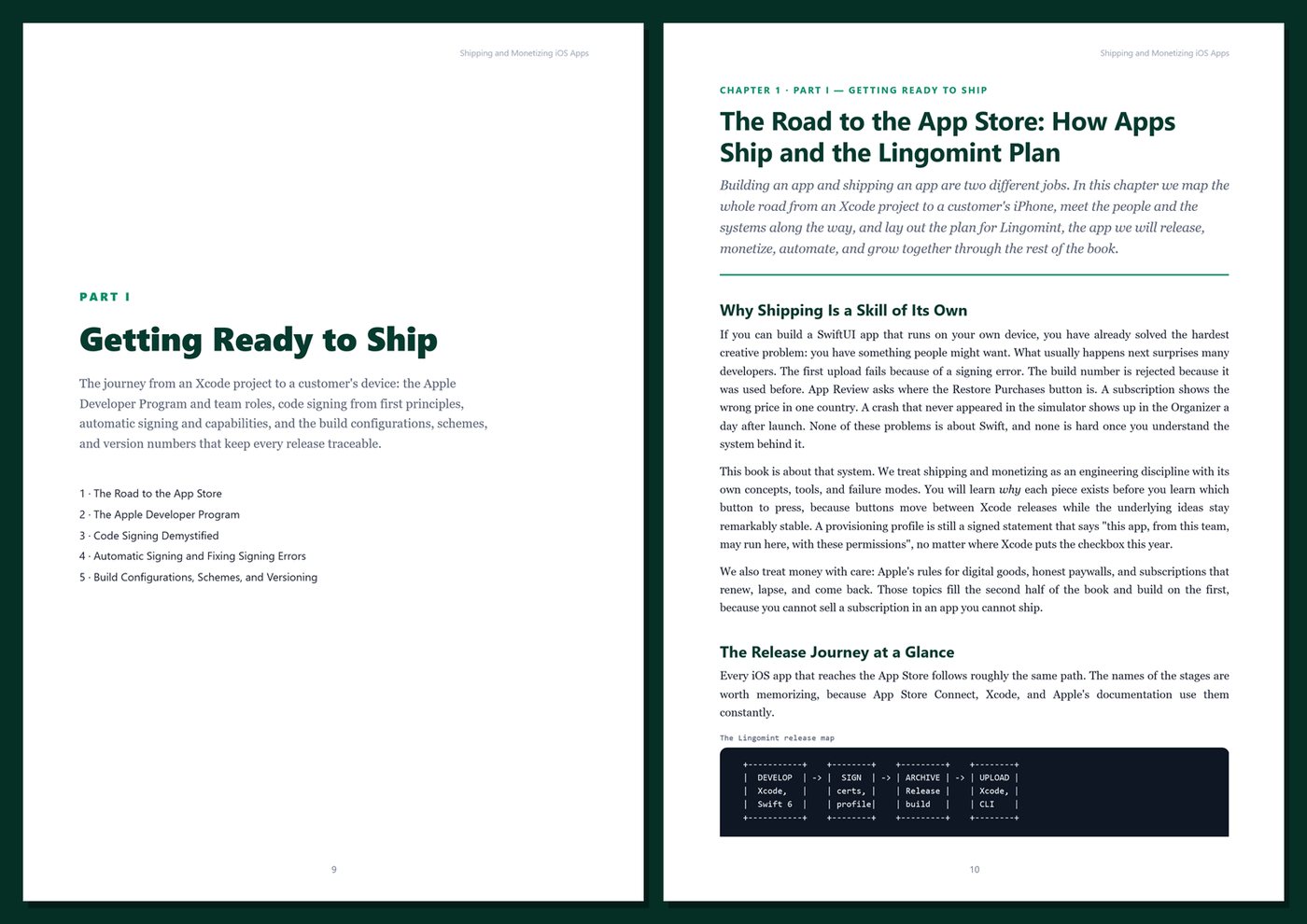
Many good apps stall between "it works on my iPhone" and "it earns money on the App Store". Signing errors, confusing provisioning profiles, rejected builds, privacy requirements, product pages nobody reads, and purchases that work in testing but not in production all get in the way — and Apple's rules change every year.
This book is a complete, practical guide to that journey. You follow one app from its first archive to a monetized product with subscriptions, an automated release pipeline, and monitoring after launch. Every step is explained from first principles, so you understand what Apple's tools are doing and can fix problems yourself.
What's inside
- The release journey end to end, the Apple Developer Program, agreements, tax and banking, and App Store Connect roles for a small team
- Code signing demystified: certificates, private keys, App IDs, devices, provisioning profiles, entitlements, automatic signing, and fixes for the most common signing errors
- Build configurations, schemes, and xcconfig files for development, staging, and release builds, plus a version and build-number strategy
- Privacy manifests, required-reason APIs, App Privacy labels, and account deletion
- App Store Connect setup, archiving, validating, and uploading builds, and TestFlight for internal and external testers
- App Review: how it works, common rejection themes, and how to answer the Resolution Center
- Product page metadata, screenshots and app previews, App Store optimization, product page optimization, custom product pages, pricing, availability, and age ratings
- Launch day: manual, automatic, and phased releases, and shipping your first update fast
- StoreKit 2 in depth: products, purchases, verified transactions, entitlements, transaction updates, restoring, consumables, non-consumables, and Family Sharing
- Auto-renewable subscriptions: groups, levels, upgrades and downgrades, grace periods, billing retry, and subscription status
- Free trials, promotional offers, offer codes, and win-back offers
- Paywalls with SubscriptionStoreView, StoreView, and custom SwiftUI — and how to design them honestly
- Testing purchases end to end with StoreKit configuration files, unit tests, sandbox accounts, and TestFlight
- Server-side purchase handling with App Store Server Notifications and the App Store Server API (overview)
- Analytics and crash reporting with App Analytics, MetricKit, and the Xcode Organizer
- Release automation with fastlane and Xcode Cloud, and growing after launch with ratings, reviews, and steady updates
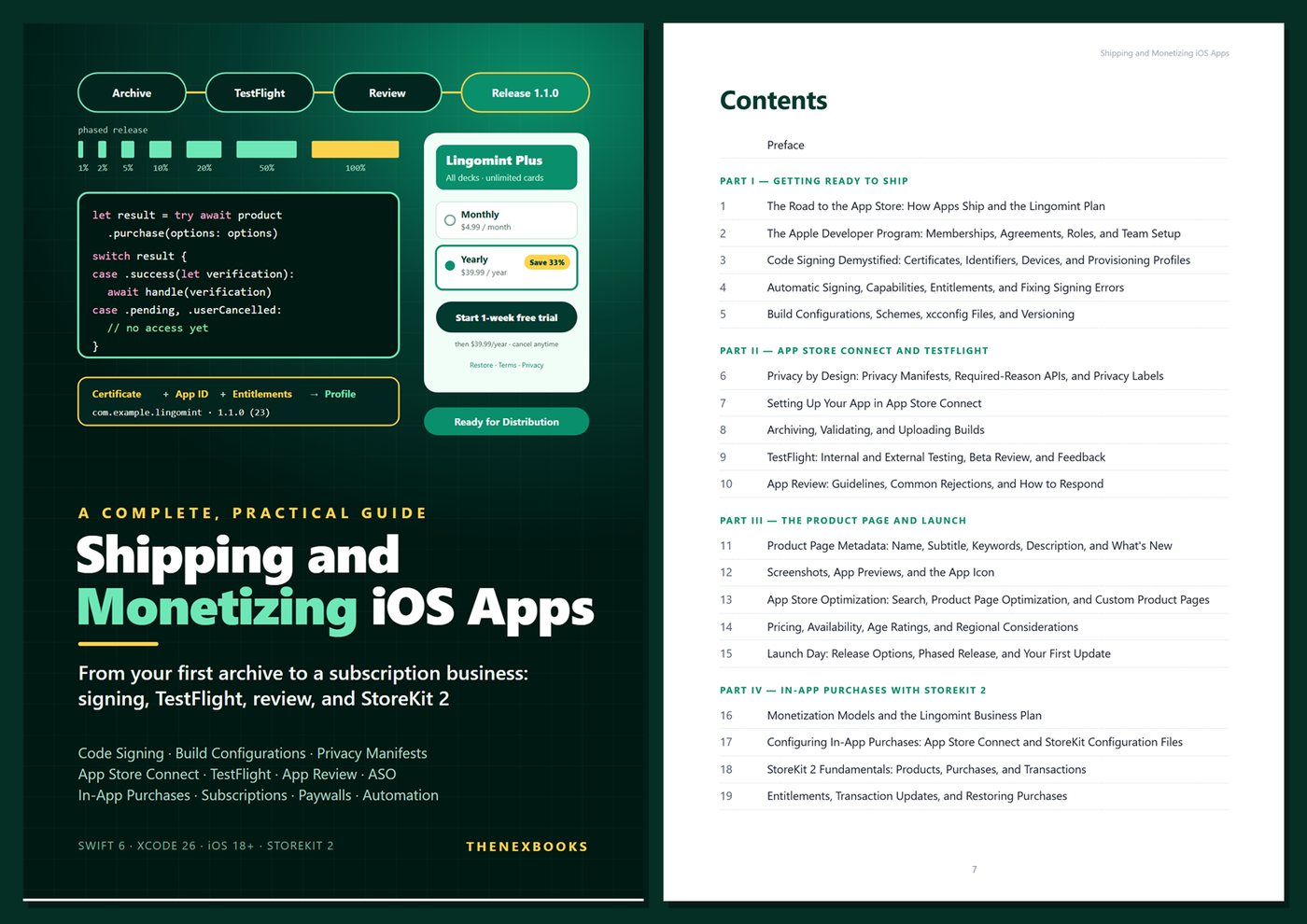
One running example, start to finish. You ship Lingomint, a fictional language flashcards app from a two-person studio. Version 1.0 launches free; version 1.1 adds Lingomint Plus with monthly and yearly plans and a one-week free trial, a one-time deck pack, and hint packs; version 1.2 adds a lifetime option, offer codes, promotional and win-back offers, and a small server for App Store notifications. Every identifier, price, and date stays consistent across the whole book, so the code, the App Store Connect settings, and the examples always agree.
Current and honest. The code uses the Swift 6 language mode and Xcode 26-era tooling with a deployment target of iOS 18; features that need iOS 26 are marked and checked for availability. App Store policies, fees, and limits change often, so the book flags each one as "at the time of writing" and tells you where to confirm it in Apple's documentation. It contains no invented statistics about conversion rates or revenue. Every chapter includes Swift code, Tips, Notes, Warnings, exercises, and Key Takeaways, and the appendices give you a cheat sheet, copy-ready templates, a release-day checklist, and a glossary.
Format: PDF, 425 pages (A4), linked table of contents and bookmarks. English. First Edition, 2026. Published by thenexbooks. Assumes you know Swift and SwiftUI basics; building and shipping iOS apps requires a Mac with Xcode and an Apple Developer Program membership. This book is independent and is not affiliated with, sponsored by, or endorsed by Apple Inc.
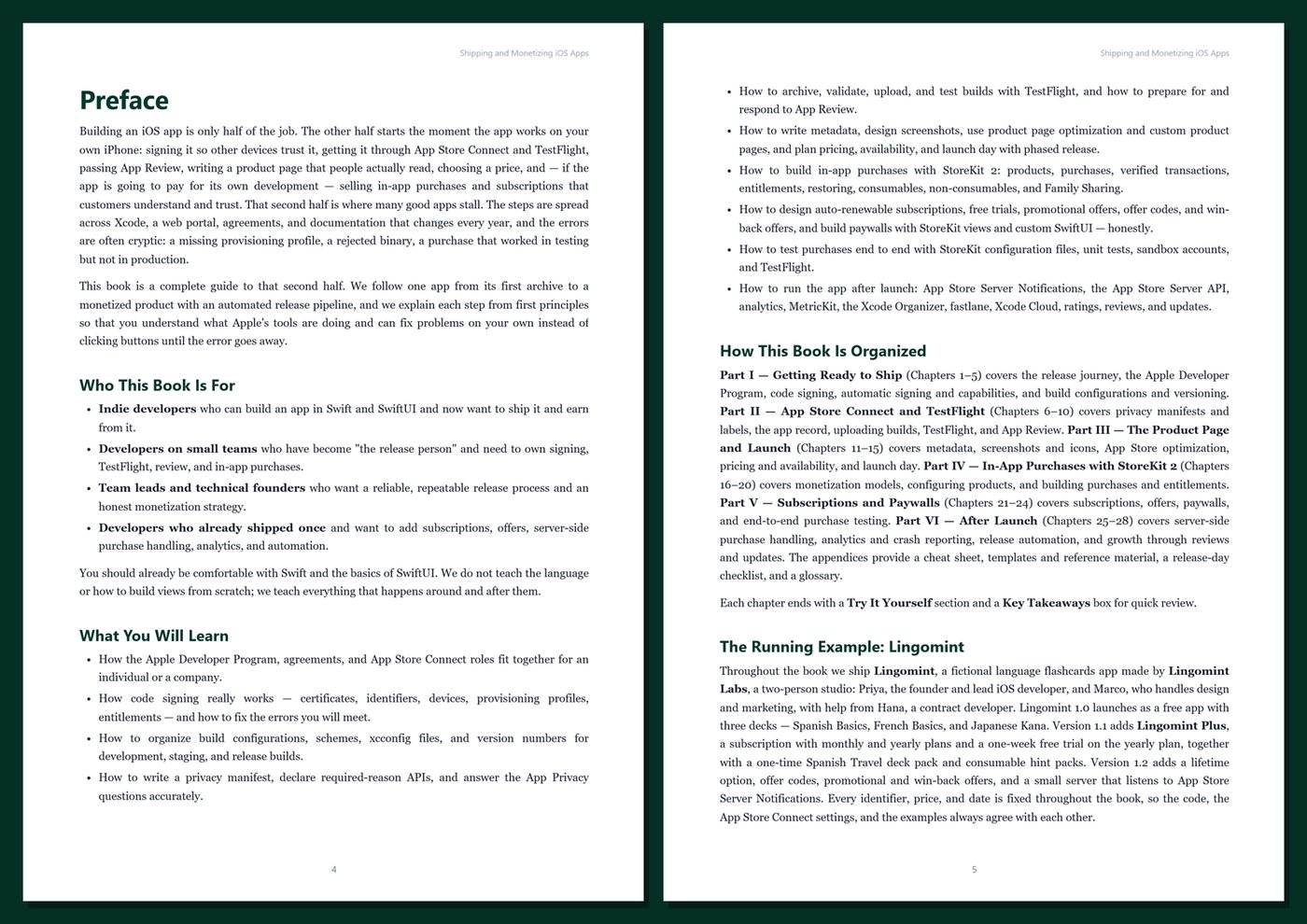
Table of Contents
Part I — Getting Ready to Ship
- Ch 1 · The Road to the App Store: How Apps Ship and the Lingomint Plan
- Ch 2 · The Apple Developer Program: Memberships, Agreements, Roles, and Team Setup
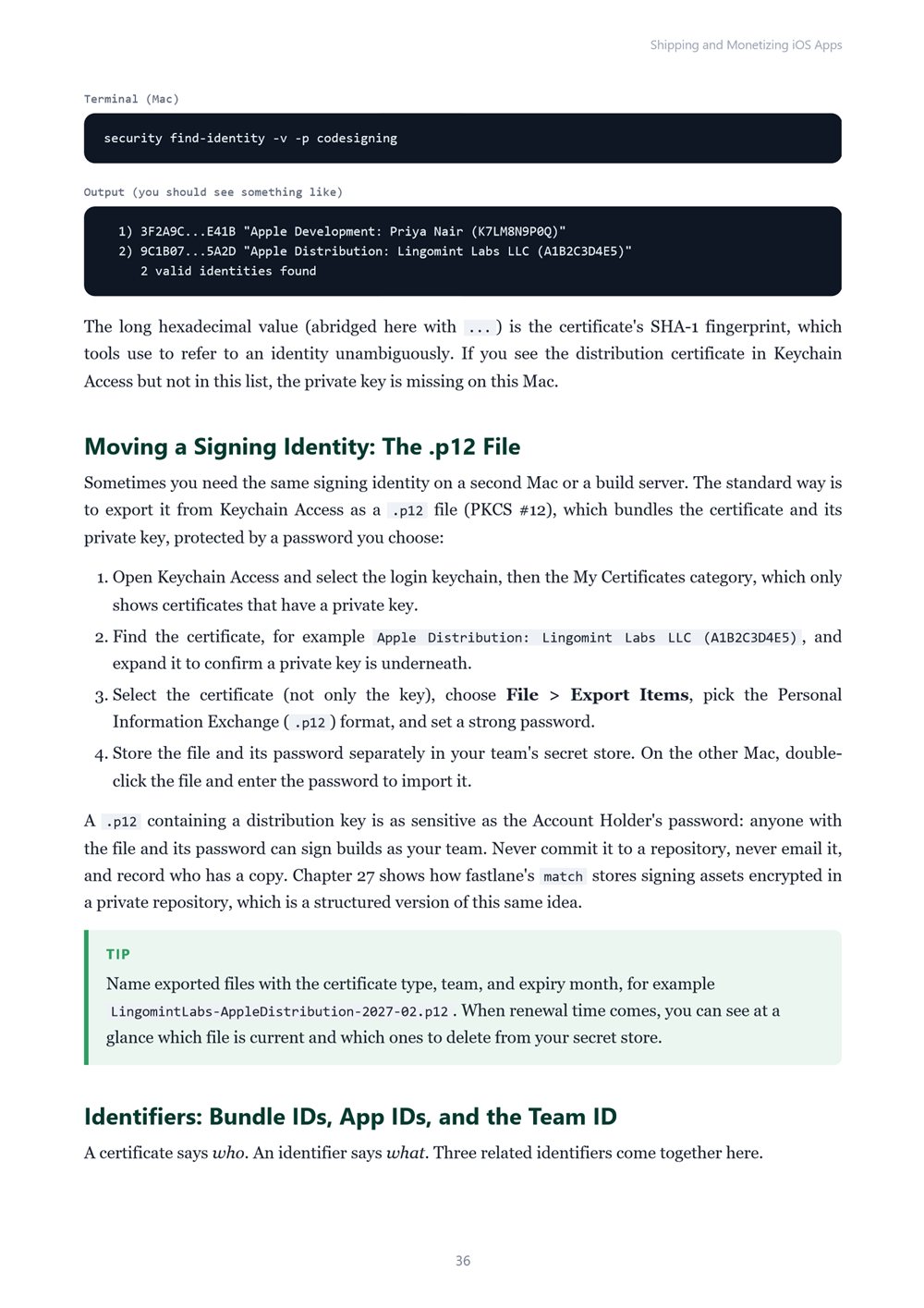
- Ch 3 · Code Signing Demystified: Certificates, Identifiers, Devices, and Provisioning Profiles
- Ch 4 · Automatic Signing, Capabilities, Entitlements, and Fixing Signing Errors
- Ch 5 · Build Configurations, Schemes, xcconfig Files, and Versioning
Part II — App Store Connect and TestFlight
- Ch 6 · Privacy by Design: Privacy Manifests, Required-Reason APIs, and Privacy Labels
- Ch 7 · Setting Up Your App in App Store Connect
- Ch 8 · Archiving, Validating, and Uploading Builds
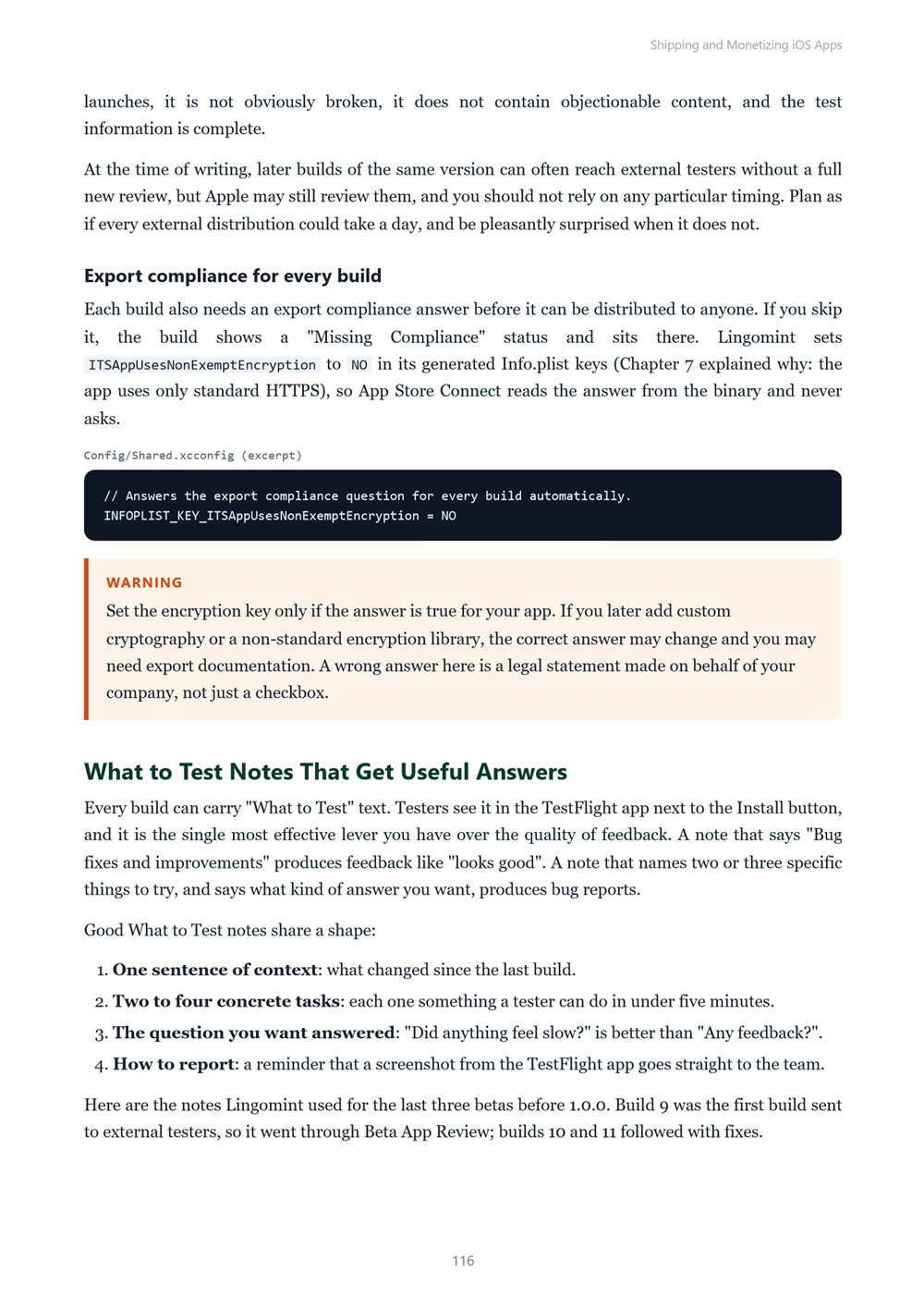
- Ch 9 · TestFlight: Internal and External Testing, Beta Review, and Feedback
- Ch 10 · App Review: Guidelines, Common Rejections, and How to Respond
Part III — The Product Page and Launch
- Ch 11 · Product Page Metadata: Name, Subtitle, Keywords, Description, and What's New
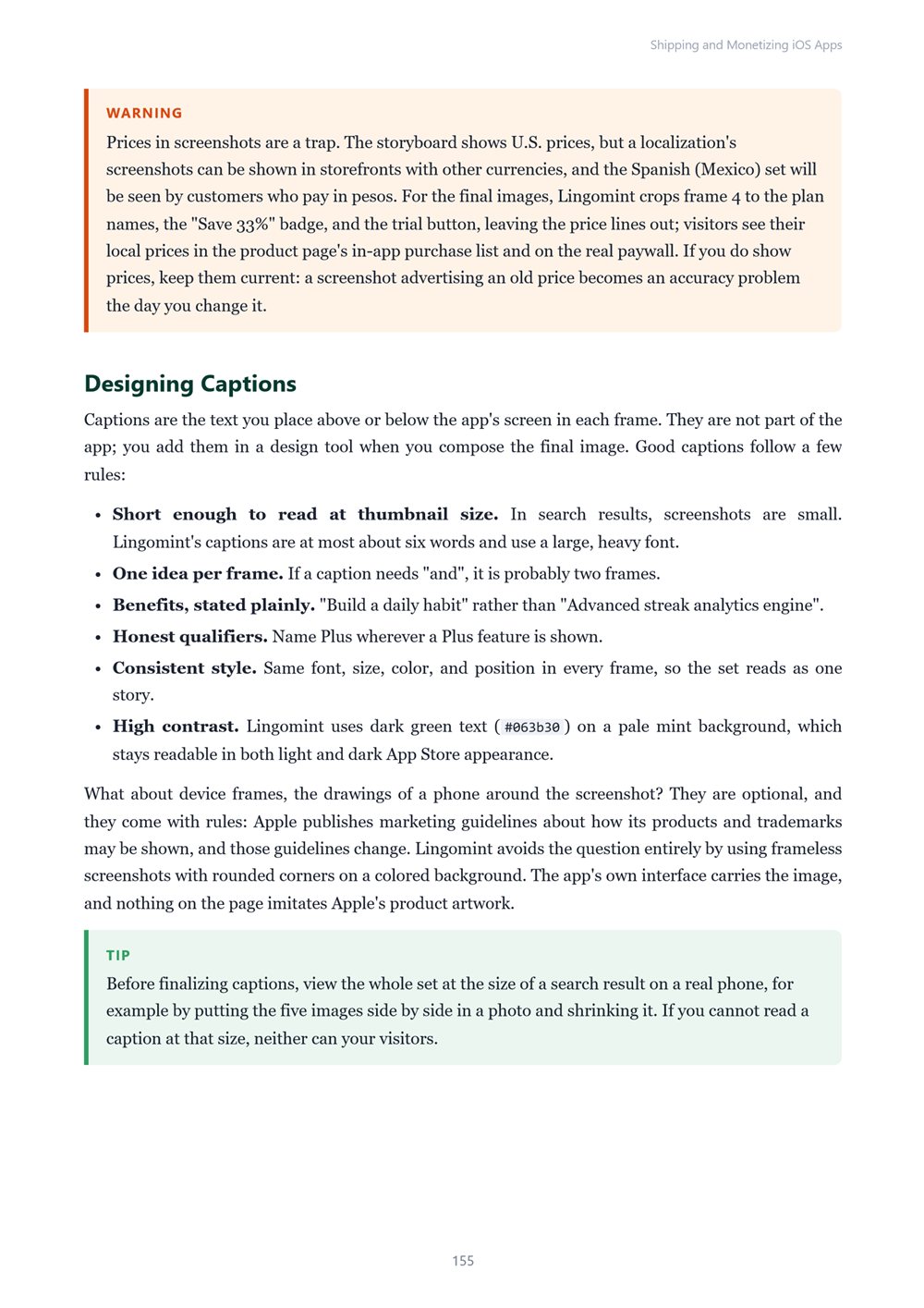
- Ch 12 · Screenshots, App Previews, and the App Icon
- Ch 13 · App Store Optimization: Search, Product Page Optimization, and Custom Product Pages
- Ch 14 · Pricing, Availability, Age Ratings, and Regional Considerations
- Ch 15 · Launch Day: Release Options, Phased Release, and Your First Update
Part IV — In-App Purchases with StoreKit 2
- Ch 16 · Monetization Models and the Lingomint Business Plan
- Ch 17 · Configuring In-App Purchases: App Store Connect and StoreKit Configuration Files
- Ch 18 · StoreKit 2 Fundamentals: Products, Purchases, and Transactions
- Ch 19 · Entitlements, Transaction Updates, and Restoring Purchases
- Ch 20 · Consumables, Non-Consumables, and Family Sharing
Part V — Subscriptions and Paywalls
- Ch 21 · Auto-Renewable Subscriptions: Groups, Levels, Renewals, and Status
- Ch 22 · Offers: Free Trials, Promotional Offers, Offer Codes, and Win-Back Offers
- Ch 23 · Paywalls with SubscriptionStoreView, StoreView, and Custom SwiftUI
- Ch 24 · Paywall Ethics and Testing Purchases End to End
Part VI — After Launch
- Ch 25 · Server-Side Purchase Handling: App Store Server Notifications and the App Store Server API
- Ch 26 · Analytics, Crash Reporting, and Performance: App Analytics, MetricKit, and the Organizer
- Ch 27 · Release Automation with fastlane and Xcode Cloud
- Ch 28 · Ratings, Reviews, Updates, and Growing After Launch
Appendices
A · Release and StoreKit Cheat Sheet
B · Templates and Reference
C · Release-Day Production Checklist
D · Glossary
Book details
| Detail | |
|---|---|
| Pages | 425 |
| Format | PDF (A4) |
| Language | English |
| Level | Intermediate |
| Edition | 1st Edition (2026) |
| Download on this site | Free sample, first 20 pages (PDF) |
| Publisher | thenexbooks |
Files you get
No reviews yet. Only buyers can review.
More from thenexbooks