 1 / 11
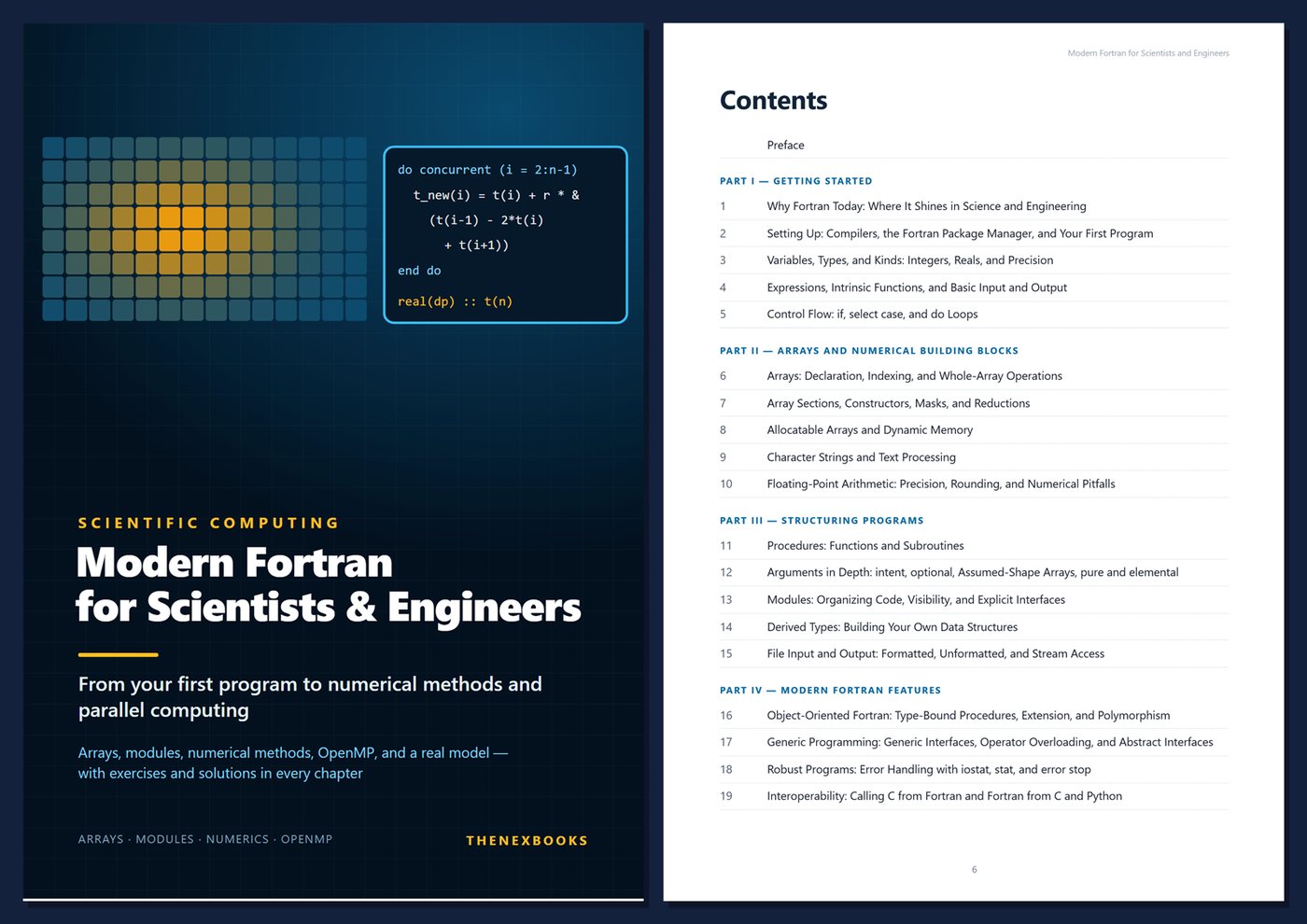
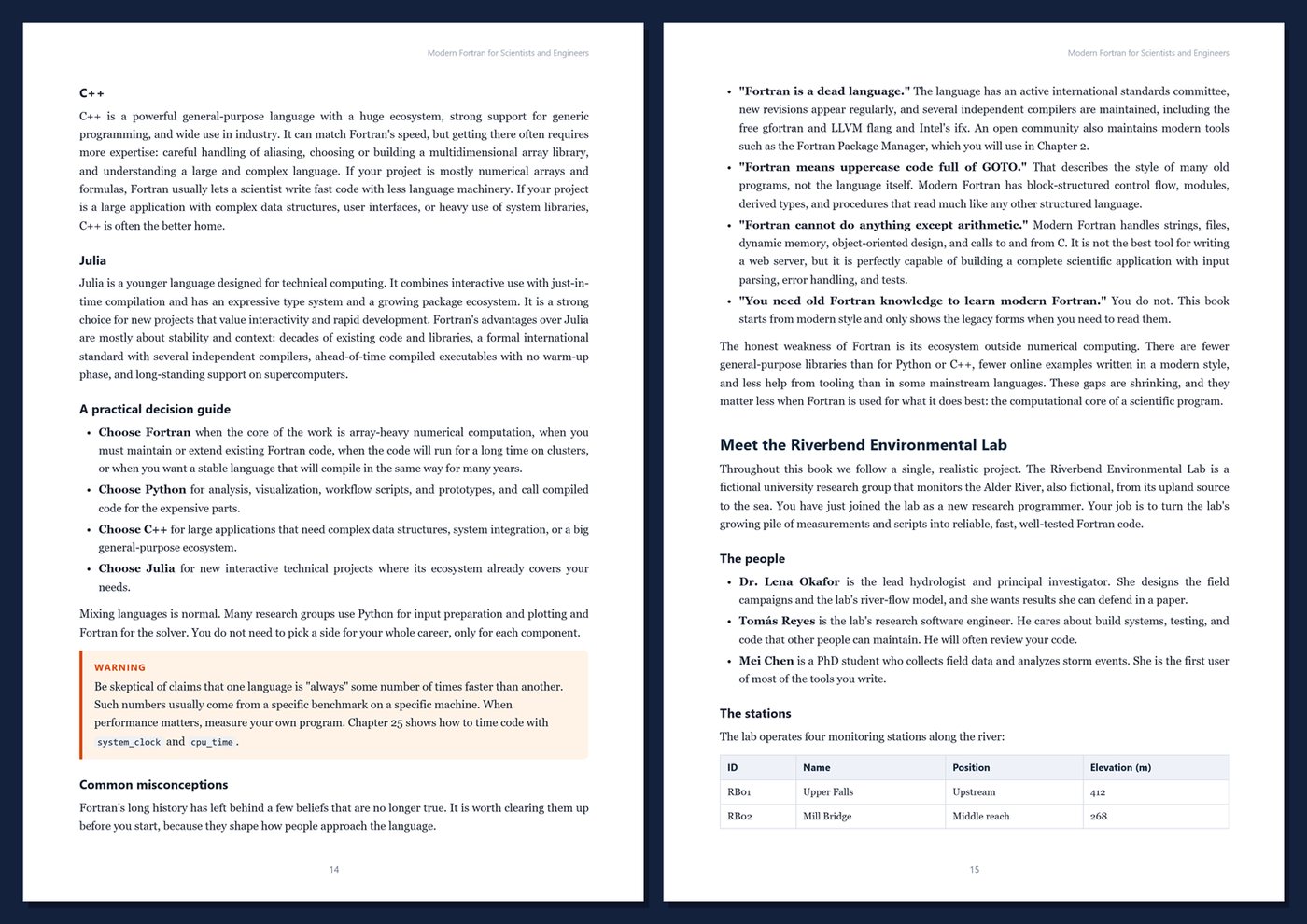
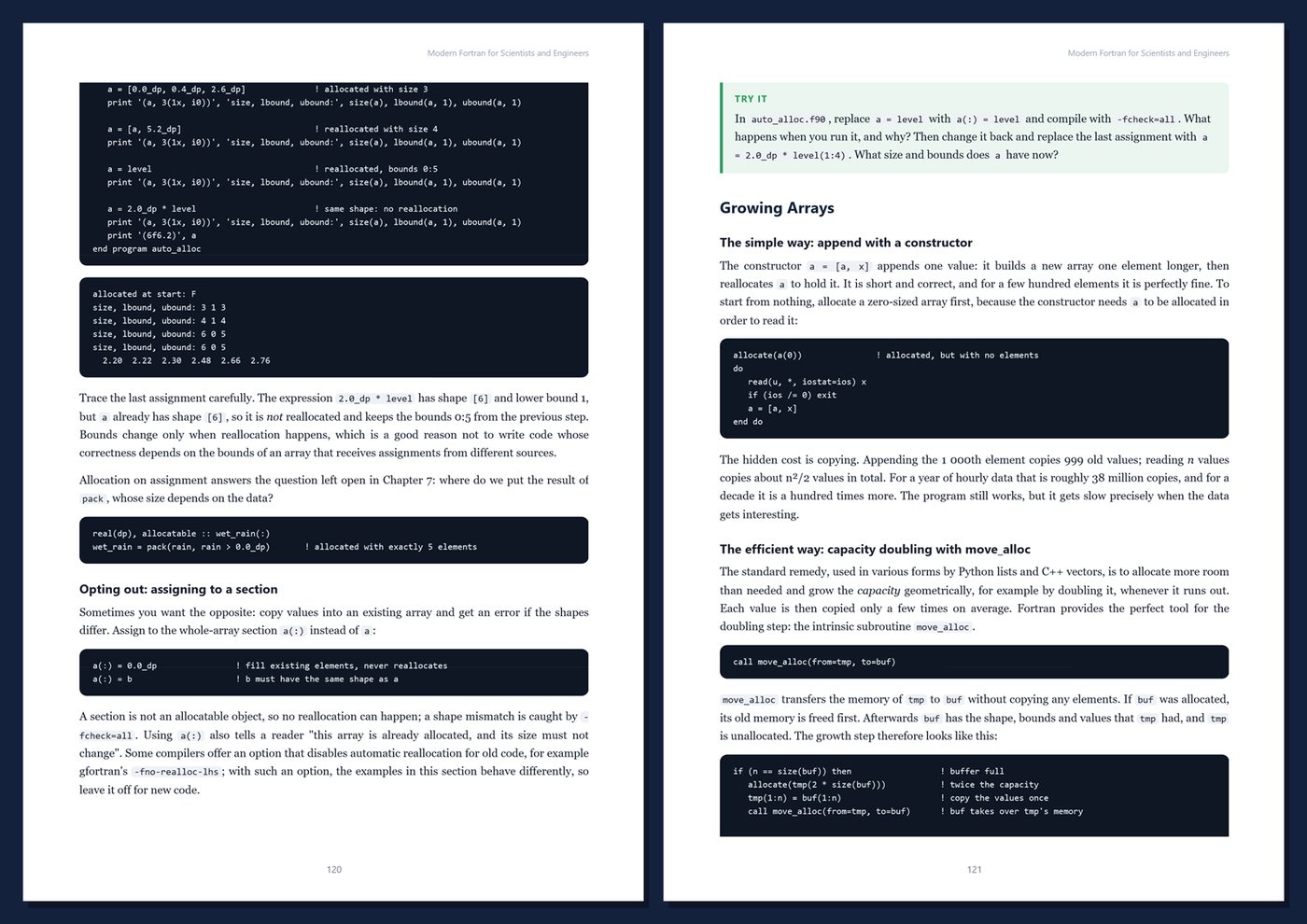
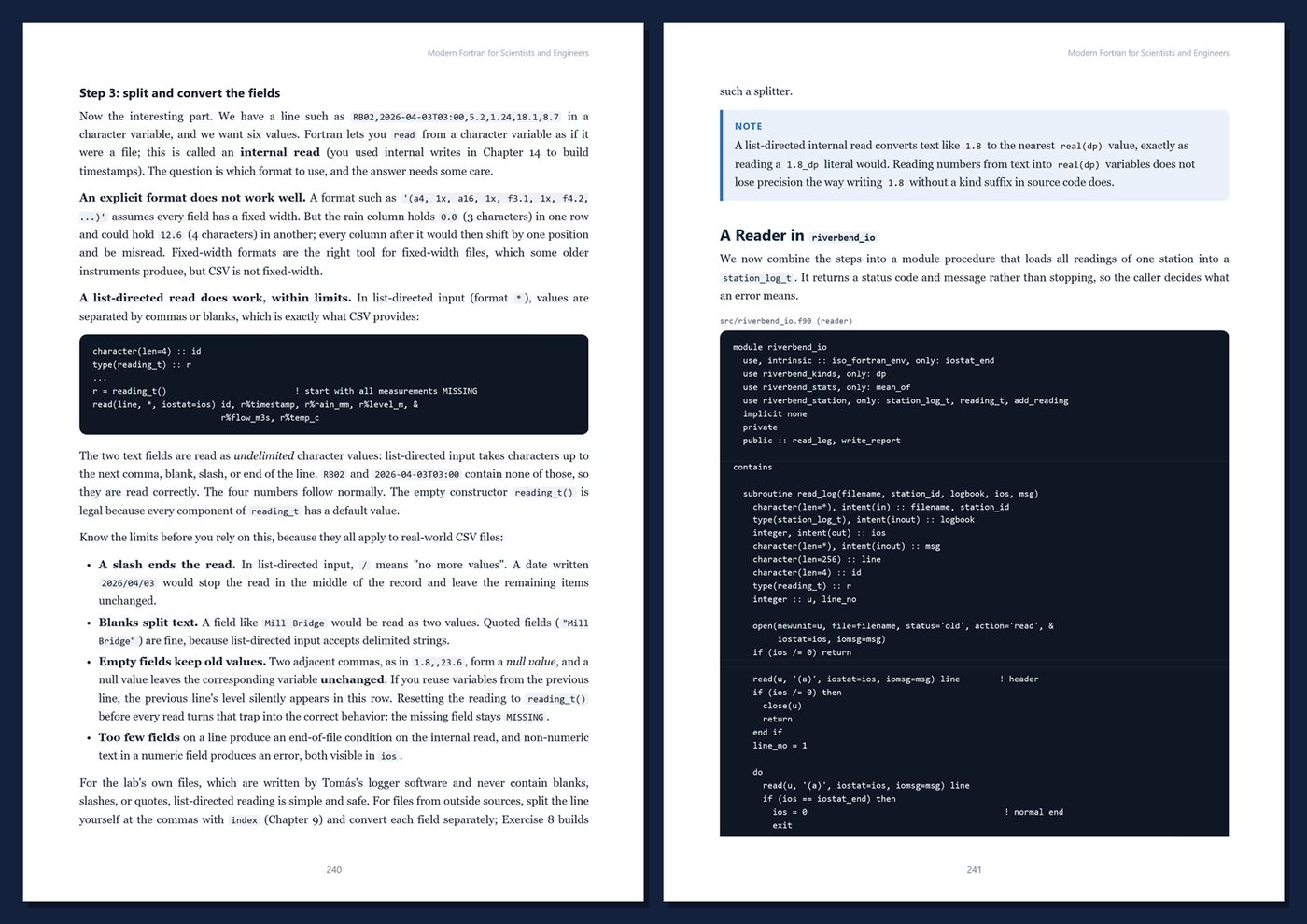
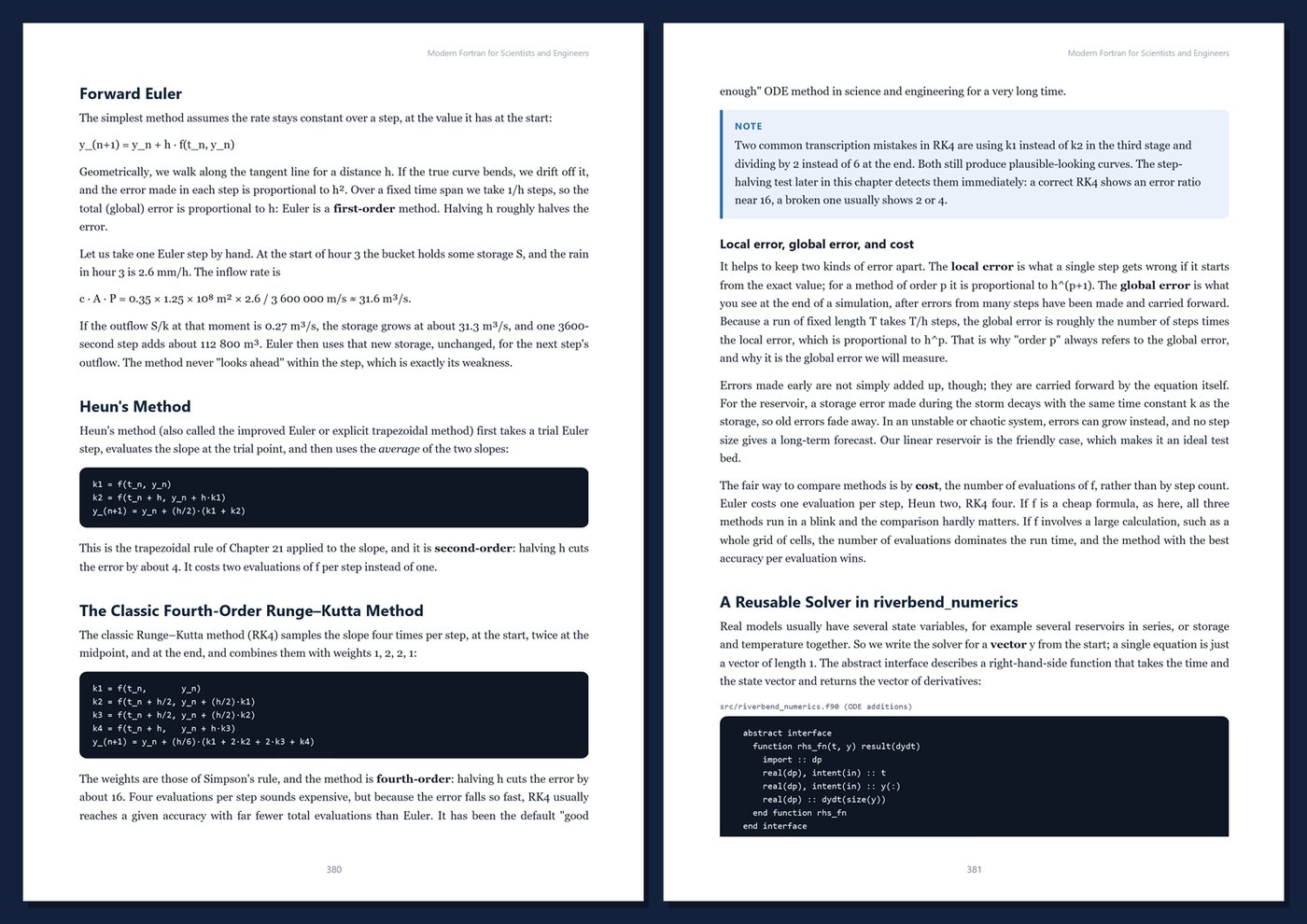
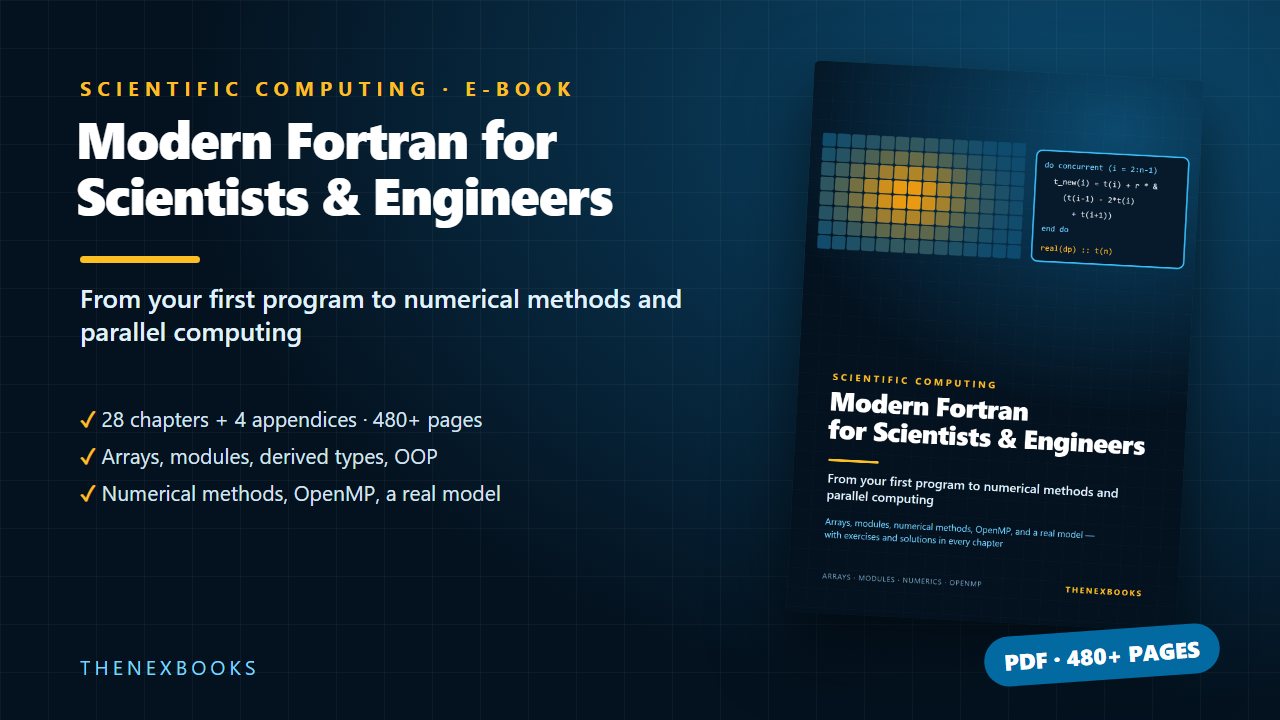
A 486-page, hands-on guide to modern Fortran for science and engineering — arrays, modules, derived types, numerical methods, performance, and parallel computing — with exercises and solutions in every chapter.
From Your First Program to Numerical Methods and Parallel Computing
Read before you buy: the PDF here is a free sample — the first 20 pages of the 486-page book (payments, sales and reviews on this demo site are sample data). Get the full e-book at thenexbooks on Gumroad.
Write fast, trustworthy scientific code in modern Fortran.
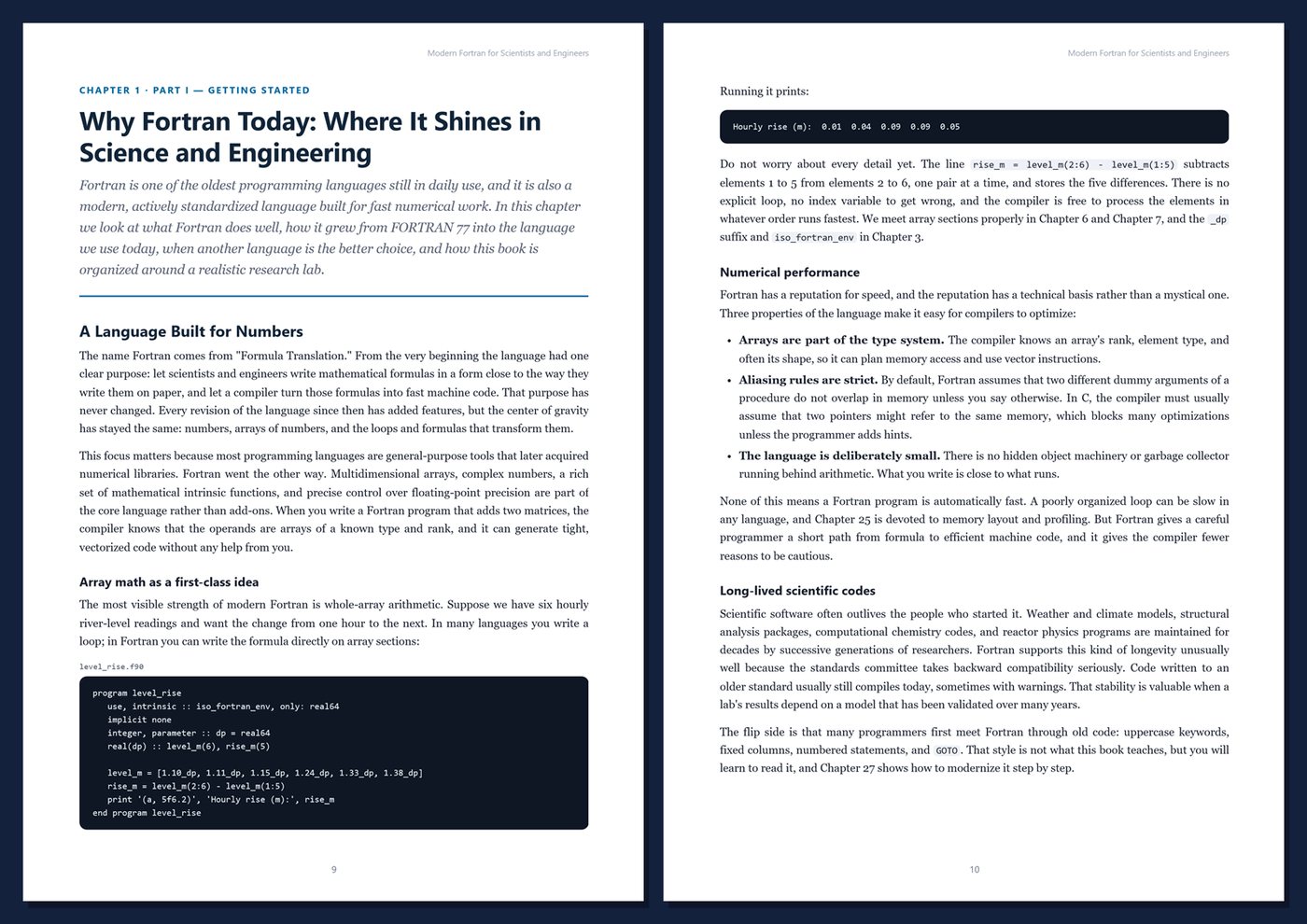
Fortran still powers weather and climate models, engineering simulations, and physics codes around the world — and modern Fortran is nothing like the punched-card language many people imagine. It has whole-array arithmetic, modules, derived types, object-oriented features, built-in parallelism, and excellent optimizing compilers. This book teaches the modern language from the first page, together with the habits that make scientific code correct: choosing precision deliberately, handling errors, testing numerical results, and measuring performance. Every chapter ends with graded exercises and worked solutions.
- 486 pages · 28 chapters + 4 appendices
- Setup with gfortran, Intel ifx, or LLVM flang, and the Fortran Package Manager (fpm)
- Types, kinds, and floating-point precision — and the numerical pitfalls to avoid
- Arrays in depth: sections, masks, reductions, and allocatable arrays
- Procedures, modules, derived types, object-oriented and generic programming
- File I/O, error handling, testing, debugging, and interoperability with C and Python
- Root finding, integration, linear algebra with LAPACK, ODEs, and grid simulations
- Performance tuning, do concurrent, OpenMP, coarrays, and modernizing FORTRAN 77 code
- A complete case study: a rainfall–runoff river-flow model built as a real fpm project
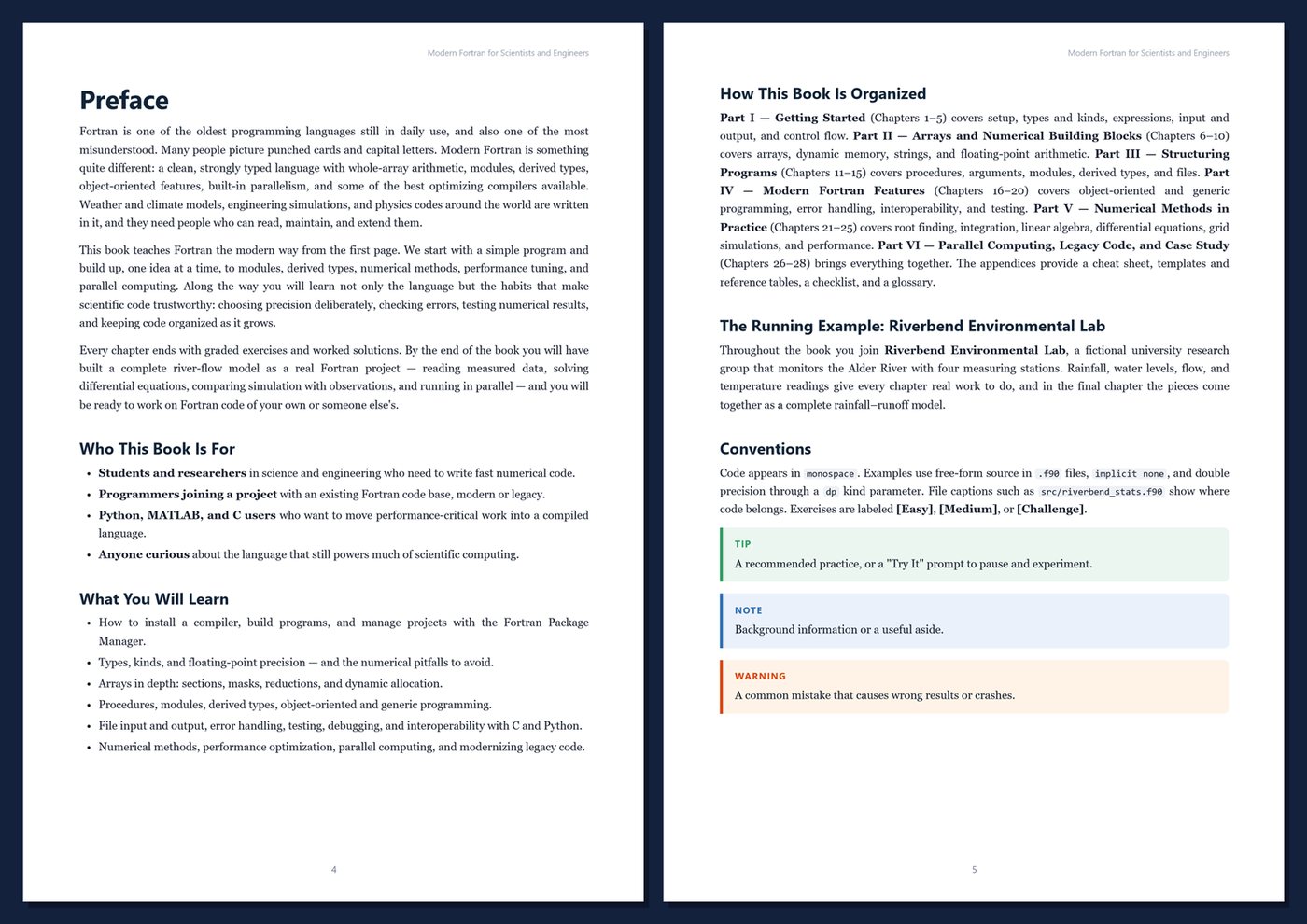
Table Of Contents
Part I — Getting Started
- Ch 1 · Why Fortran Today: Where It Shines in Science and Engineering
- Ch 2 · Setting Up: Compilers, the Fortran Package Manager, and Your First Program
- Ch 3 · Variables, Types, and Kinds: Integers, Reals, and Precision
- Ch 4 · Expressions, Intrinsic Functions, and Basic Input and Output
- Ch 5 · Control Flow: if, select case, and do Loops
Part II — Arrays and Numerical Building Blocks
- Ch 6 · Arrays: Declaration, Indexing, and Whole-Array Operations
- Ch 7 · Array Sections, Constructors, Masks, and Reductions
- Ch 8 · Allocatable Arrays and Dynamic Memory
- Ch 9 · Character Strings and Text Processing
- Ch 10 · Floating-Point Arithmetic: Precision, Rounding, and Numerical Pitfalls
Part III — Structuring Programs
- Ch 11 · Procedures: Functions and Subroutines
- Ch 12 · Arguments in Depth: intent, optional, Assumed-Shape Arrays, pure and elemental
- Ch 13 · Modules: Organizing Code, Visibility, and Explicit Interfaces
- Ch 14 · Derived Types: Building Your Own Data Structures
- Ch 15 · File Input and Output: Formatted, Unformatted, and Stream Access
Part IV — Modern Fortran Features
- Ch 16 · Object-Oriented Fortran: Type-Bound Procedures, Extension, and Polymorphism
- Ch 17 · Generic Programming: Generic Interfaces, Operator Overloading, and Abstract Interfaces
- Ch 18 · Robust Programs: Error Handling with iostat, stat, and error stop
- Ch 19 · Interoperability: Calling C from Fortran and Fortran from C and Python
- Ch 20 · Testing, Debugging, and Tooling: Compiler Checks, Unit Tests, and fpm
Part V — Numerical Methods in Practice
- Ch 21 · Root Finding and Numerical Integration
- Ch 22 · Linear Algebra: Solving Systems and Using BLAS and LAPACK
- Ch 23 · Ordinary Differential Equations: Euler and Runge–Kutta Methods
- Ch 24 · Simulations on Grids: Finite Differences and Diffusion
- Ch 25 · Performance: Memory Layout, Profiling, and Optimization
Part VI — Parallel Computing, Legacy Code, and Case Study
- Ch 26 · Parallel Fortran: do concurrent, OpenMP, and an Introduction to Coarrays
- Ch 27 · Working with Legacy Code: From FORTRAN 77 to Modern Fortran
- Ch 28 · Case Study: Building the Riverbend River-Flow Model
Appendices
- App A · Modern Fortran Cheat Sheet
- App B · Templates and Reference Tables
- App C · Code Review and Numerical Checklist
- App D · Glossary
WHO IT IS FOR
Students and researchers in science and engineering, programmers joining a project with existing Fortran code, Python, MATLAB, and C users who need fast numerical code, and anyone curious about the language behind much of scientific computing.
FORMAT
PDF (A4), 486 pages, English, clickable table of contents and PDF bookmarks. 1st Edition, 2026. Published by thenexbooks.
Book details
| Detail | |
|---|---|
| Pages | 486 |
| Format | PDF (A4) |
| Language | English |
| Level | Beginner to Intermediate |
| Edition | 1st Edition, 2026 |
| Download on this site | Free sample, first 20 pages (PDF) |
| Publisher | thenexbooks |
Files you get
No reviews yet. Only buyers can review.
More from thenexbooks