 1 / 11
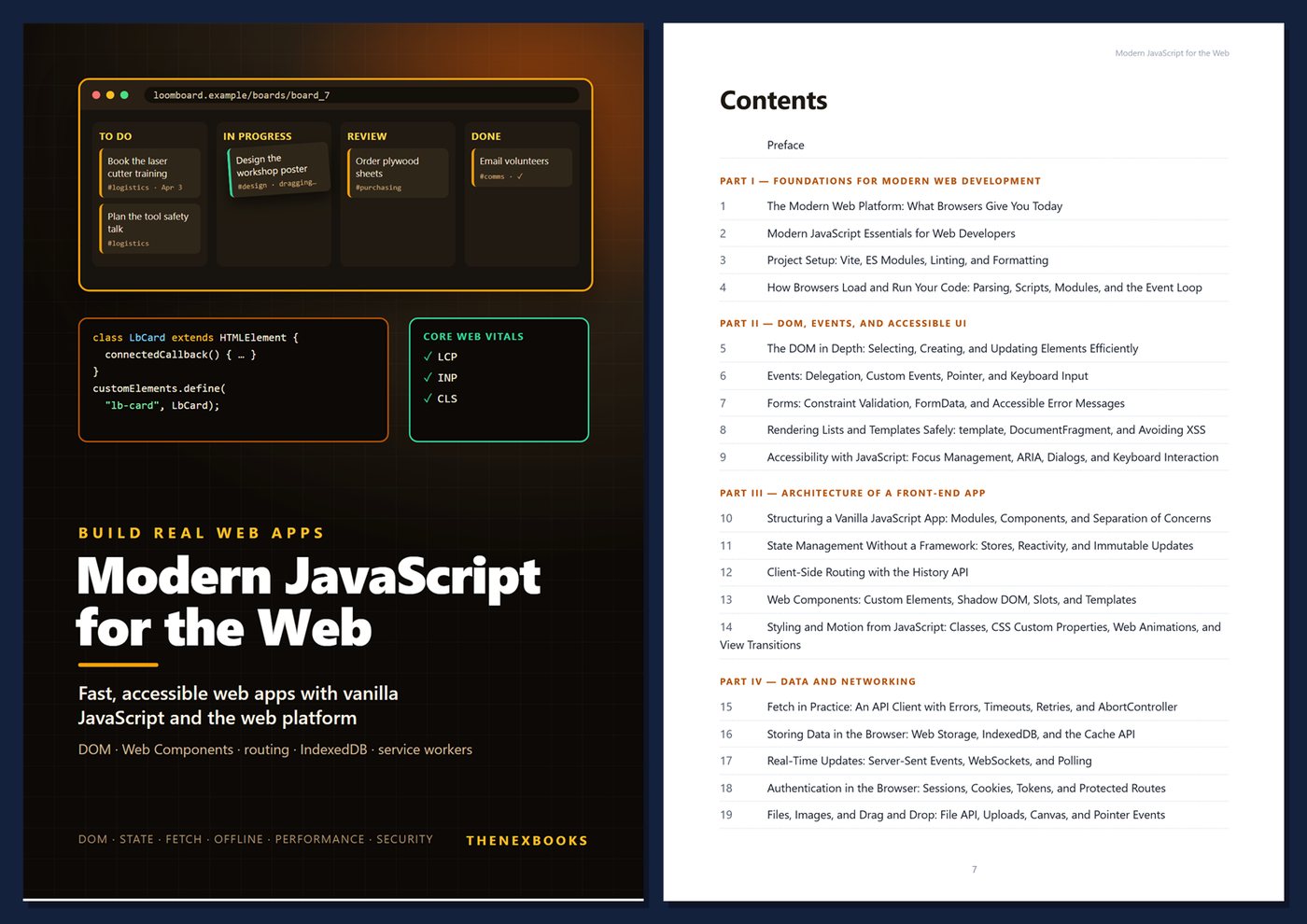
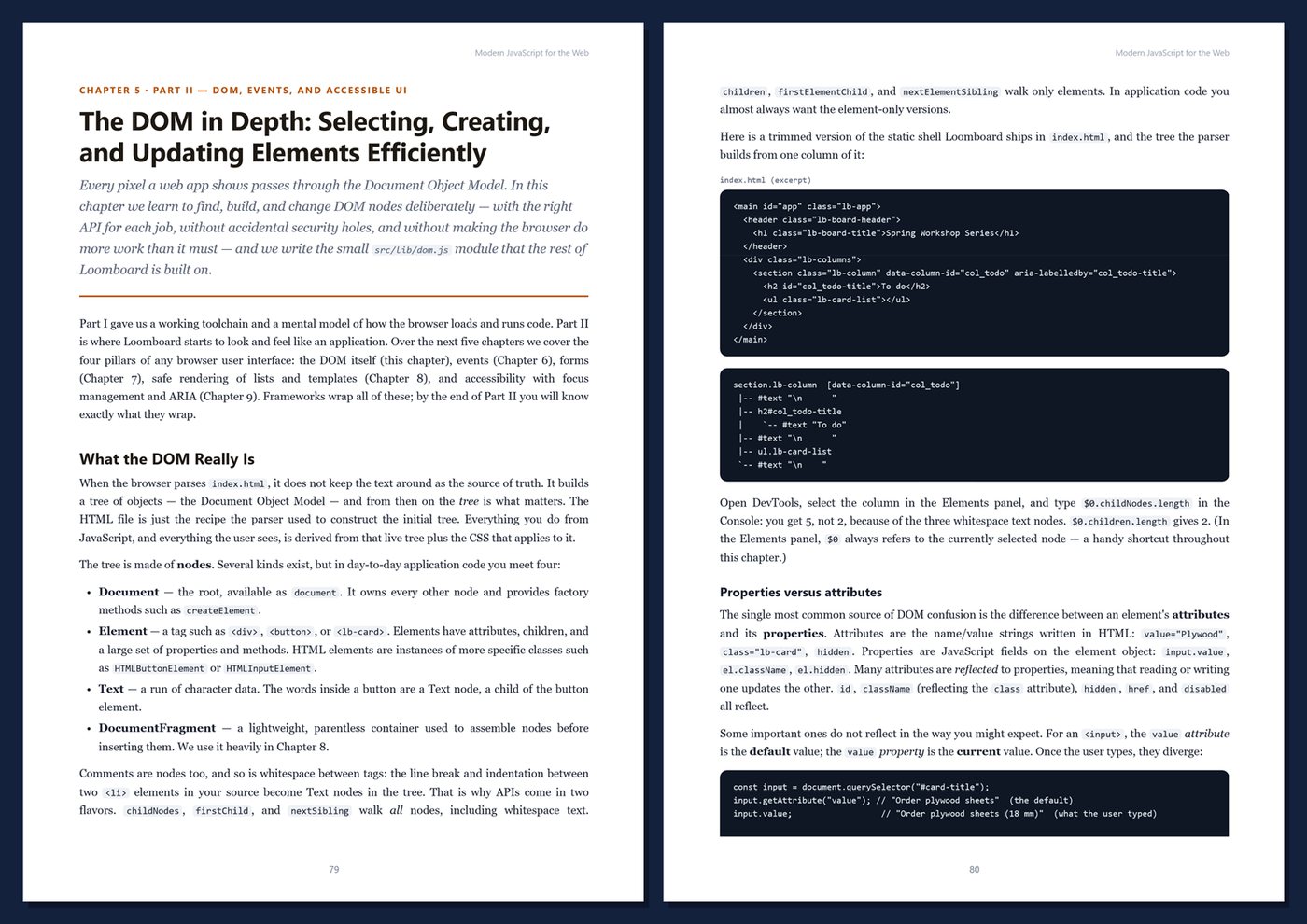
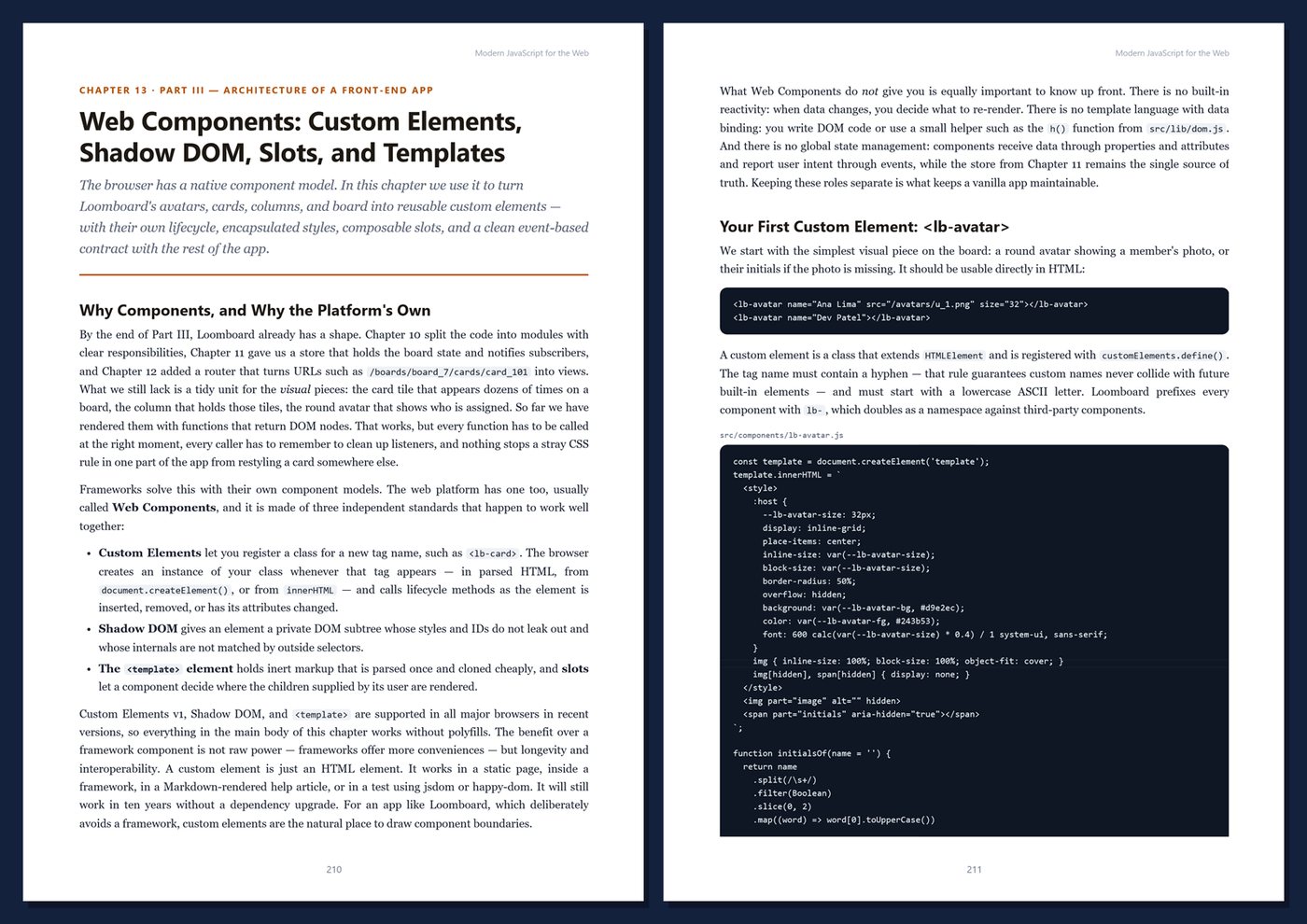
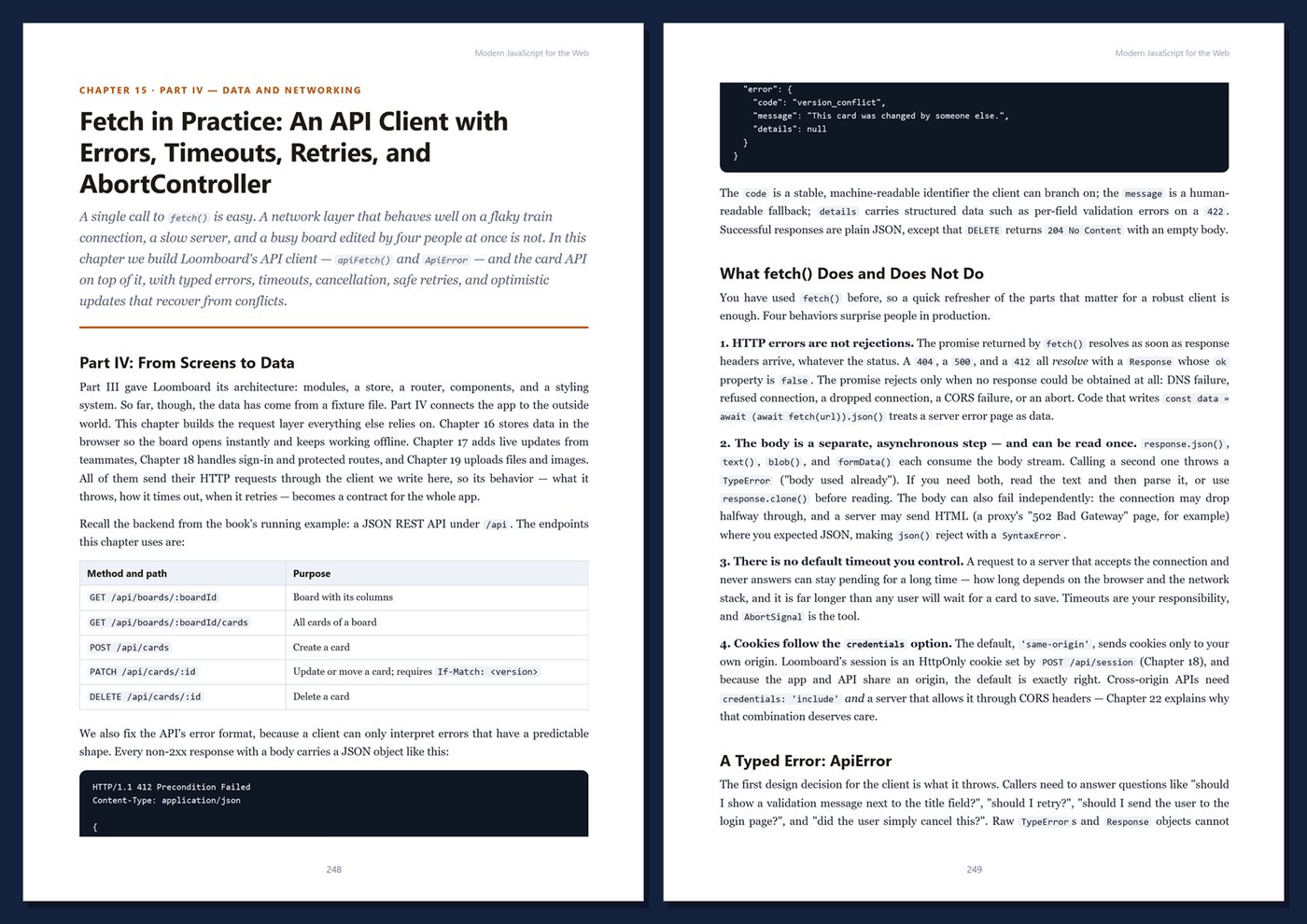
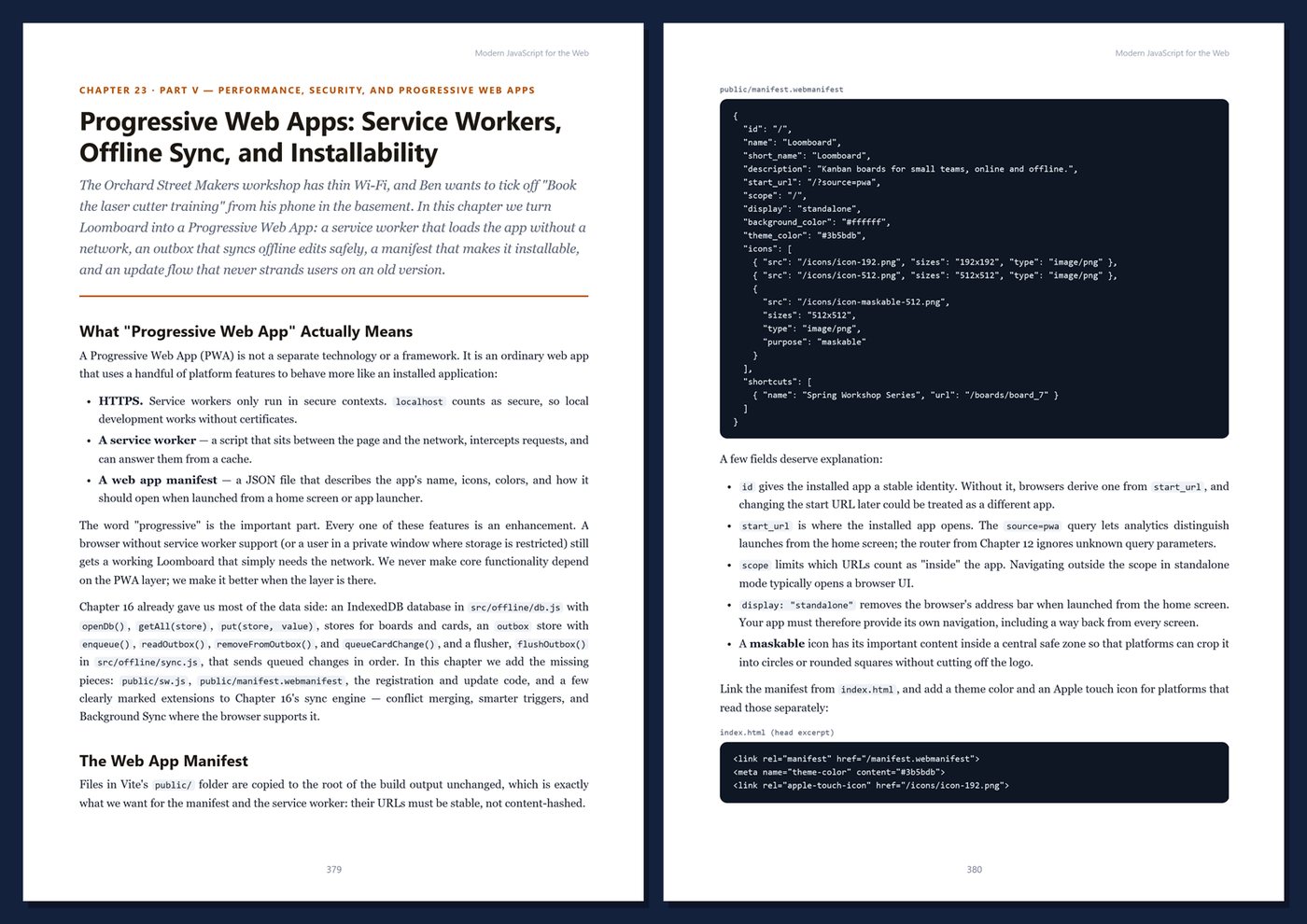
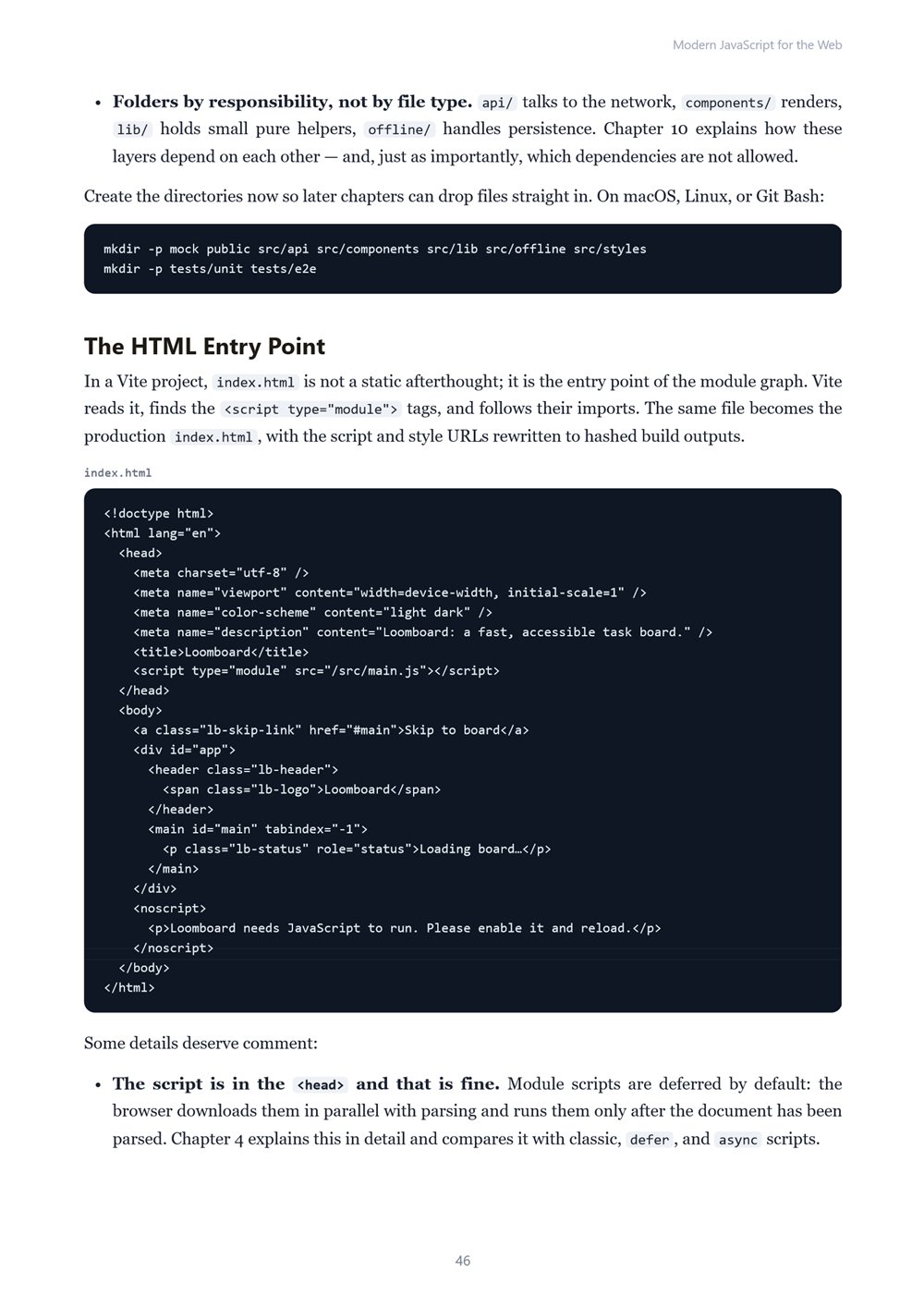
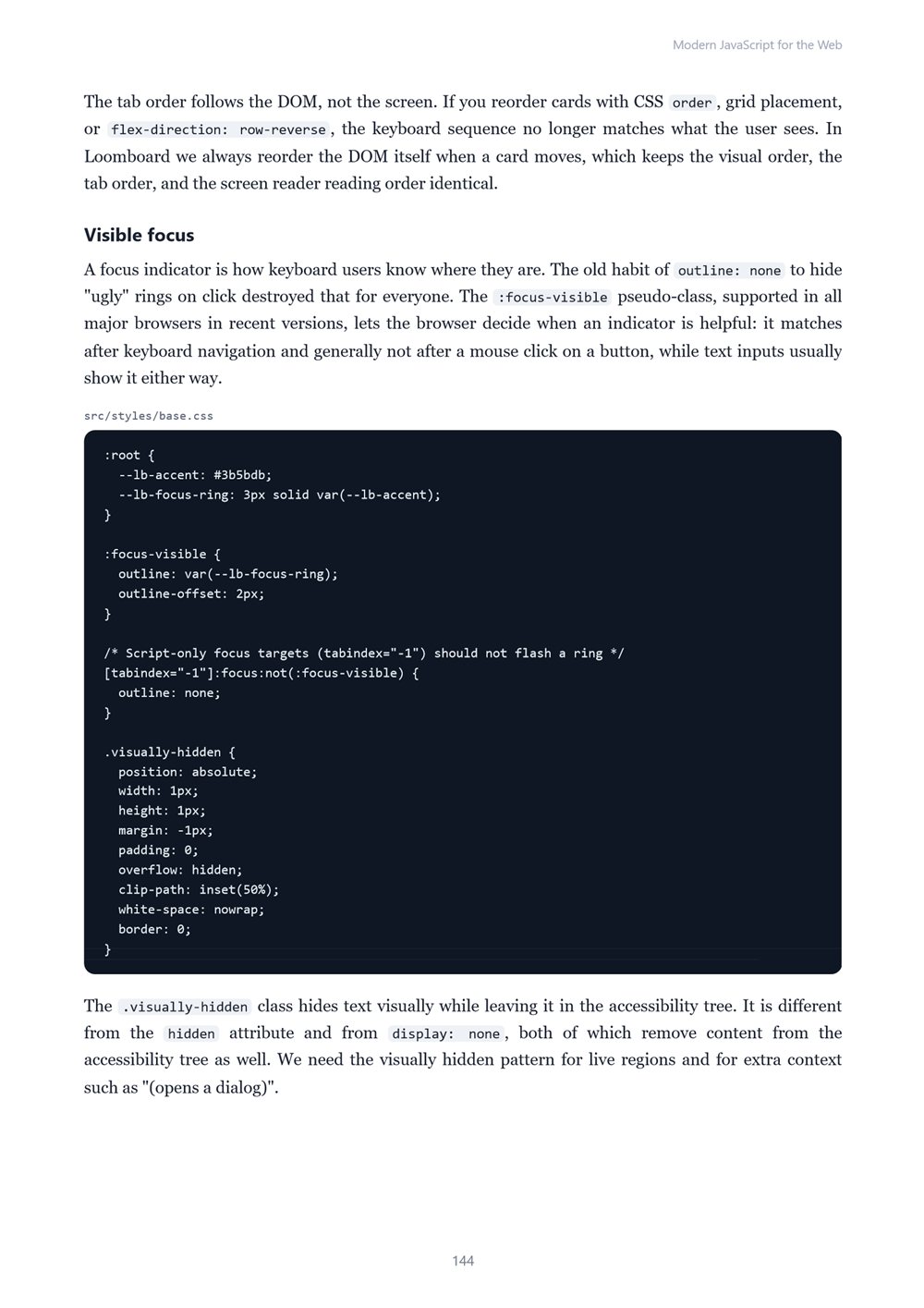
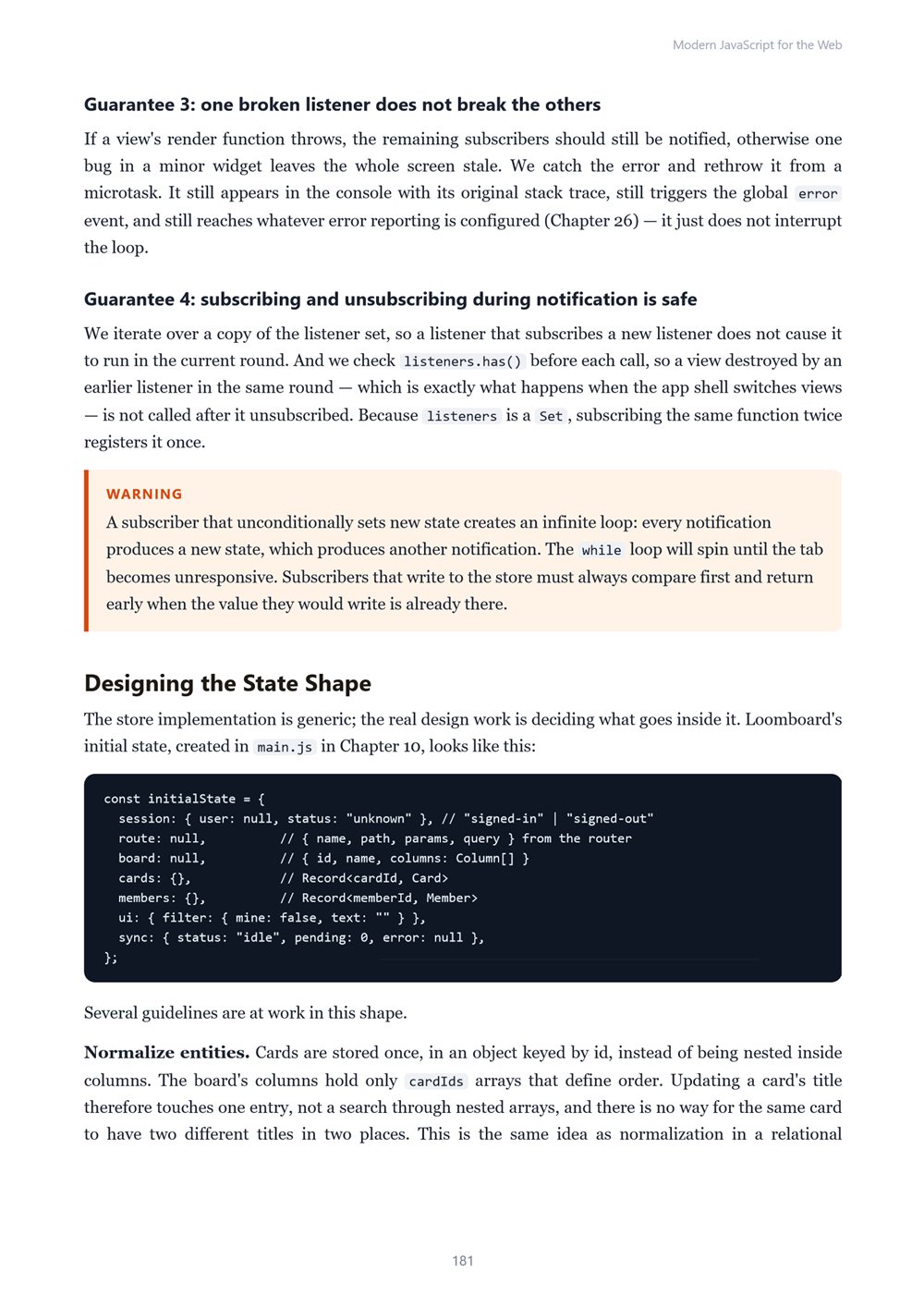
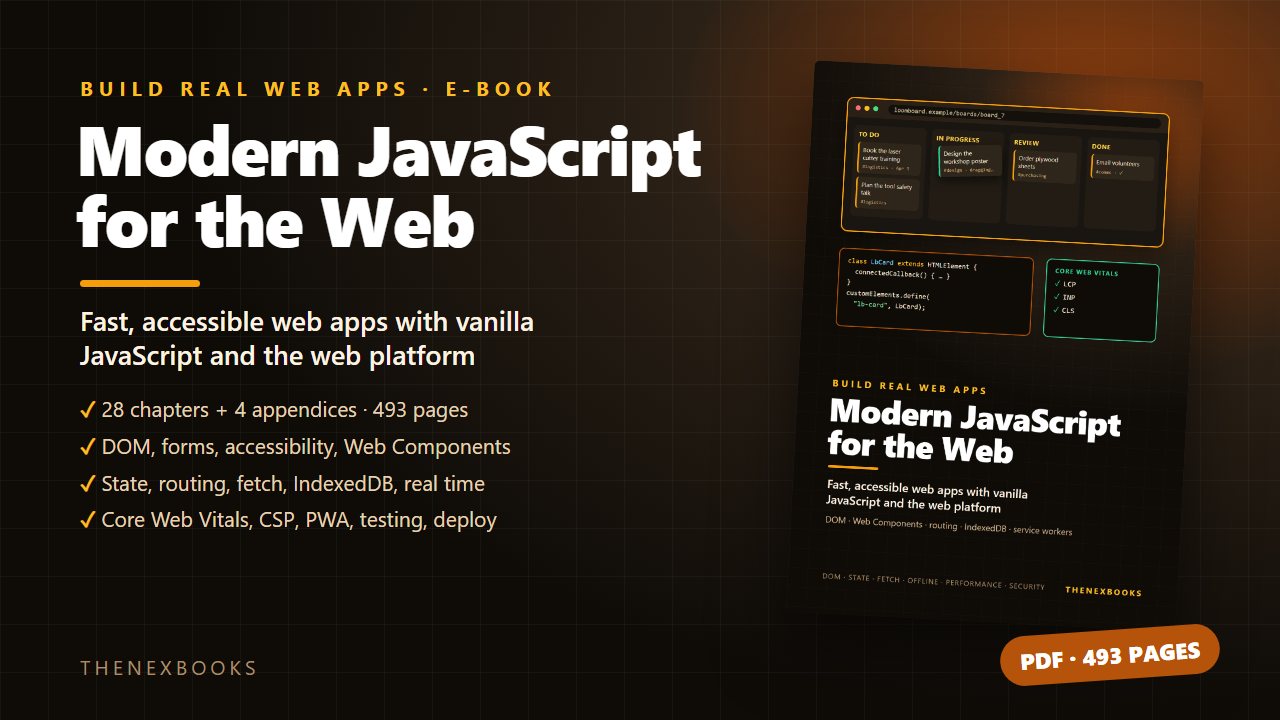
A 493-page practical guide to building production-quality web apps with vanilla JavaScript and the web platform: DOM, accessibility, state, routing, Web Components, networking, offline, performance, security, PWA, testing, and deployment.
Build Fast, Accessible Web Apps with Vanilla JavaScript and the Web Platform
Read before you buy: the PDF here is a free sample — the first 20 pages of the 493-page book (payments, sales and reviews on this demo site are sample data). Get the full e-book at thenexbooks on Gumroad.
You don't need a heavy framework to build a great web app. You need to know the platform.
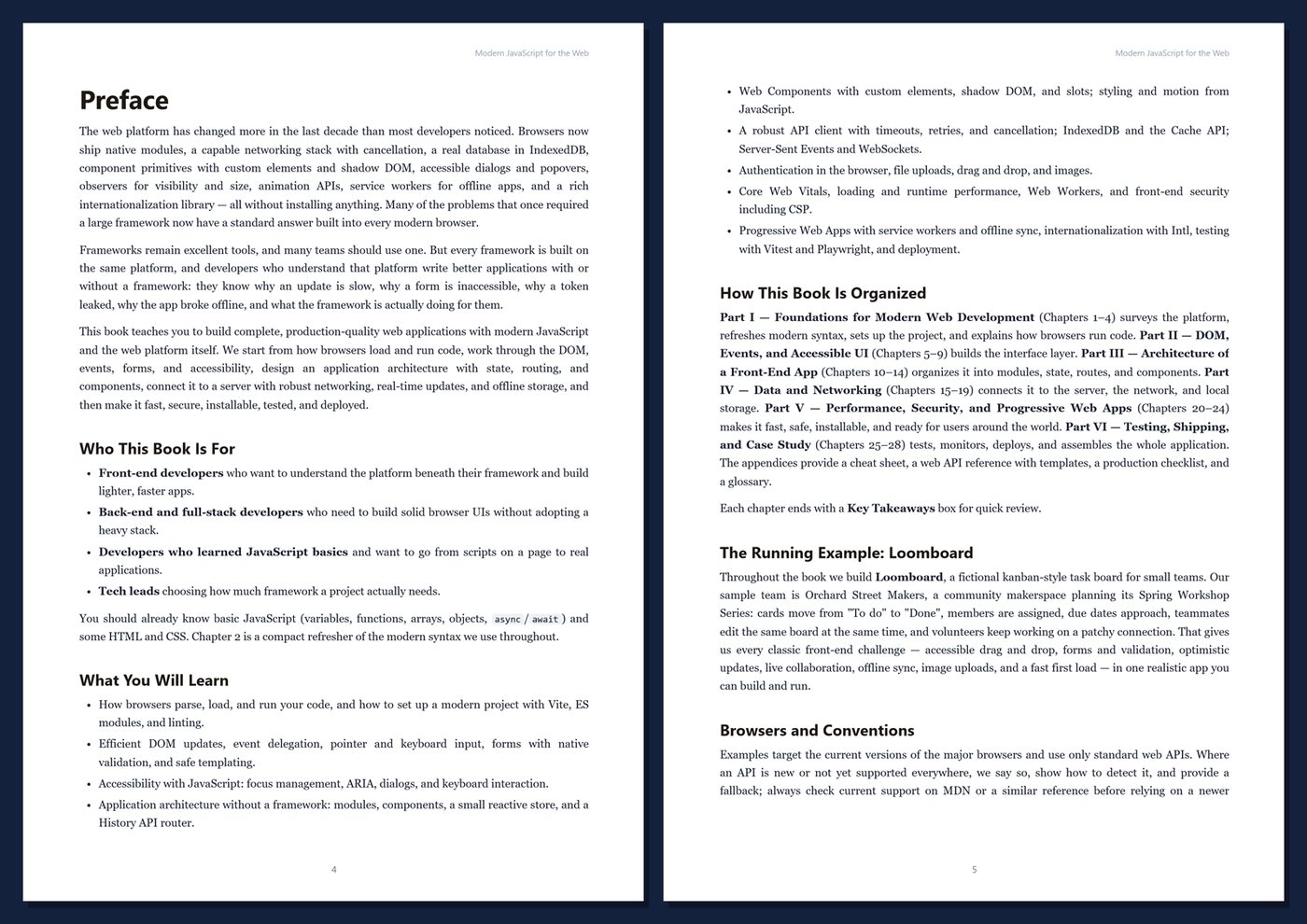
Modern browsers ship native modules, cancellable networking, a real database, component primitives, accessible dialogs and popovers, observers, animation APIs, service workers, and a rich internationalization library — all built in. Developers who understand that platform write better applications with or without a framework: they know why an update is slow, why a form is inaccessible, why a token leaked, and why the app broke offline.
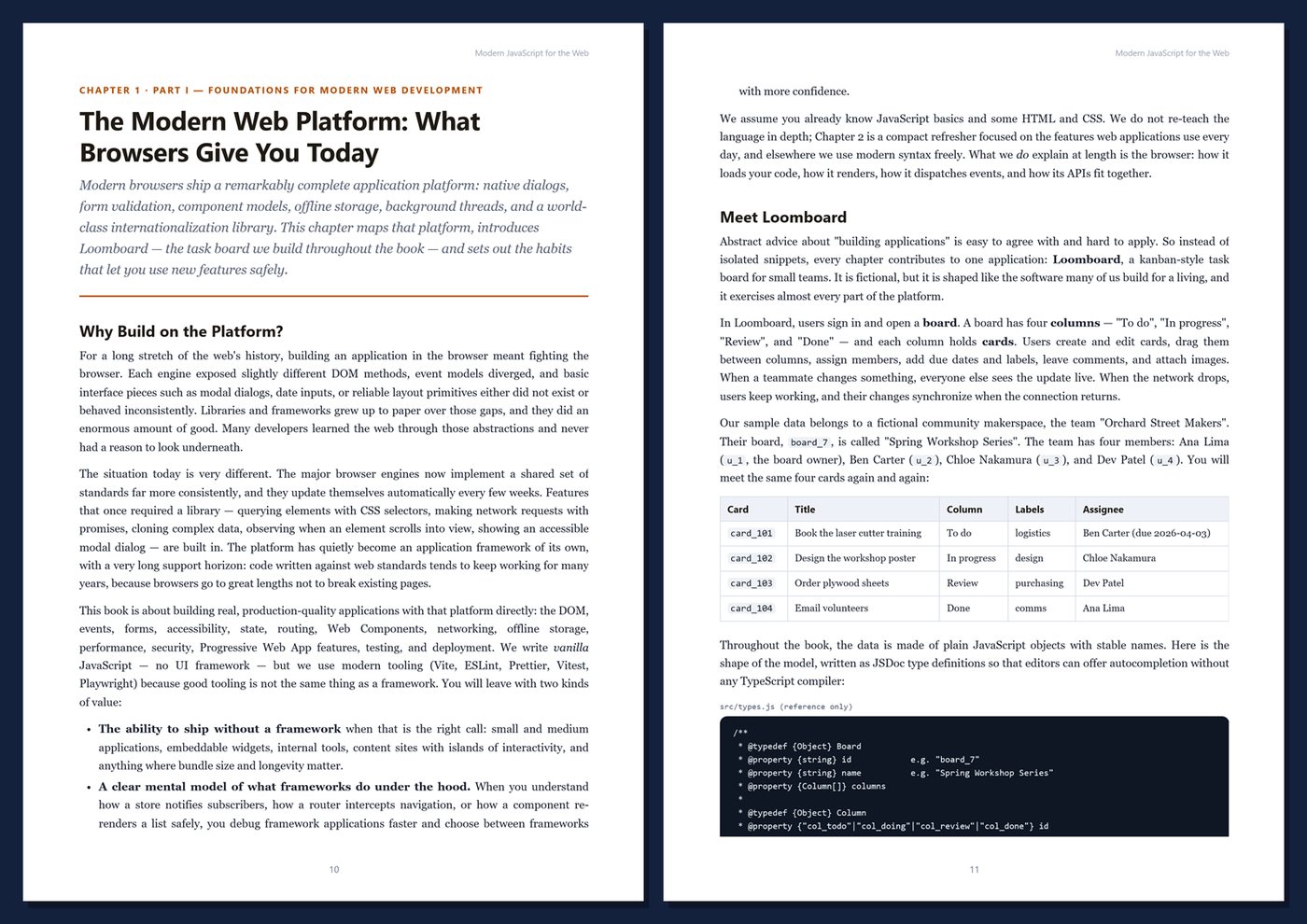
This book teaches you to build complete, production-quality web applications with modern JavaScript and the web platform itself. One realistic running example ties it all together: Loomboard, a kanban-style task board for small teams with accessible drag and drop, forms and validation, optimistic updates, live collaboration, offline sync, image uploads, and a fast first load.
- 493 pages · 28 chapters + 4 appendices
- How browsers parse, load, and run your code — and a modern project setup with Vite, ES modules, ESLint, and Prettier
- Efficient DOM updates, event delegation, pointer and keyboard input, and forms with native validation
- Safe templating without XSS, and accessibility with JavaScript: focus management, ARIA, dialogs, keyboard interaction
- App architecture without a framework: modules, components, a small reactive store, and a History API router
- Web Components with custom elements, shadow DOM, and slots; styling and motion from JavaScript
- A robust fetch-based API client with timeouts, retries, and AbortController
- IndexedDB, the Cache API, Server-Sent Events, WebSockets, authentication, files, and drag and drop
- Core Web Vitals, loading and runtime performance, Web Workers, and front-end security with CSP
- Progressive Web Apps with service workers and offline sync, and internationalization with Intl
- Testing with Vitest and Playwright, monitoring, deployment, and a complete case study
- Browser-support notes and fallbacks for newer APIs — no hype, no framework lock-in
Table Of Contents
Part I — Foundations for Modern Web Development
- Ch 1 · The Modern Web Platform: What Browsers Give You Today
- Ch 2 · Modern JavaScript Essentials for Web Developers
- Ch 3 · Project Setup: Vite, ES Modules, Linting, and Formatting
- Ch 4 · How Browsers Load and Run Your Code: Parsing, Scripts, Modules, and the Event Loop
Part II — DOM, Events, and Accessible UI
- Ch 5 · The DOM in Depth: Selecting, Creating, and Updating Elements Efficiently
- Ch 6 · Events: Delegation, Custom Events, Pointer, and Keyboard Input
- Ch 7 · Forms: Constraint Validation, FormData, and Accessible Error Messages
- Ch 8 · Rendering Lists and Templates Safely: template, DocumentFragment, and Avoiding XSS
- Ch 9 · Accessibility with JavaScript: Focus Management, ARIA, Dialogs, and Keyboard Interaction
Part III — Architecture of a Front-End App
- Ch 10 · Structuring a Vanilla JavaScript App: Modules, Components, and Separation of Concerns
- Ch 11 · State Management Without a Framework: Stores, Reactivity, and Immutable Updates
- Ch 12 · Client-Side Routing with the History API
- Ch 13 · Web Components: Custom Elements, Shadow DOM, Slots, and Templates
- Ch 14 · Styling and Motion from JavaScript: Classes, CSS Custom Properties, Web Animations, and View Transitions
Part IV — Data and Networking
- Ch 15 · Fetch in Practice: An API Client with Errors, Timeouts, Retries, and AbortController
- Ch 16 · Storing Data in the Browser: Web Storage, IndexedDB, and the Cache API
- Ch 17 · Real-Time Updates: Server-Sent Events, WebSockets, and Polling
- Ch 18 · Authentication in the Browser: Sessions, Cookies, Tokens, and Protected Routes
- Ch 19 · Files, Images, and Drag and Drop: File API, Uploads, Canvas, and Pointer Events
Part V — Performance, Security, and Progressive Web Apps
- Ch 20 · Loading Performance: Core Web Vitals, Resource Hints, and Code Splitting
- Ch 21 · Runtime Performance: Rendering, Layout Thrashing, Long Tasks, and Web Workers
- Ch 22 · Front-End Security: XSS, Content Security Policy, CSRF, CORS, and Dependencies
- Ch 23 · Progressive Web Apps: Service Workers, Offline Sync, and Installability
- Ch 24 · Internationalization and Localization with Intl
Part VI — Testing, Shipping, and Case Study
- Ch 25 · Testing Front-End Code: Unit Tests with Vitest and End-to-End Tests with Playwright
- Ch 26 · Debugging and Monitoring: DevTools, Error Reporting, and Real User Monitoring
- Ch 27 · Building and Deploying: Production Builds, Environment Configuration, Caching, and Static Hosting
- Ch 28 · Case Study: Building Loomboard from Empty Folder to Production
Appendices
- App A · Modern Web JavaScript Cheat Sheet
- App B · Web API Reference and Templates
- App C · Production Checklist
- App D · Glossary
WHO IT IS FOR
Front-end developers who want to understand the platform beneath their framework, back-end and full-stack developers who need solid browser UIs without a heavy stack, developers moving from scripts on a page to real applications, and tech leads deciding how much framework a project needs. You should know basic JavaScript, HTML, and CSS.
FORMAT
PDF (A4), 493 pages, English, clickable table of contents and PDF bookmarks. 1st Edition, 2026. Published by thenexbooks.
This book is independent and is not affiliated with or endorsed by any browser vendor. JavaScript is a trademark of Oracle Corporation; all other product names are trademarks of their respective owners.
Book details
| Detail | |
|---|---|
| Pages | 493 |
| Format | PDF (A4) |
| Language | English |
| Level | Intermediate |
| Edition | 1st Edition, 2026 |
| Download on this site | Free sample, first 20 pages (PDF) |
| Publisher | thenexbooks |
ไฟล์ที่คุณจะได้รับ
ยังไม่มีรีวิว เฉพาะผู้ซื้อเท่านั้นที่รีวิวได้
สินค้าอื่นจาก thenexbooks