 1 / 11
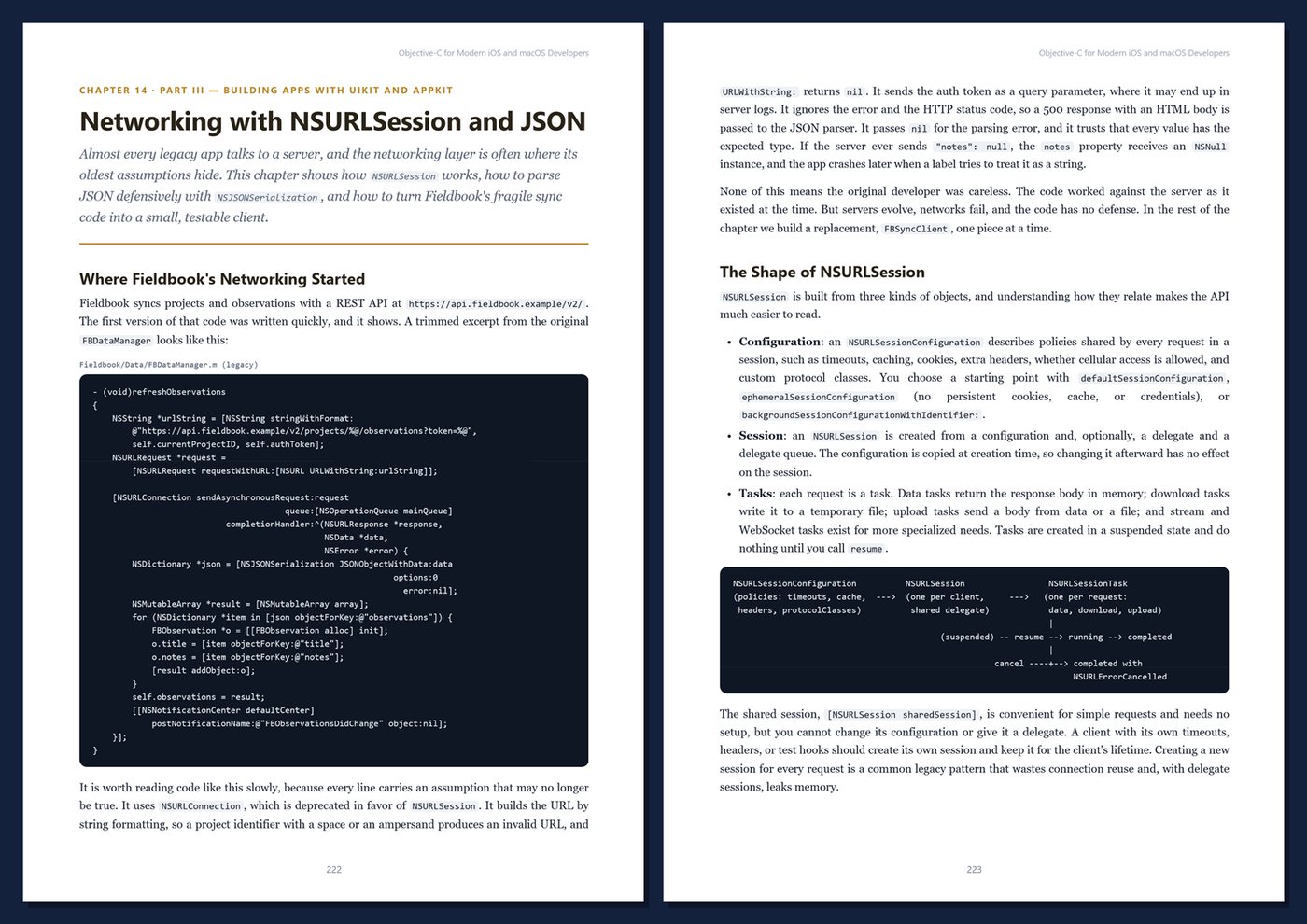
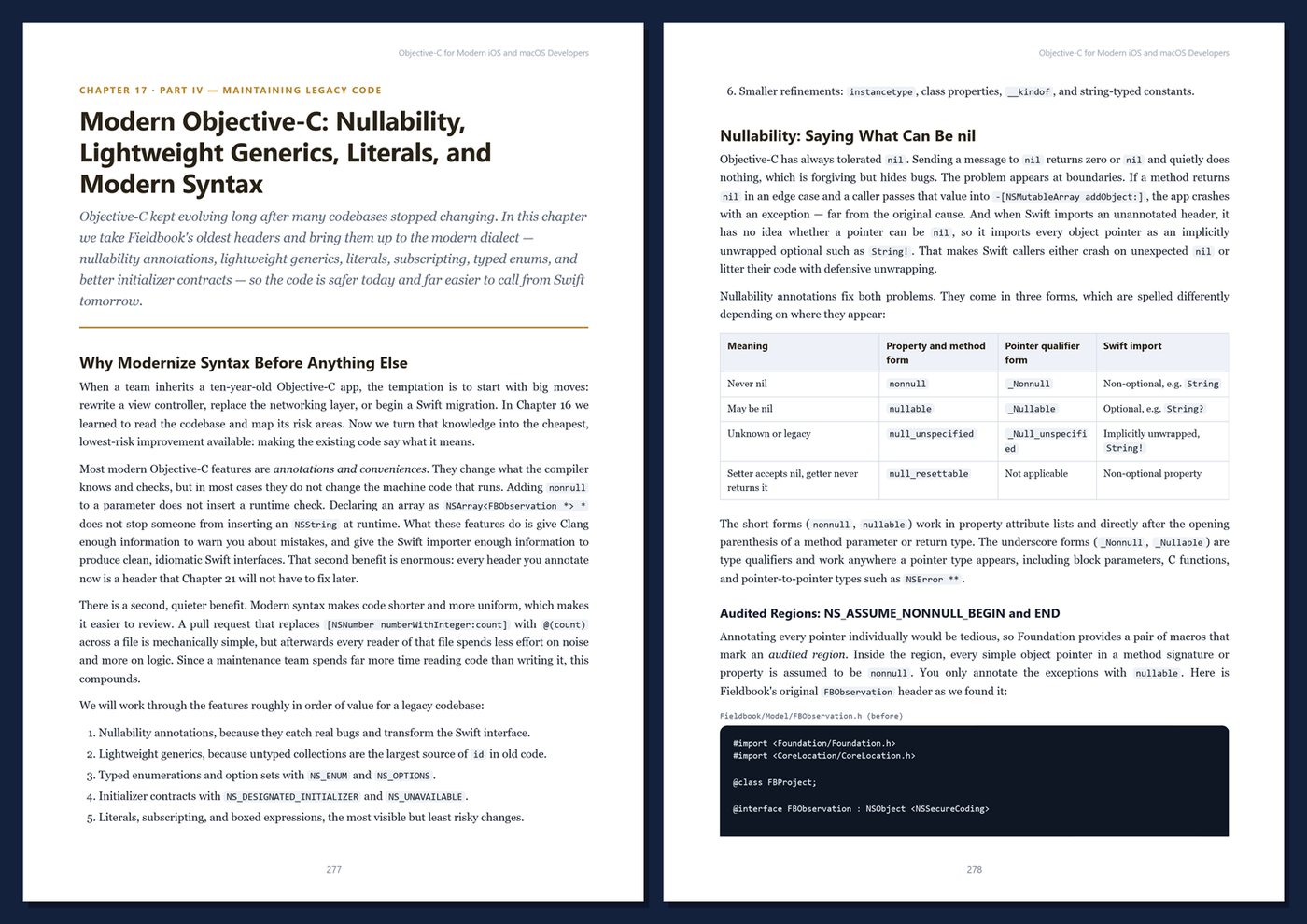
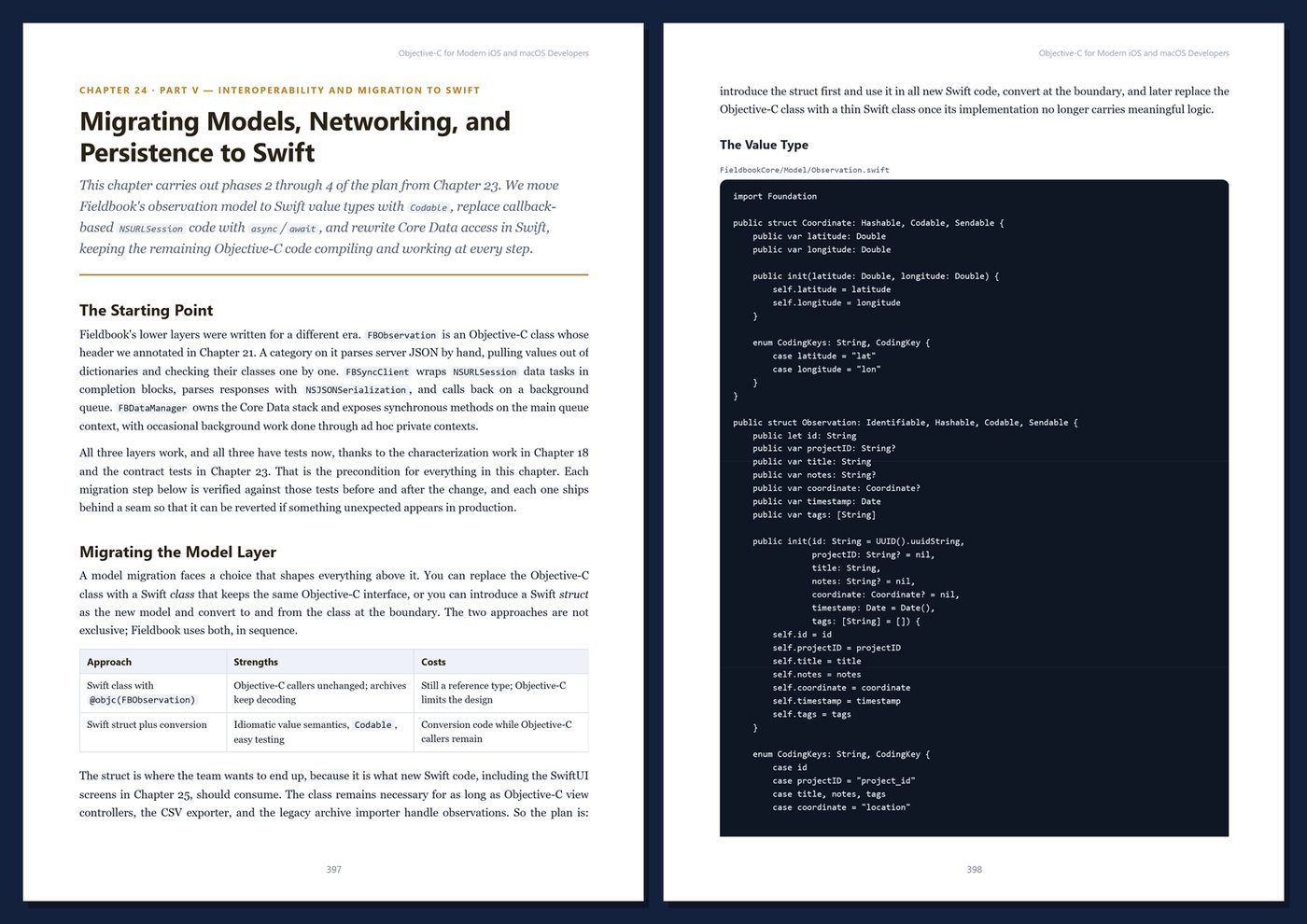
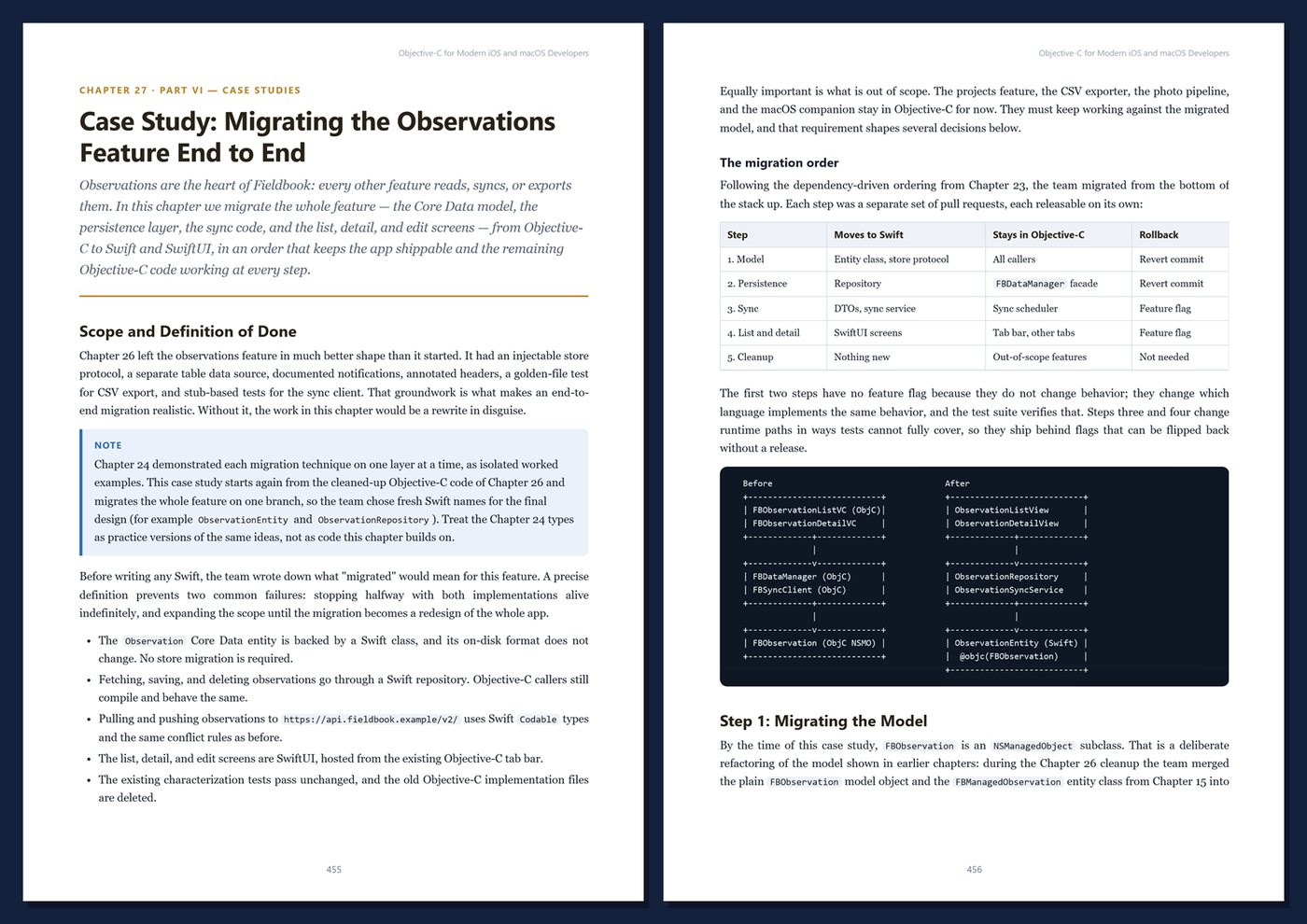
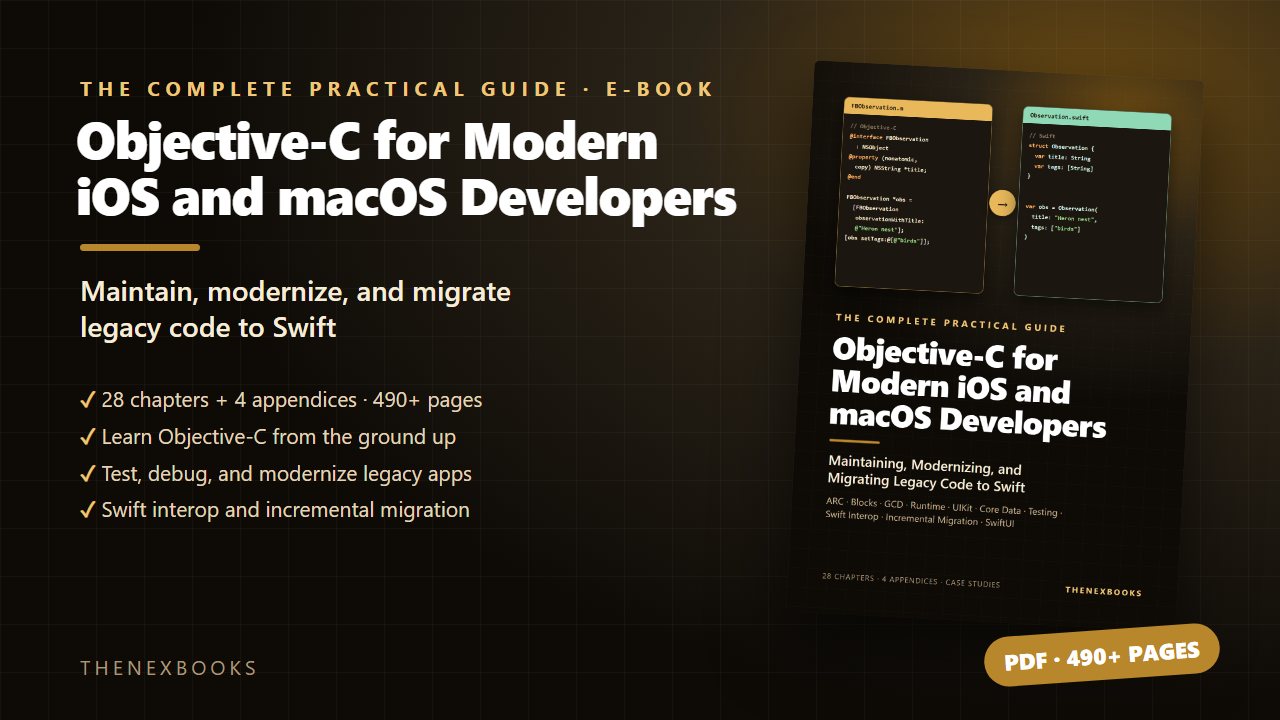
A 496-page, hands-on guide to reading, maintaining, and modernizing Objective-C apps, and migrating them to Swift and SwiftUI one safe step at a time, without a risky rewrite.
Maintaining, Modernizing, and Migrating Legacy Code to Swift
Read before you buy: the PDF here is a free sample — the first 20 pages of the 496-page book (payments, sales and reviews on this demo site are sample data). Get the full e-book at thenexbooks on Gumroad.
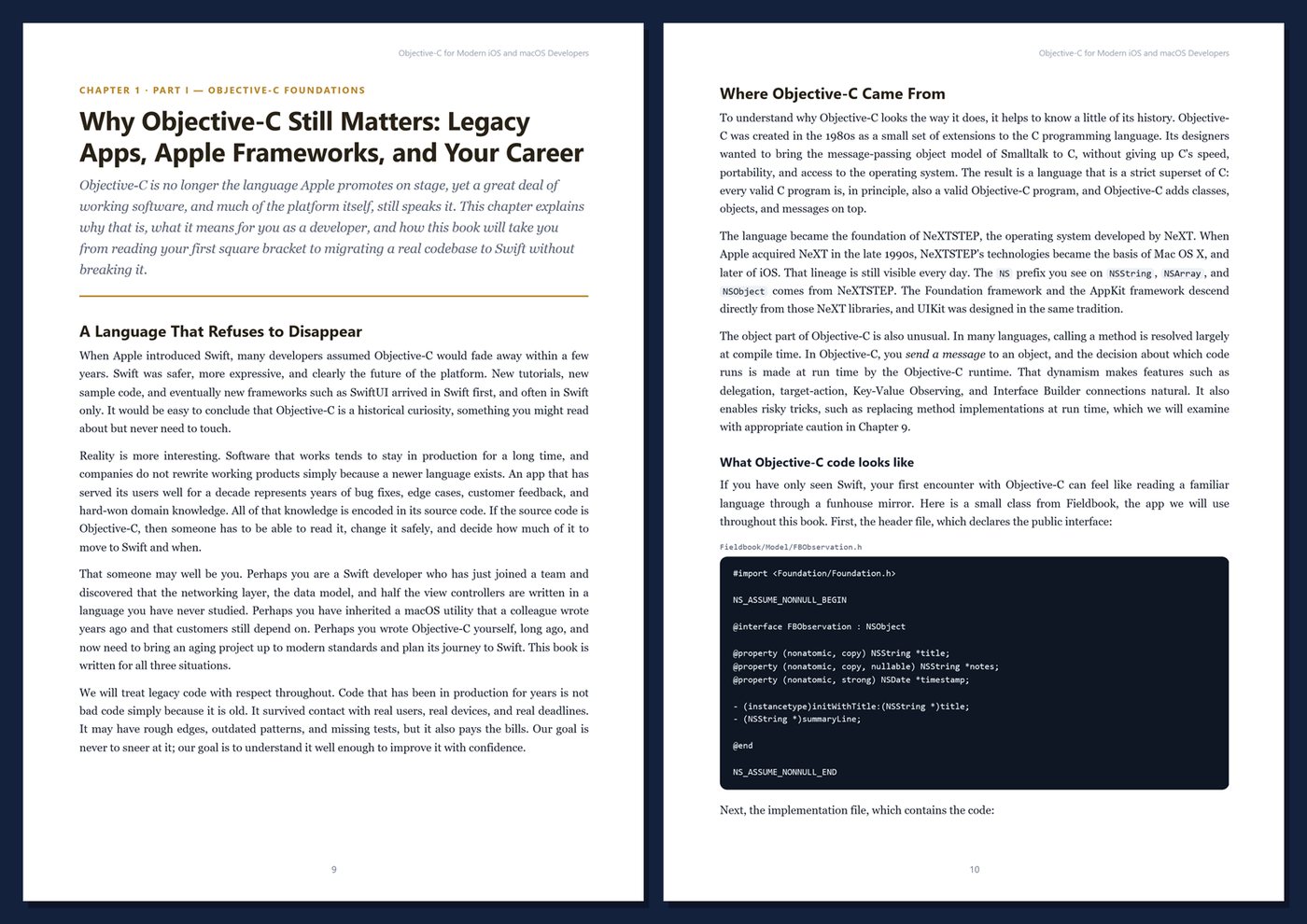
Plenty of successful iOS and macOS apps still run on Objective-C, and someone has to keep them working.
Maybe you are a Swift developer who has just inherited a codebase full of square brackets. Maybe you are maintaining a long-lived macOS utility. Or maybe you wrote Objective-C years ago and now need to modernize an aging project and plan its move to Swift. This book is written for all three situations.
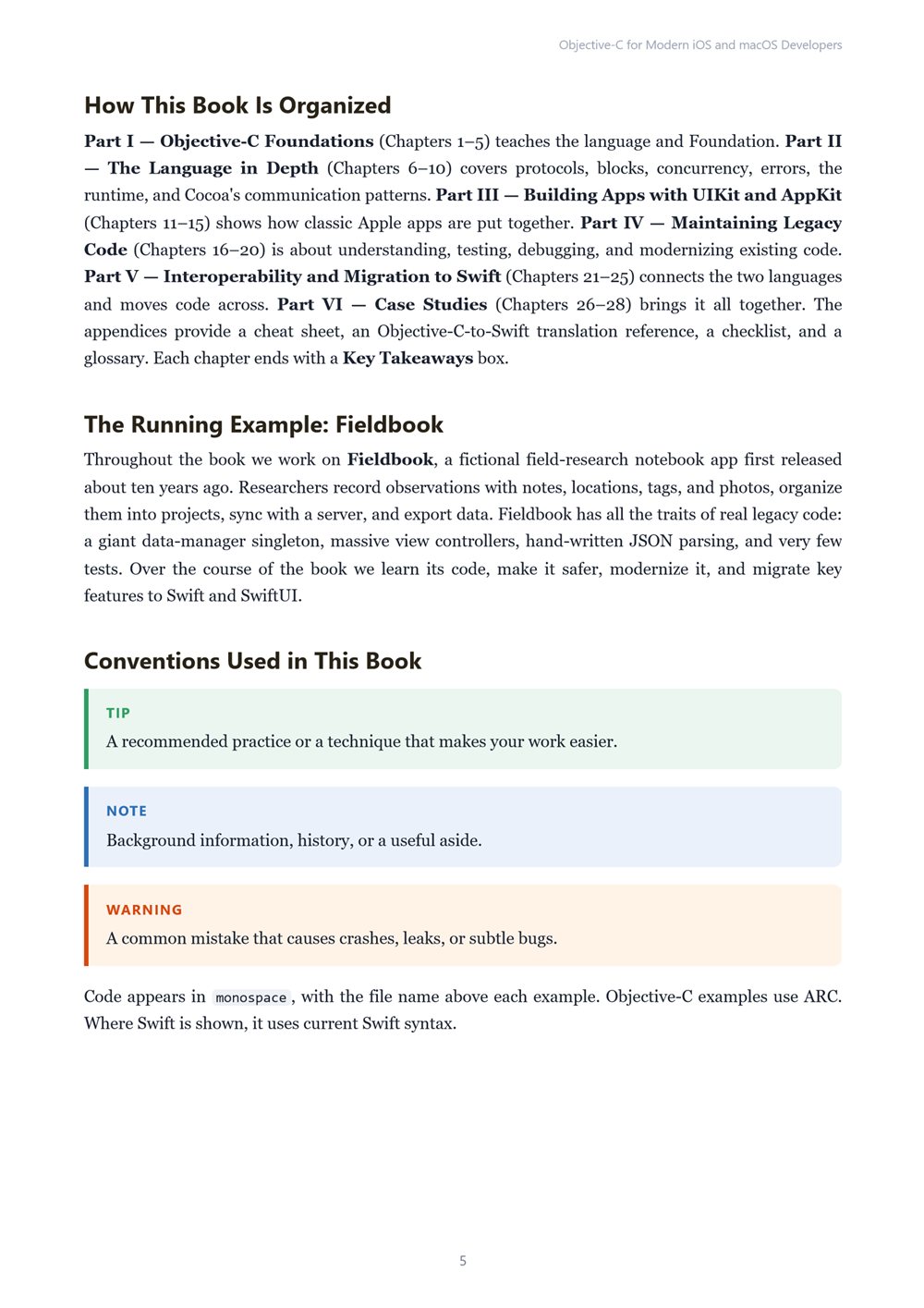
You learn the language properly, then use it on a realistic legacy app. Fieldbook is a fictional ten-year-old field-research app with a giant data-manager singleton, massive view controllers, hand-written JSON parsing and very few tests. Over 28 chapters you read it, test it, debug it, modernize it, and migrate key features to Swift and SwiftUI, keeping the app shippable at every step.
WHAT'S INSIDE
➔ 496 pages · 28 chapters in 6 parts + 4 appendices
➔ Objective-C from the ground up: messages, classes, headers, properties, and ARC
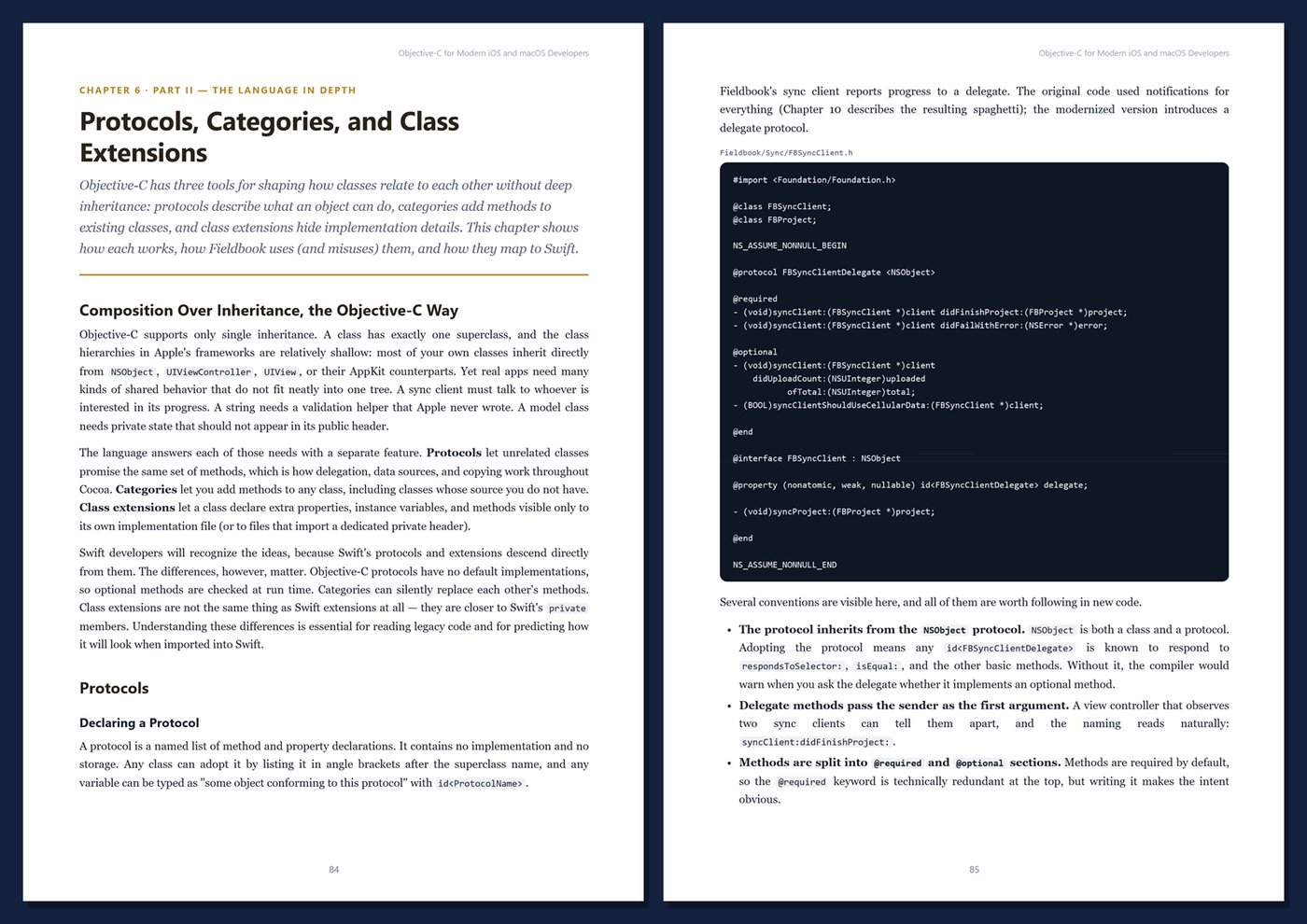
➔ Foundation, protocols, categories, blocks, Grand Central Dispatch, and error handling
➔ The Objective-C runtime: dynamic dispatch, introspection, and method swizzling
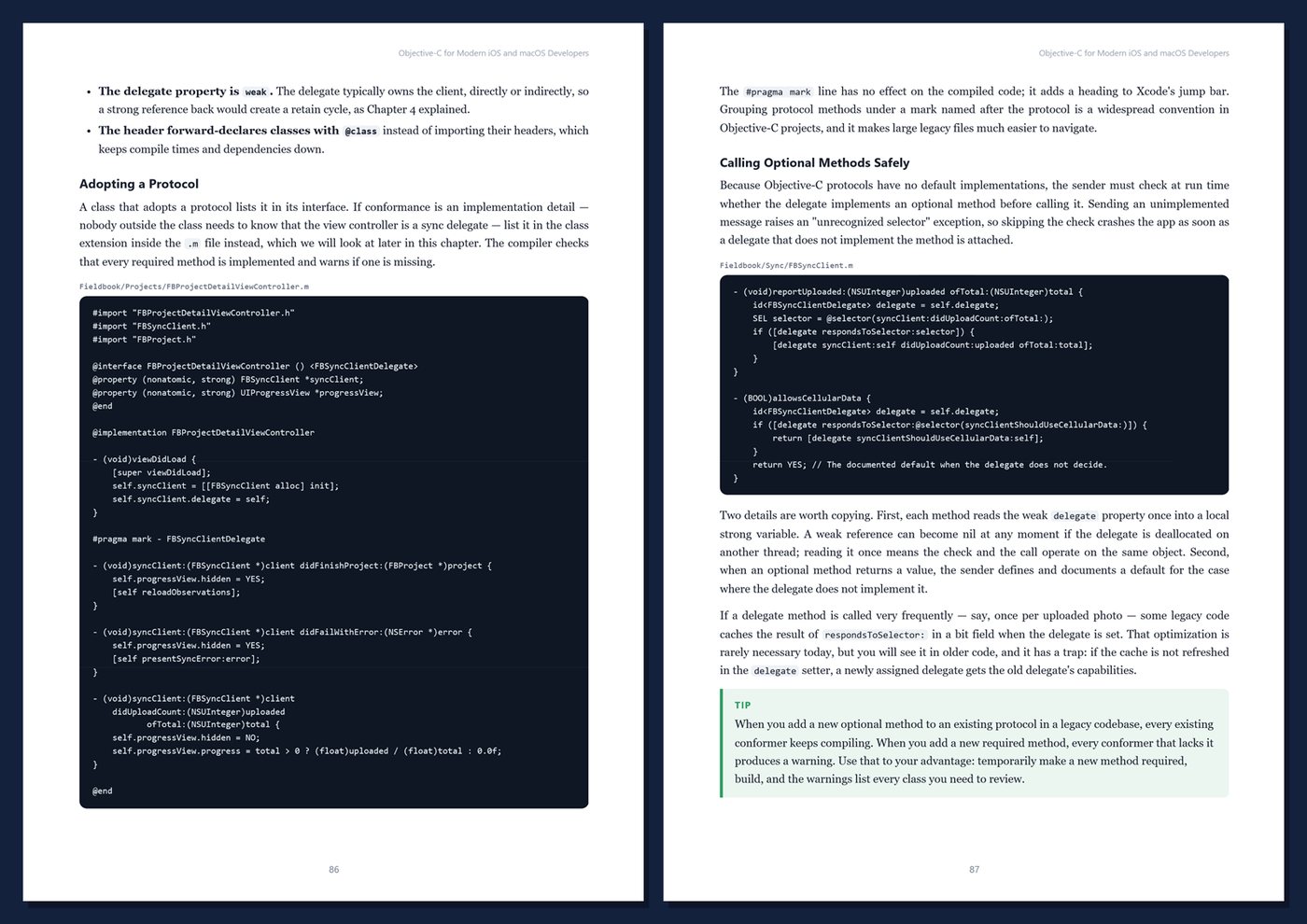
➔ Delegation, target-action, notifications, KVC, and KVO
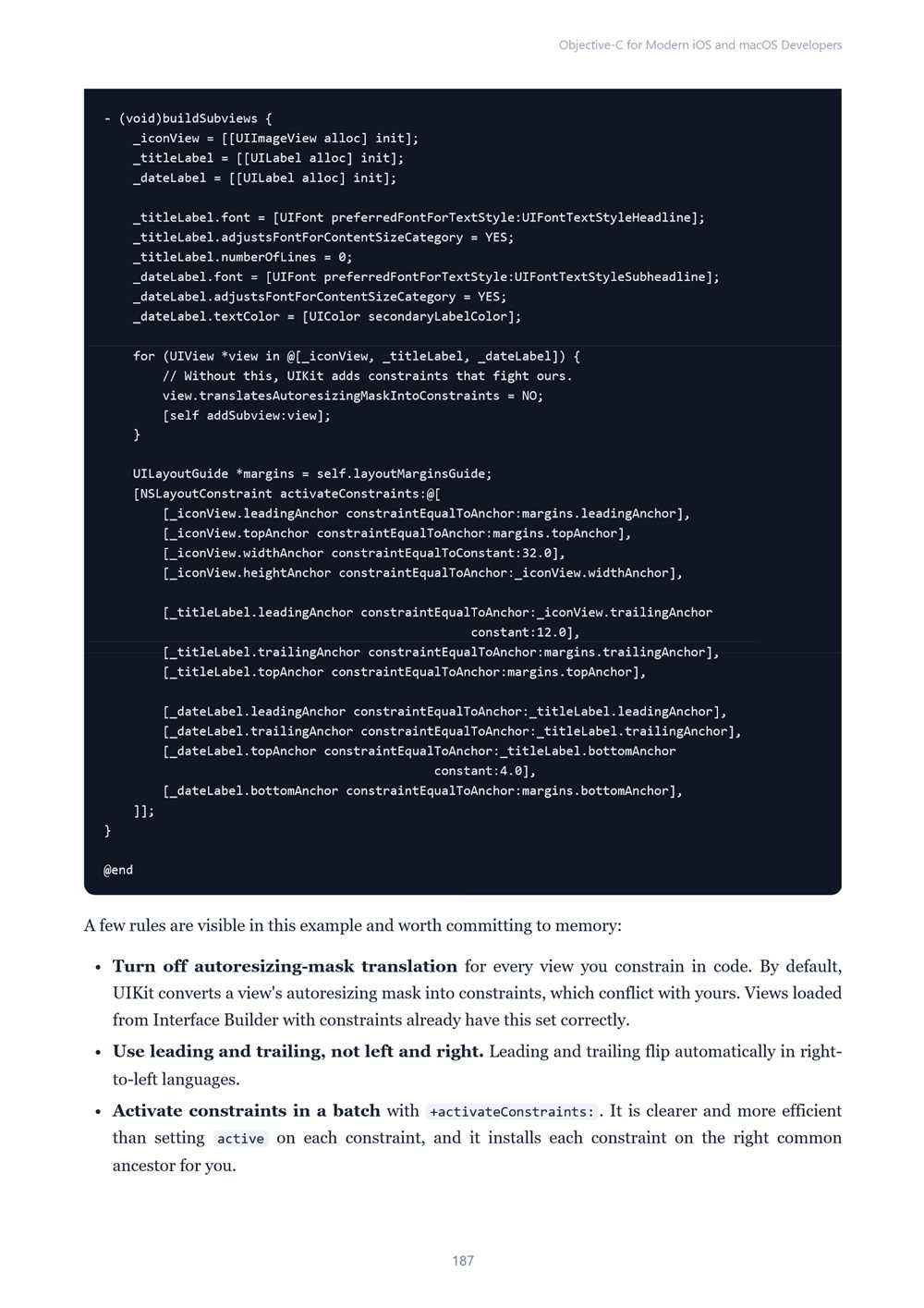
➔ UIKit and AppKit apps: view controllers, Auto Layout, table views, networking, and Core Data
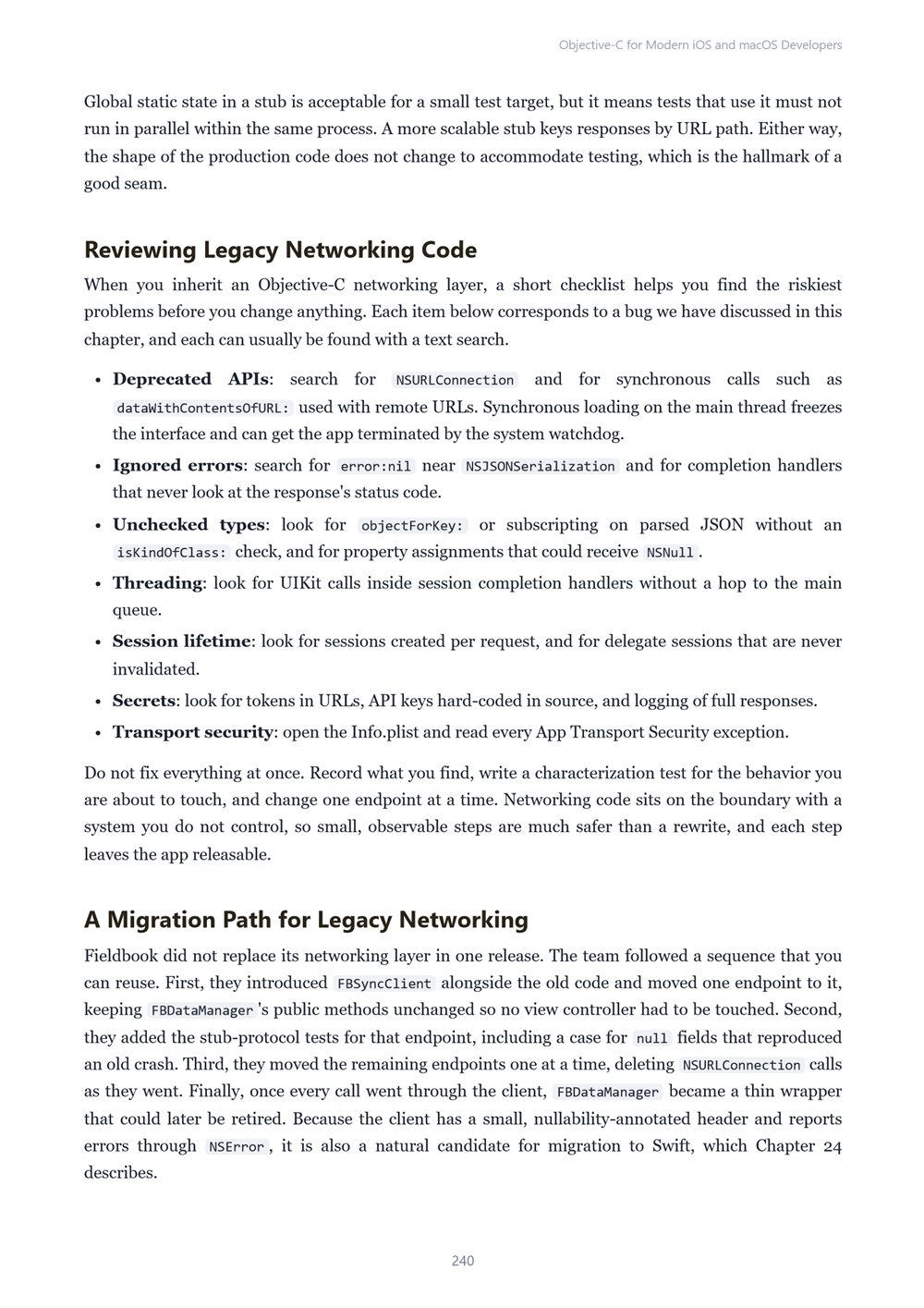
➔ Reading, testing (XCTest), debugging (Instruments), and modernizing legacy code
➔ Nullability, lightweight generics, and NS_SWIFT_NAME for great Swift interop
➔ Planning and running an incremental migration to Swift and SwiftUI
➔ Hands-on case studies, plus a cheat sheet, a translation reference, and a migration checklist
Table Of Contents
PART I — OBJECTIVE-C FOUNDATIONS
- Ch 1 · Why Objective-C Still Matters: Legacy Apps, Apple Frameworks, and Your Career
- Ch 2 · The Toolchain: Xcode, Clang, Projects, and Your First Objective-C Program
- Ch 3 · Syntax Essentials: C Roots, Messages, Classes, Methods, and Headers
- Ch 4 · Objects, Properties, and Memory Management with ARC
- Ch 5 · The Foundation Framework: Strings, Collections, Numbers, Dates, and Literals
PART II — THE LANGUAGE IN DEPTH
- Ch 6 · Protocols, Categories, and Class Extensions
- Ch 7 · Blocks and Grand Central Dispatch
- Ch 8 · Error Handling: NSError, Exceptions, and Assertions
- Ch 9 · The Objective-C Runtime: Messaging, Introspection, Dynamic Dispatch, and Method Swizzling
- Ch 10 · Communication Patterns: Delegation, Target-Action, Notifications, KVC, and KVO
PART III — BUILDING APPS WITH UIKIT AND APPKIT
- Ch 11 · UIKit Fundamentals: App and Scene Lifecycle, View Controllers, and the Responder Chain
- Ch 12 · Views, Auto Layout, Table Views, and Collection Views
- Ch 13 · Navigation, Storyboards, XIBs, and Building UI in Code (with AppKit notes)
- Ch 14 · Networking with NSURLSession and JSON
- Ch 15 · Persistence: NSUserDefaults, Files, NSSecureCoding, and Core Data
PART IV — MAINTAINING LEGACY CODE
- Ch 16 · Reading and Understanding a Legacy Codebase
- Ch 17 · Modern Objective-C: Nullability, Lightweight Generics, Literals, and Modern Syntax
- Ch 18 · Testing Legacy Objective-C with XCTest
- Ch 19 · Debugging and Instruments: Leaks, Retain Cycles, Zombies, and Crashes
- Ch 20 · Modernizing the Project: Build Settings, Warnings, Dependencies, and Deprecated APIs
PART V — INTEROPERABILITY AND MIGRATION TO SWIFT
- Ch 21 · Using Objective-C from Swift: Bridging Headers, Nullability, and NS_SWIFT_NAME
- Ch 22 · Using Swift from Objective-C: @objc, the Generated Header, and Limitations
- Ch 23 · Planning an Incremental Migration: Strategy, Order, and Risk Management
- Ch 24 · Migrating Models, Networking, and Persistence to Swift
- Ch 25 · Migrating UI: From UIKit View Controllers to SwiftUI with UIHostingController
PART VI — CASE STUDIES
- Ch 26 · Case Study: Modernizing Fieldbook Without a Rewrite
- Ch 27 · Case Study: Migrating the Observations Feature End to End
- Ch 28 · Living with a Mixed Codebase: Long-Term Maintenance and Team Practices
APPENDICES
- App A · Objective-C Cheat Sheet
- App B · Objective-C to Swift Translation Reference
- App C · Legacy Modernization and Migration Checklist
- App D · Glossary
WHO IT IS FOR
This book is for:
- Swift developers who maintain or inherit Objective-C code.
- iOS and macOS developers returning to Objective-C after years away.
- Teams planning a gradual migration to Swift.
- Developers who want to understand the Objective-C foundations that Apple's frameworks were built on.
Basic programming knowledge is assumed. Familiarity with Swift helps but is not required.
FORMAT
PDF (A4), 496 pages, English, clickable table of contents and PDF bookmarks. 1st Edition, 2026. Published by thenexbooks. Not affiliated with or endorsed by Apple Inc.
Book details
| Detail | |
|---|---|
| Pages | 496 |
| Format | PDF (A4) |
| Language | English |
| Level | Intermediate |
| Edition | 1st Edition, 2026 |
| Download on this site | Free sample, first 20 pages (PDF) |
| Publisher | thenexbooks |
ไฟล์ที่คุณจะได้รับ
ยังไม่มีรีวิว เฉพาะผู้ซื้อเท่านั้นที่รีวิวได้
สินค้าอื่นจาก thenexbooks