 1 / 11
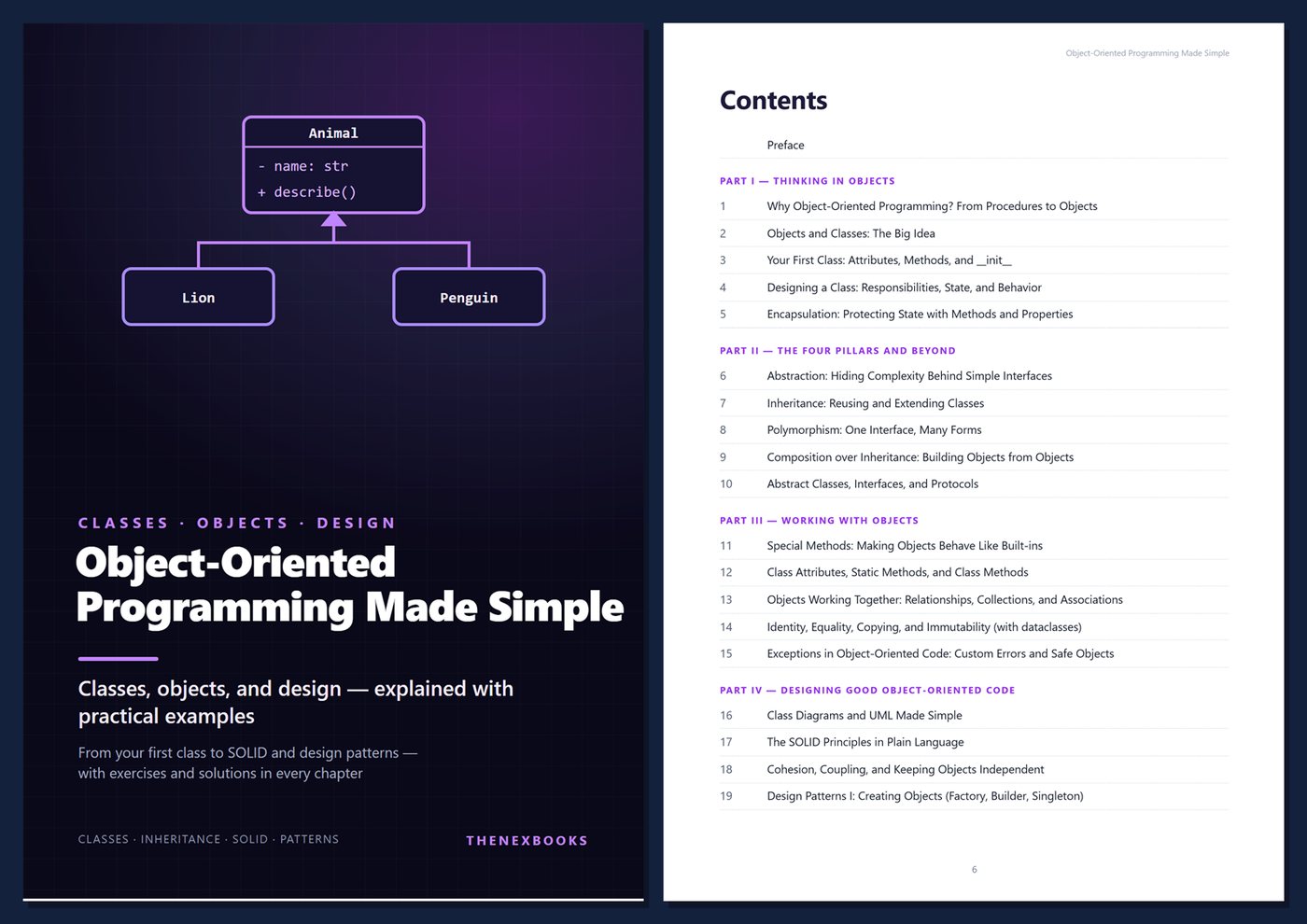
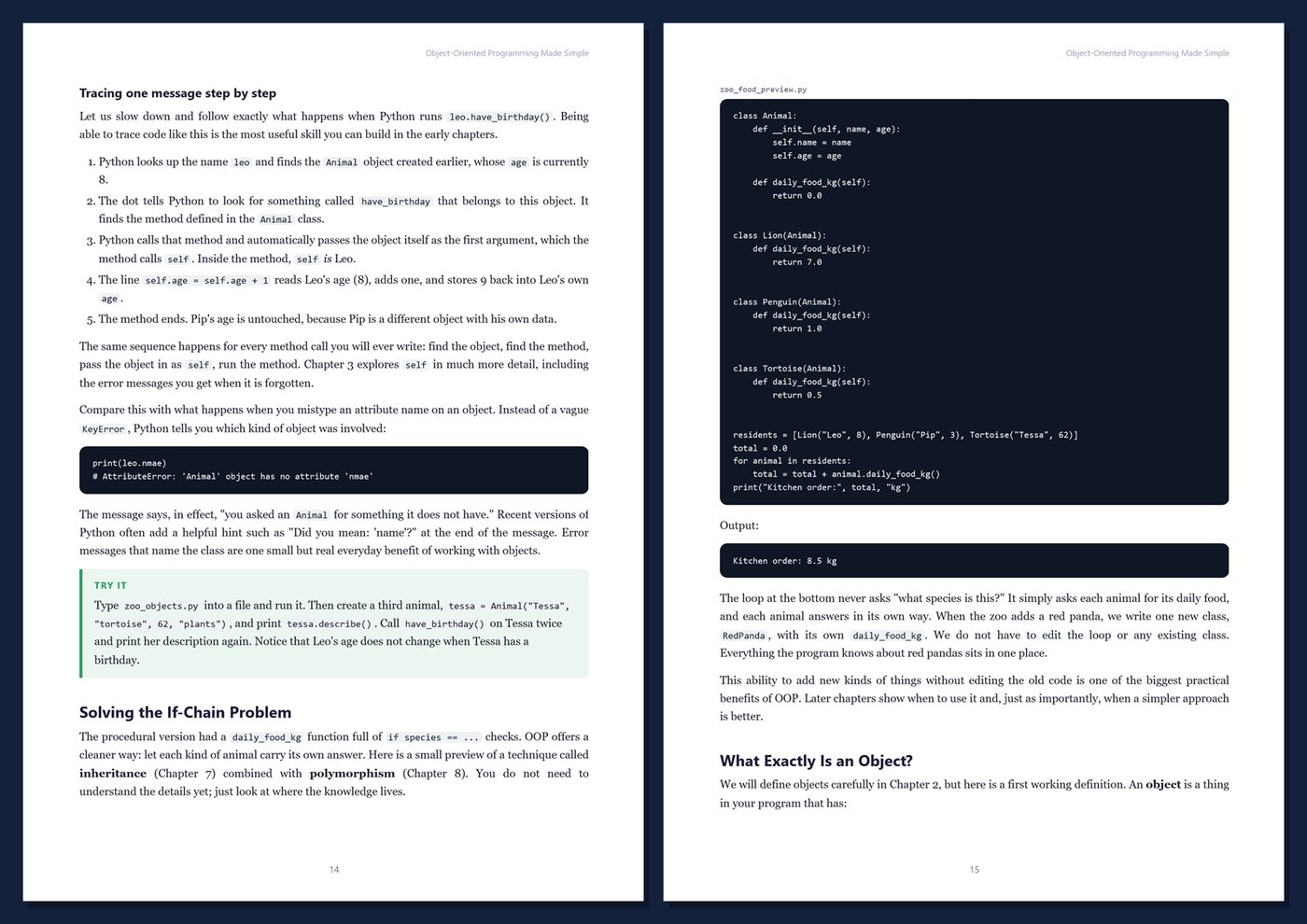
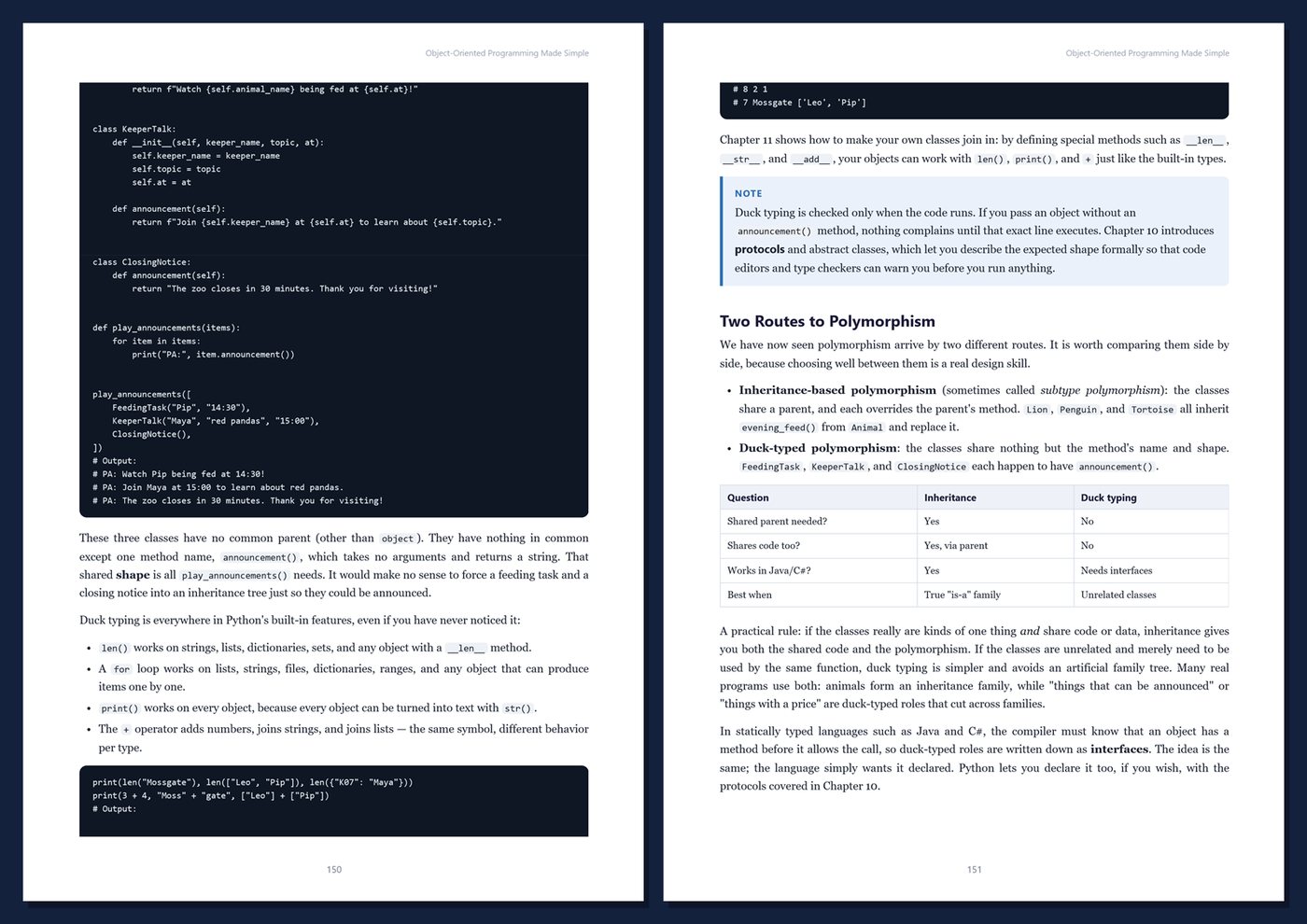
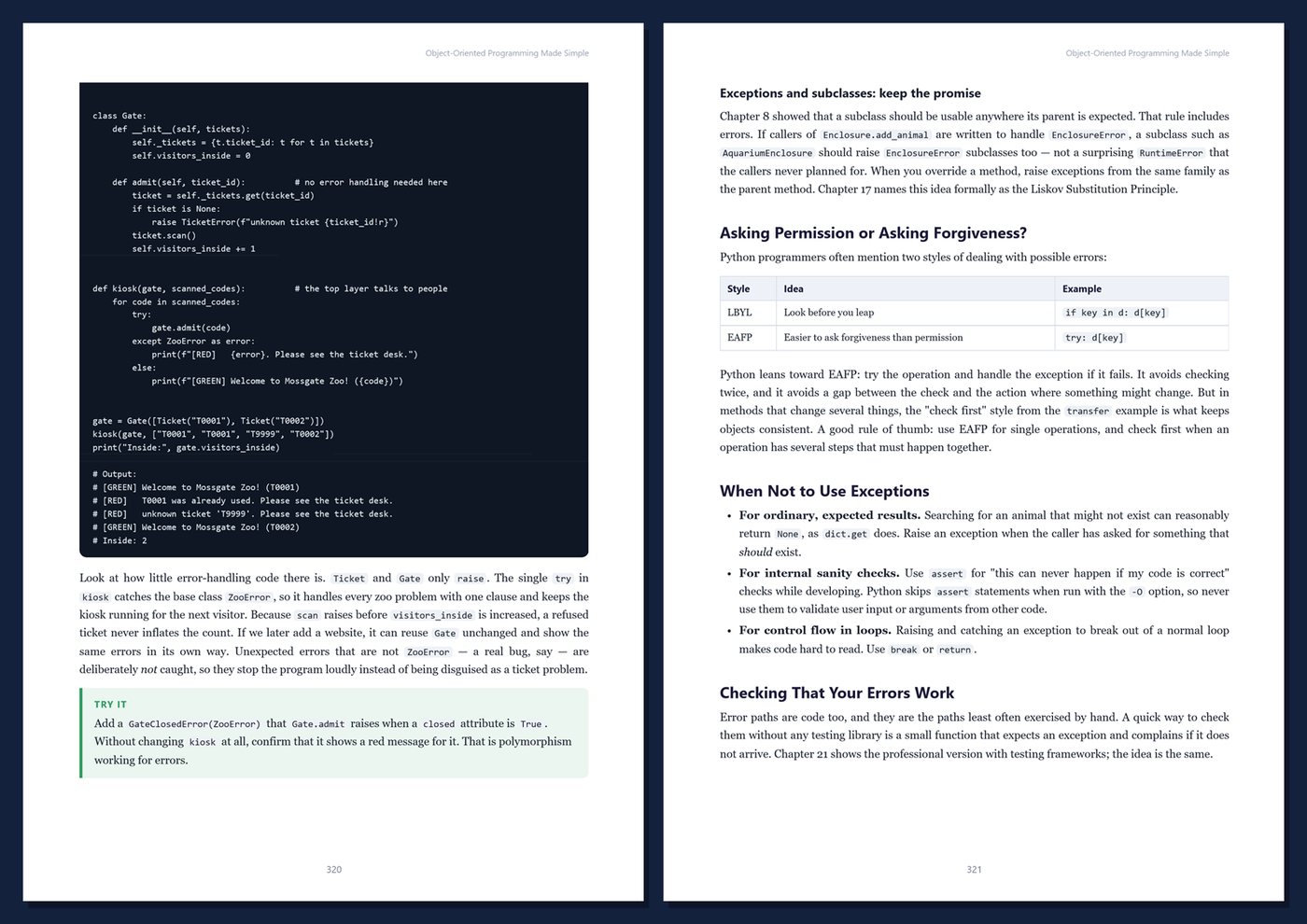
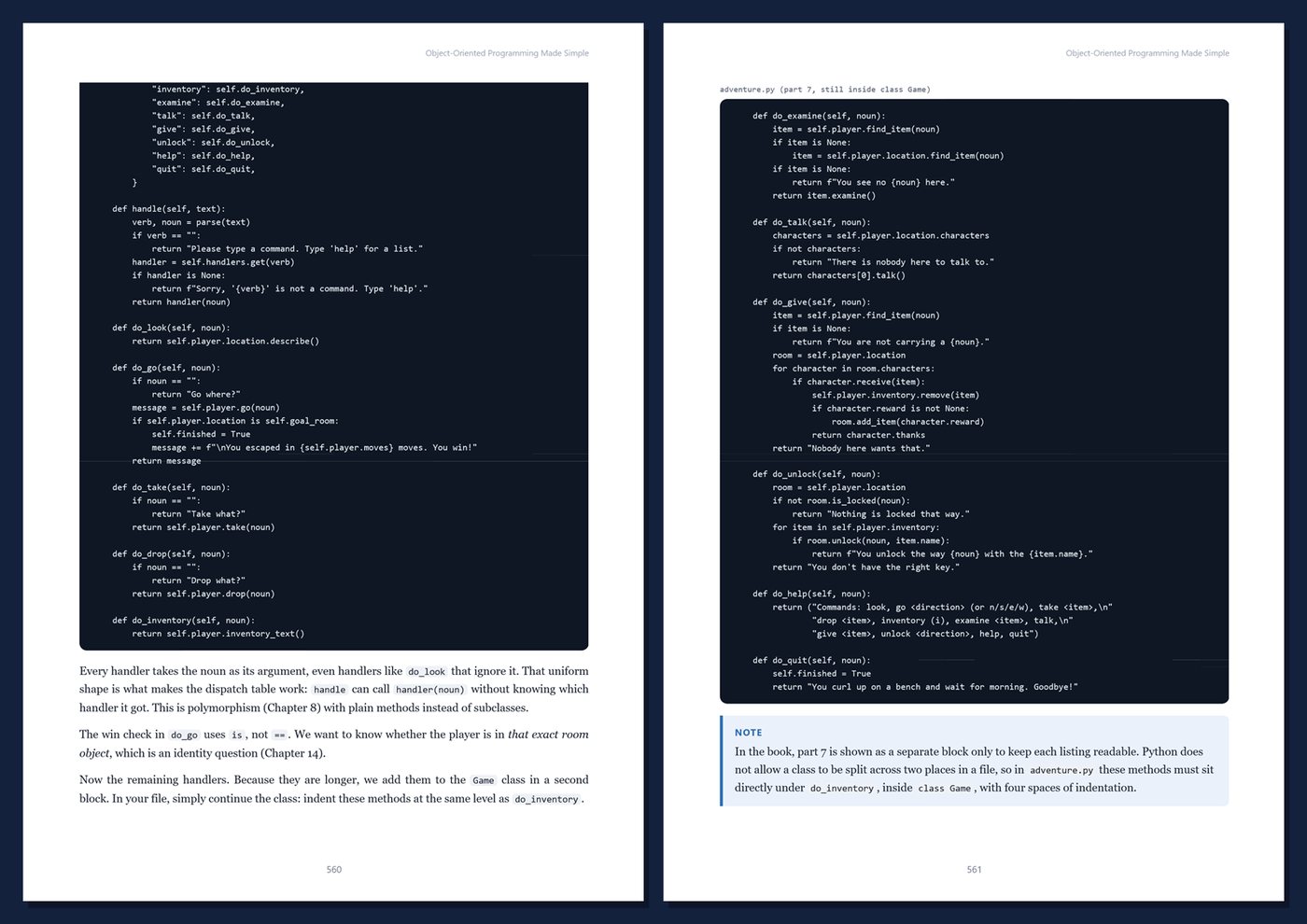
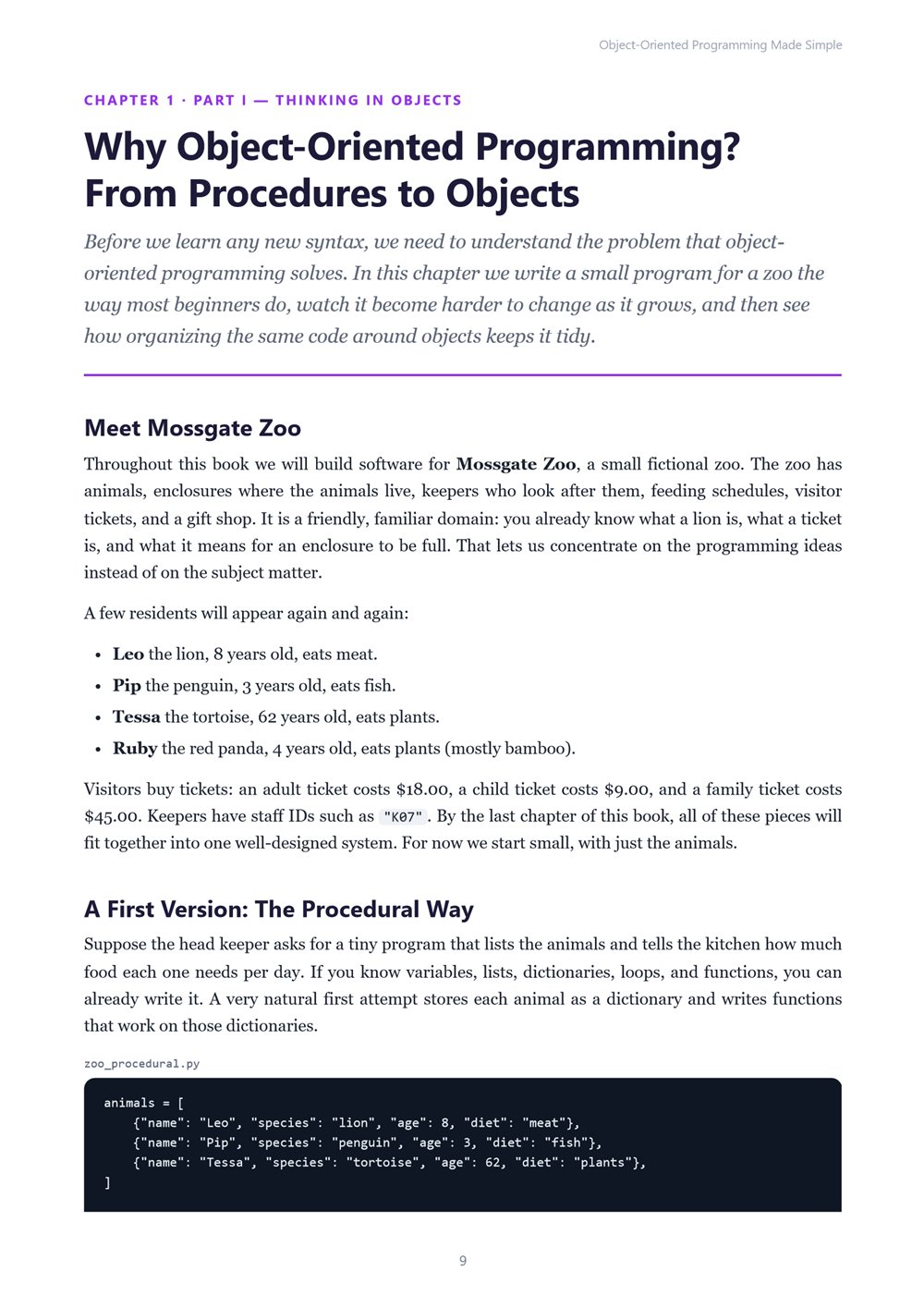
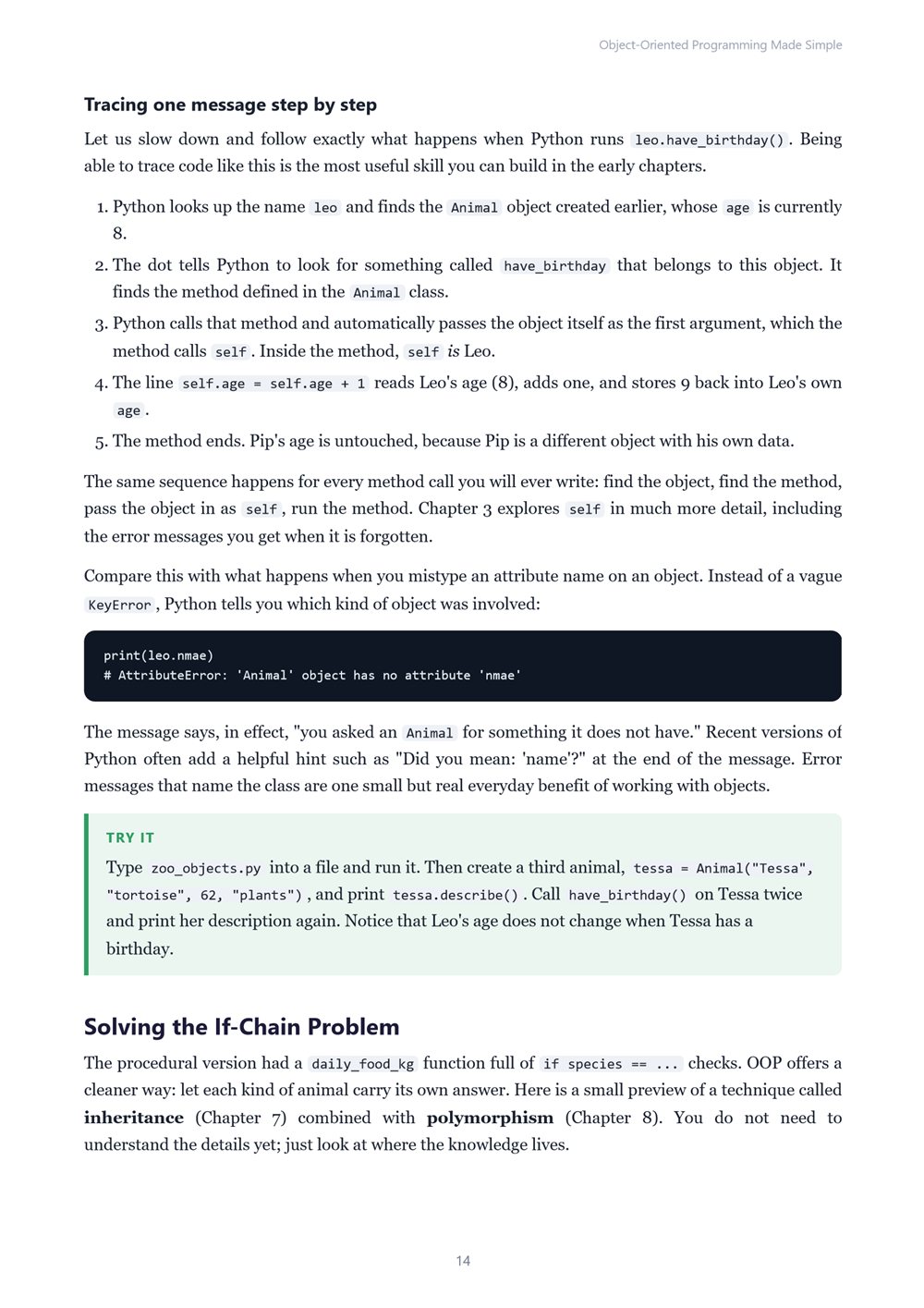
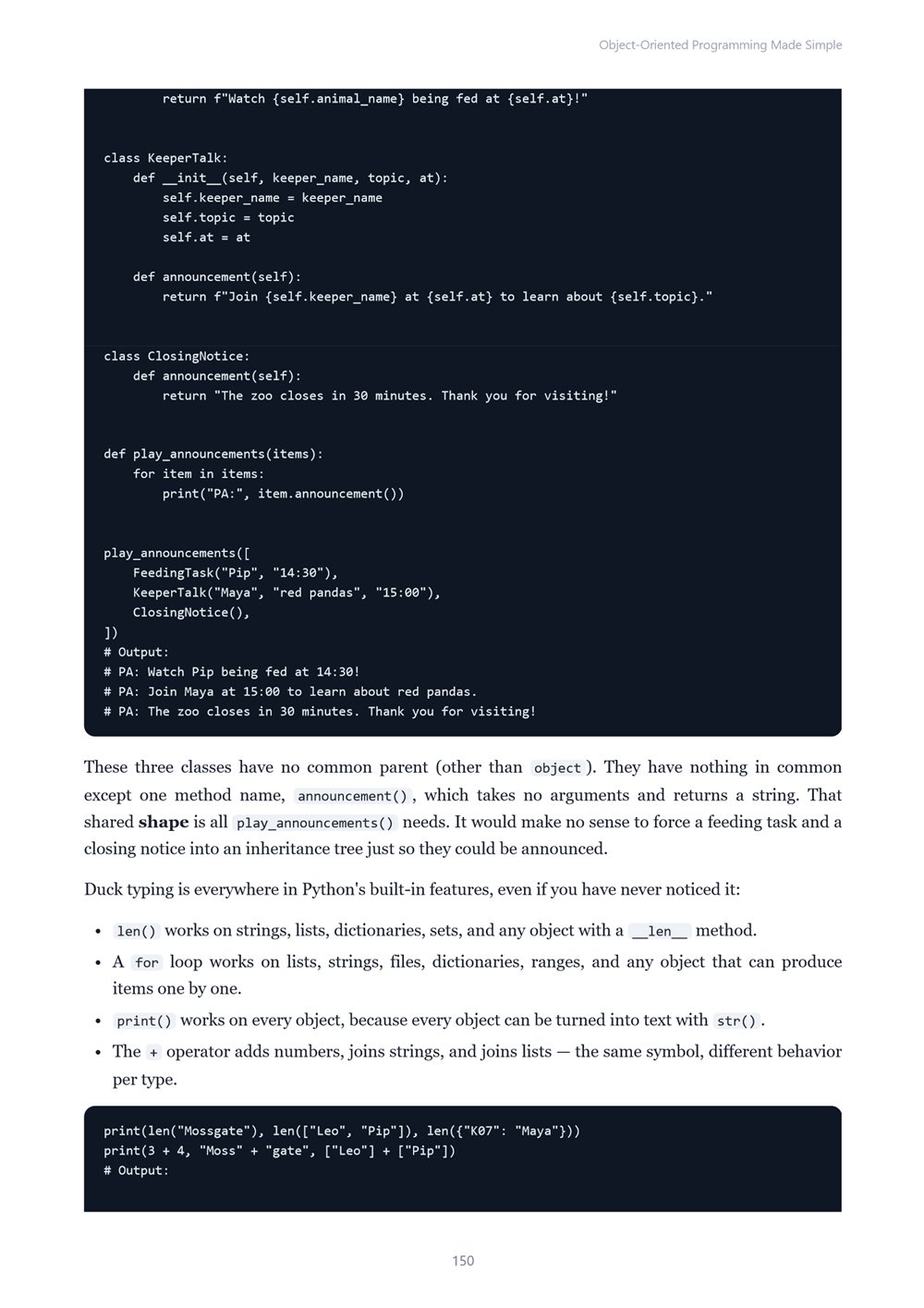
A 632-page, practical guide to object-oriented programming — classes, the four pillars, SOLID, and design patterns — with Python examples, exercises, and solutions.
Classes, Objects, and Design Explained with Practical Examples
Read before you buy: the PDF here is a free sample — the first 20 pages of the 632-page book (payments, sales and reviews on this demo site are sample data). Get the full e-book at thenexbooks on Gumroad.
Classes, objects, and design — finally explained simply.
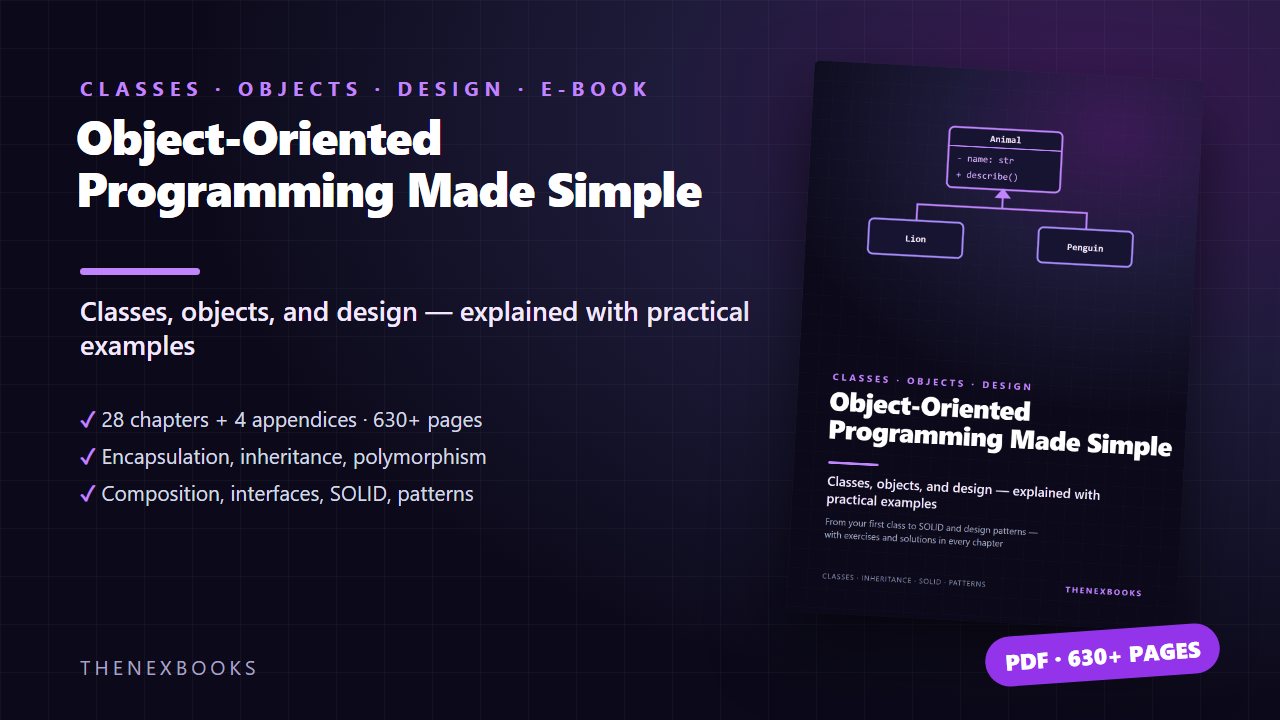
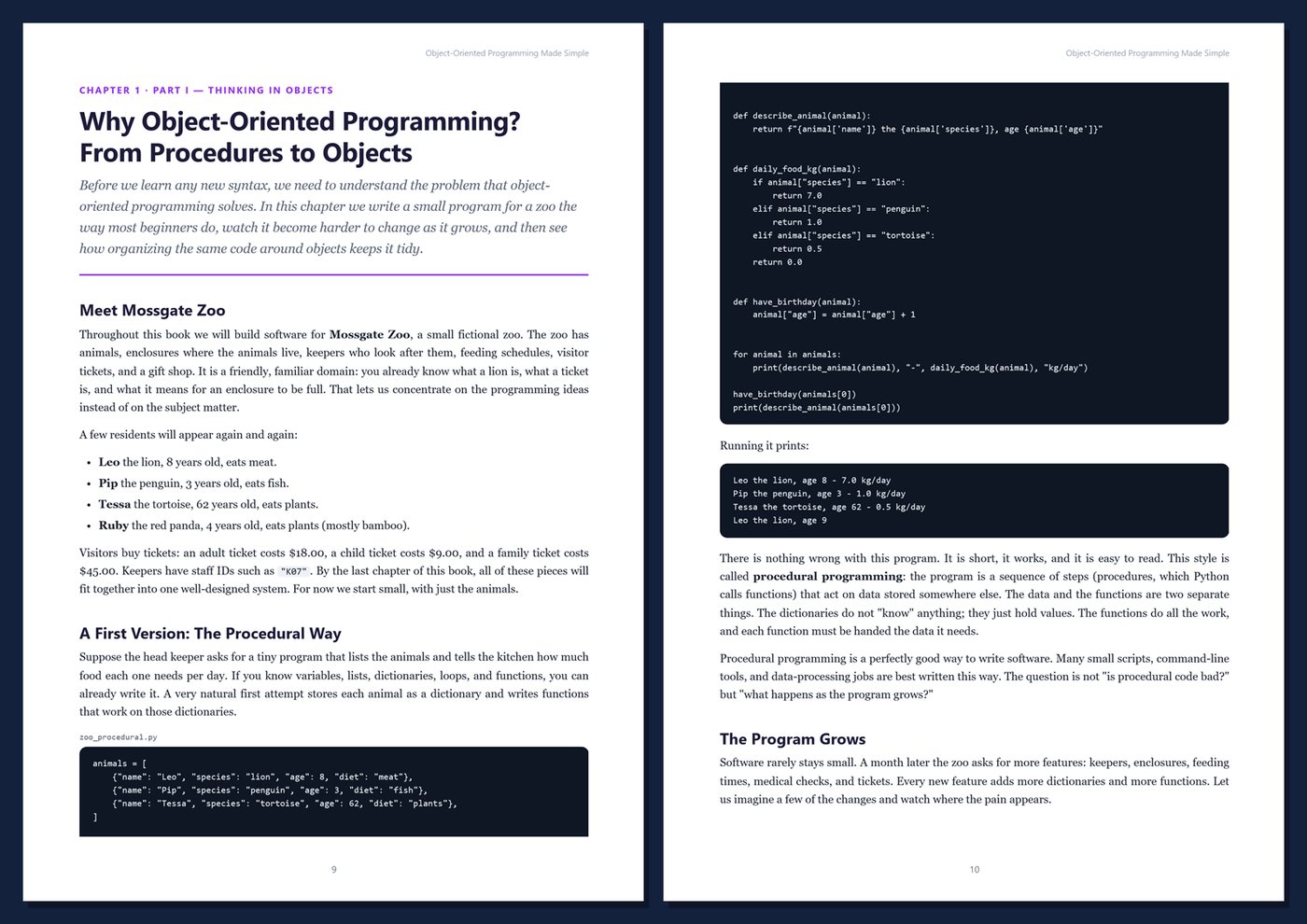
Many learners can write a class but aren't sure why it should exist, what belongs inside it, or how classes should work together. Encapsulation, polymorphism, composition, interfaces, SOLID, and design patterns sound intimidating, but each idea is simple once it is shown with real code. This book builds up one concept at a time with runnable Python, short Java/C#/TypeScript comparisons where they differ, and a realistic running example — then gives you exercises and worked solutions to make it stick.
- 632 pages · 28 chapters + 4 appendices
- Classes, objects, constructors, attributes, methods, and properties
- Encapsulation, abstraction, inheritance, and polymorphism — plus composition over inheritance
- Abstract classes, interfaces, protocols, special methods, and dataclasses
- Class diagrams, SOLID, cohesion and coupling, and the design patterns most worth knowing
- Testing, refactoring procedural code into objects, and OOP across Python, Java, C#, and TypeScript
- Exercises with worked solutions in every chapter
- Three complete projects, including a zoo management system
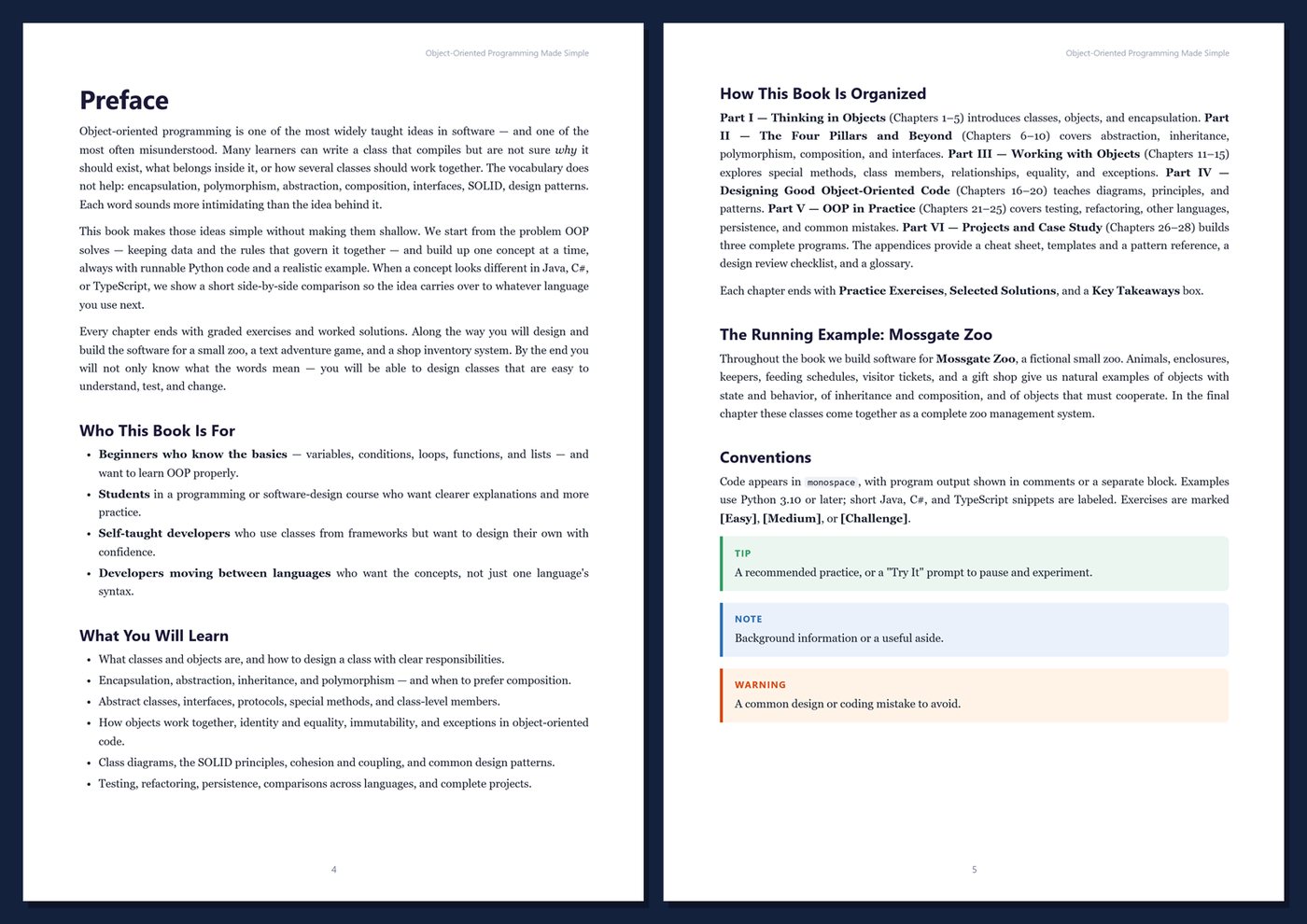
Table Of Contents
Part I — Thinking in Objects
- Ch 1 · Why Object-Oriented Programming? From Procedures to Objects
- Ch 2 · Objects and Classes: The Big Idea
- Ch 3 · Your First Class: Attributes, Methods, and init
- Ch 4 · Designing a Class: Responsibilities, State, and Behavior
- Ch 5 · Encapsulation: Protecting State with Methods and Properties
Part II — The Four Pillars and Beyond
- Ch 6 · Abstraction: Hiding Complexity Behind Simple Interfaces
- Ch 7 · Inheritance: Reusing and Extending Classes
- Ch 8 · Polymorphism: One Interface, Many Forms
- Ch 9 · Composition over Inheritance: Building Objects from Objects
- Ch 10 · Abstract Classes, Interfaces, and Protocols
Part III — Working with Objects
- Ch 11 · Special Methods: Making Objects Behave Like Built-ins
- Ch 12 · Class Attributes, Static Methods, and Class Methods
- Ch 13 · Objects Working Together: Relationships, Collections, and Associations
- Ch 14 · Identity, Equality, Copying, and Immutability (with dataclasses)
- Ch 15 · Exceptions in Object-Oriented Code: Custom Errors and Safe Objects
Part IV — Designing Good Object-Oriented Code
- Ch 16 · Class Diagrams and UML Made Simple
- Ch 17 · The SOLID Principles in Plain Language
- Ch 18 · Cohesion, Coupling, and Keeping Objects Independent
- Ch 19 · Design Patterns I: Creating Objects (Factory, Builder, Singleton)
- Ch 20 · Design Patterns II: Structural and Behavioral (Adapter, Decorator, Strategy, Observer, Command)
Part V — OOP in Practice
- Ch 21 · Testing Object-Oriented Code
- Ch 22 · Refactoring Procedural Code into Objects
- Ch 23 · OOP Across Languages: Python, Java, C#, and TypeScript Compared
- Ch 24 · Saving and Loading Objects: Files, JSON, and Databases
- Ch 25 · Common OOP Mistakes and How to Avoid Them
Part VI — Projects and Case Study
- Ch 26 · Project: A Text-Based Adventure Game with Objects
- Ch 27 · Project: A Shop Inventory and Ordering System
- Ch 28 · Case Study: Building the Mossgate Zoo Management System
Appendices
- App A · OOP Cheat Sheet
- App B · Class Design Templates and Pattern Reference
- App C · Object-Oriented Design Review Checklist
- App D · Glossary
WHO IT IS FOR
Beginners who know basic programming, students in programming or software-design courses, self-taught developers, and anyone moving between object-oriented languages.
FORMAT
PDF (A4), 632 pages, English, clickable table of contents and PDF bookmarks. 1st Edition, 2026. Published by thenexbooks.
Book details
| Detail | |
|---|---|
| Pages | 632 |
| Format | PDF (A4) |
| Language | English |
| Level | Beginner to Intermediate |
| Edition | 1st Edition, 2026 |
| Download on this site | Free sample, first 20 pages (PDF) |
| Publisher | thenexbooks |
Files you get
No reviews yet. Only buyers can review.
More from thenexbooks