 1 / 11
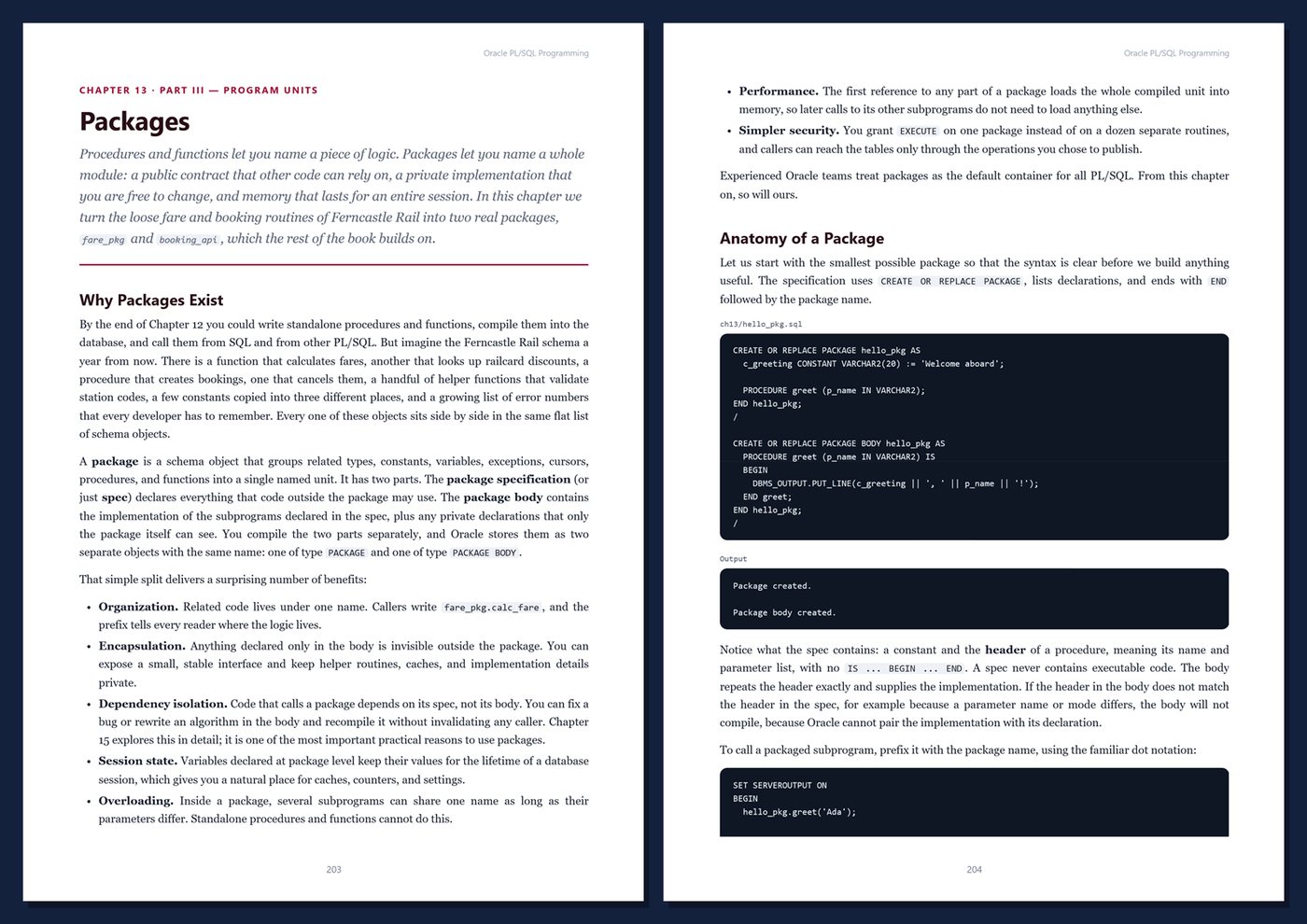
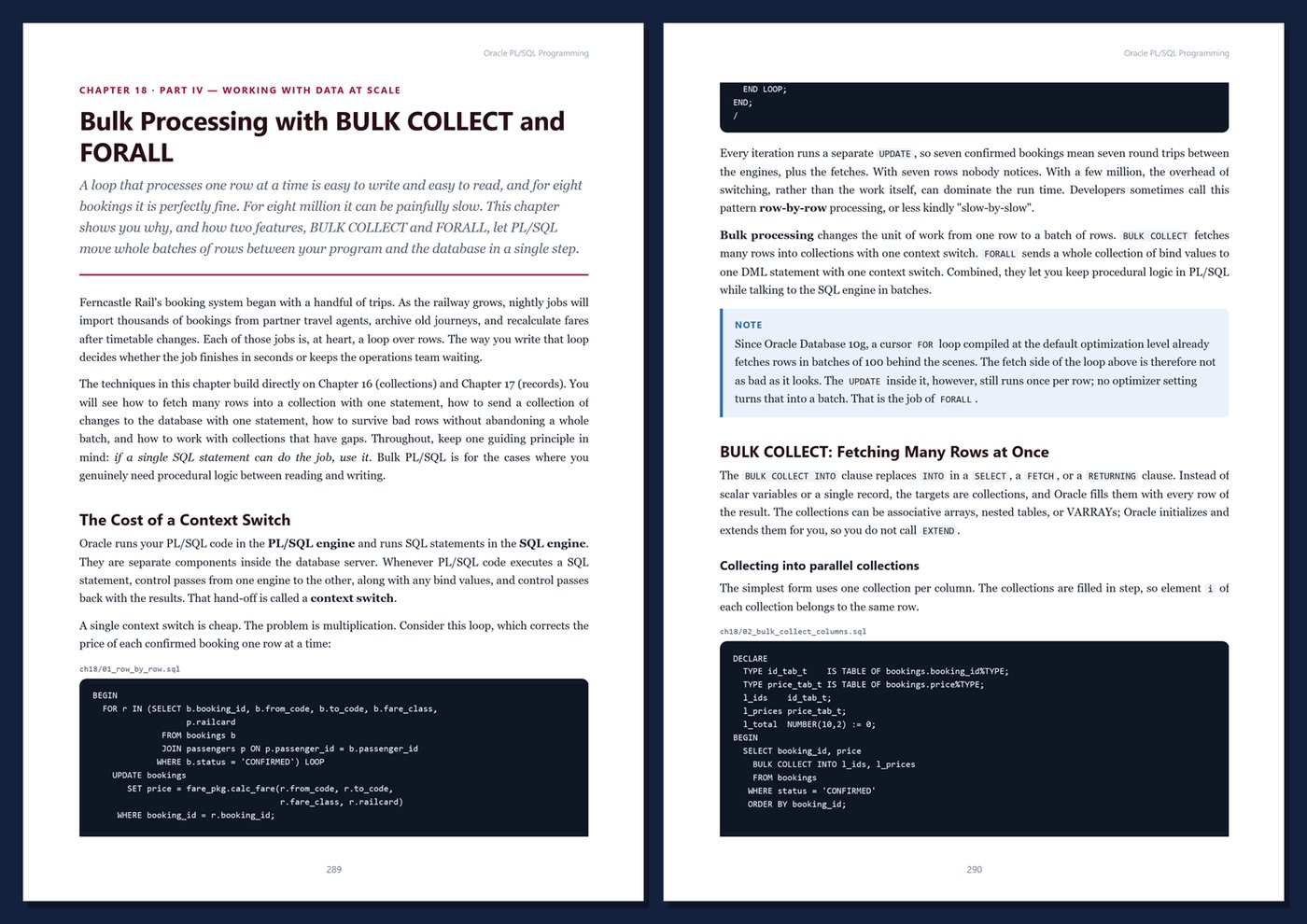
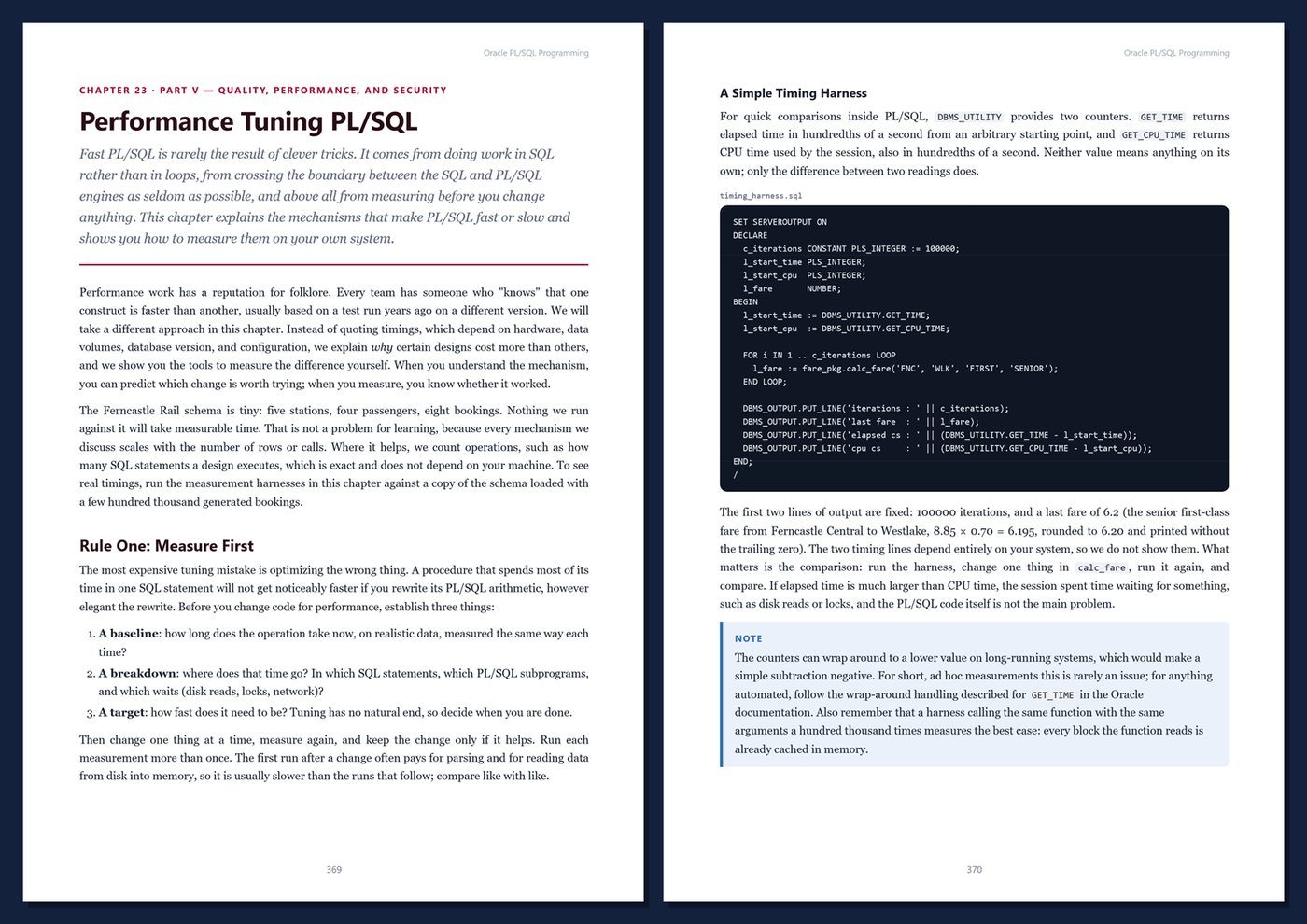
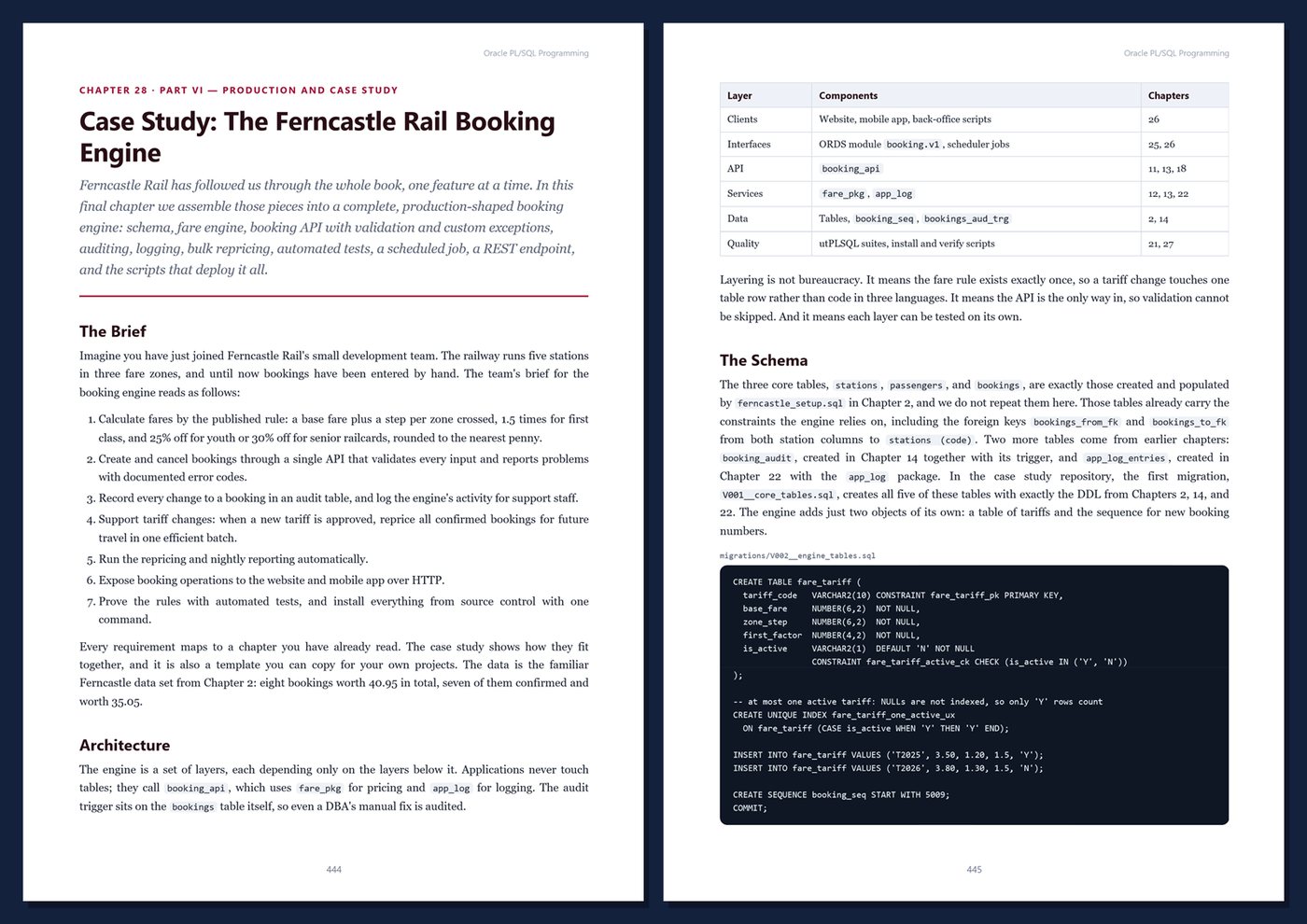
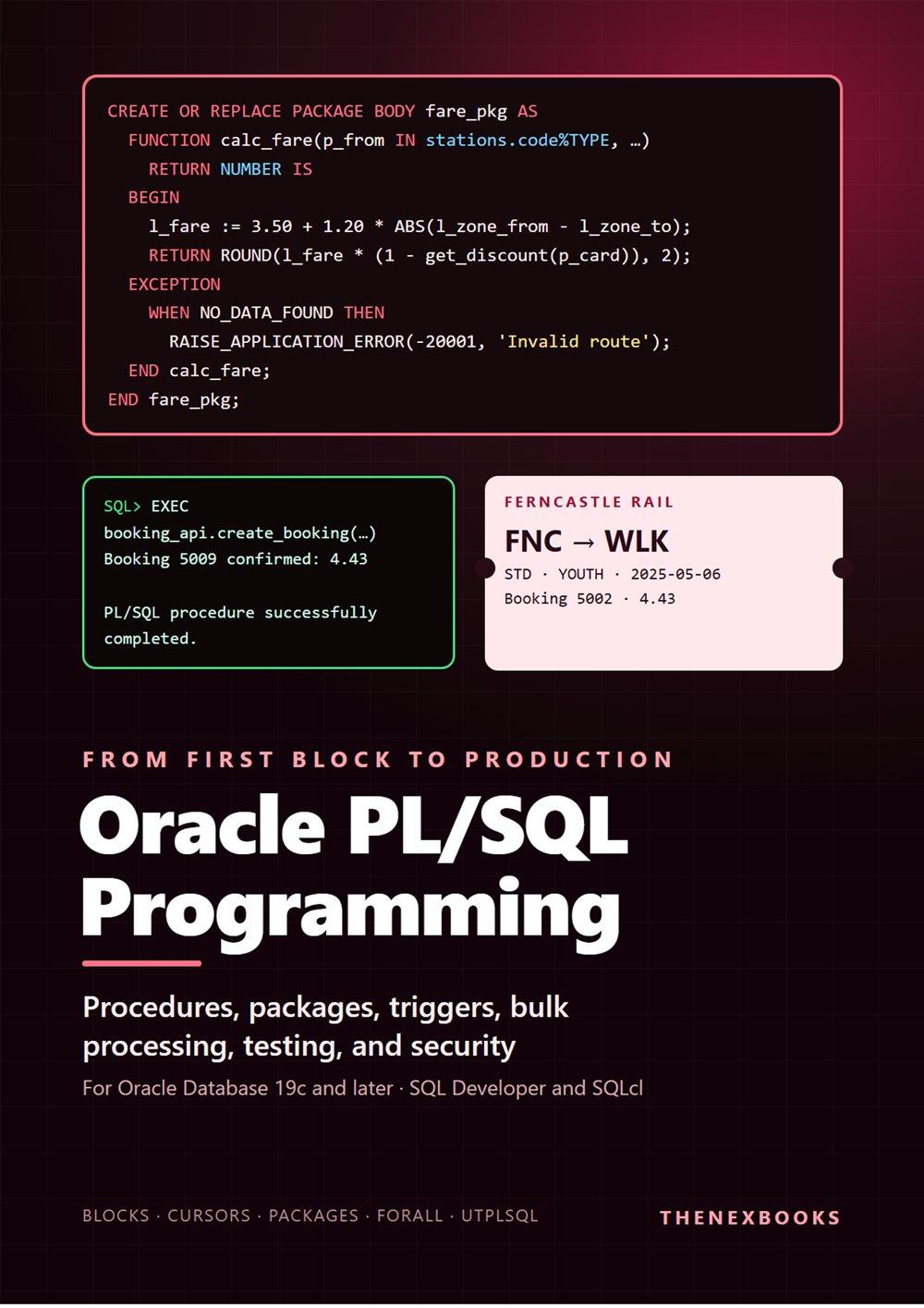
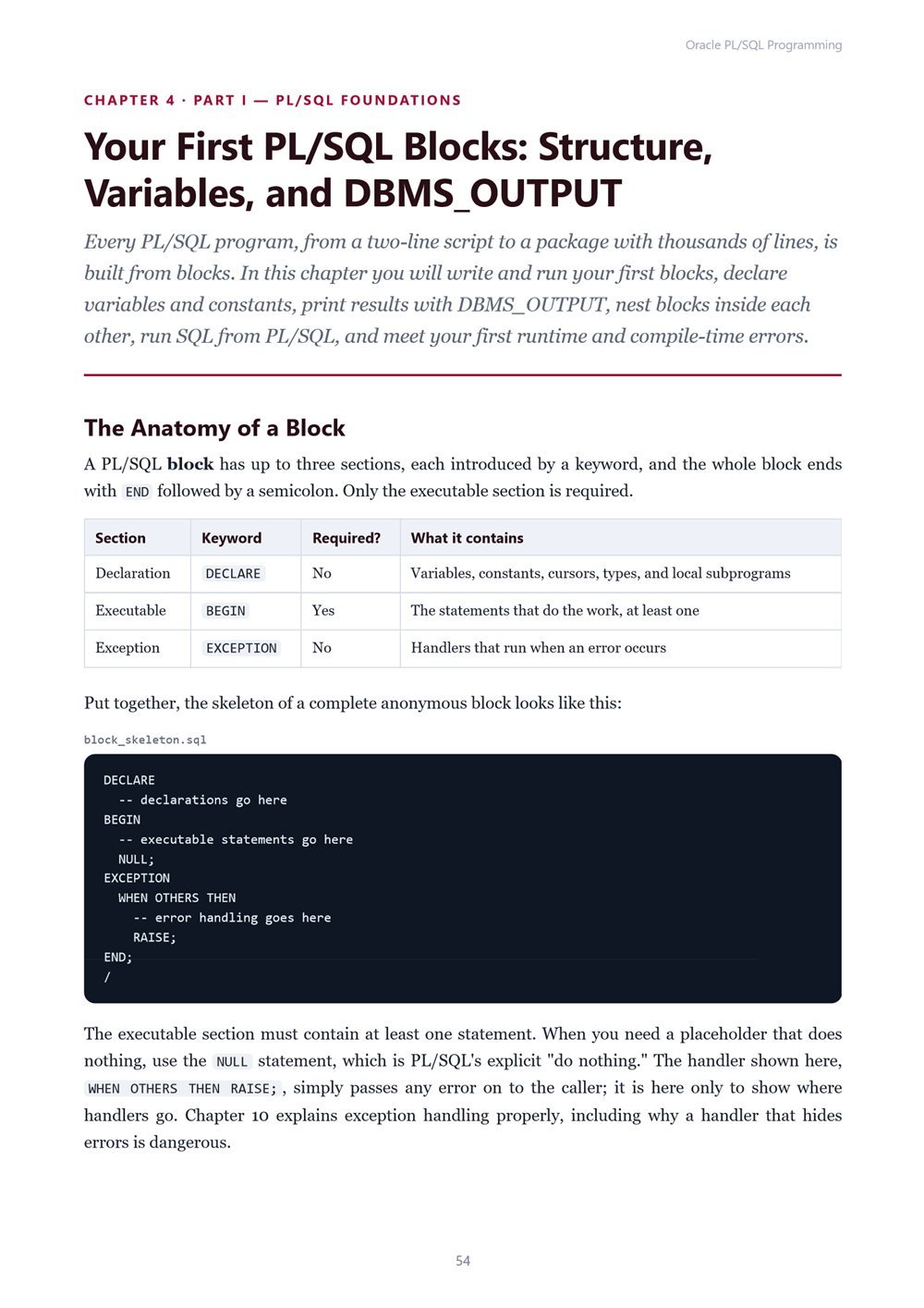
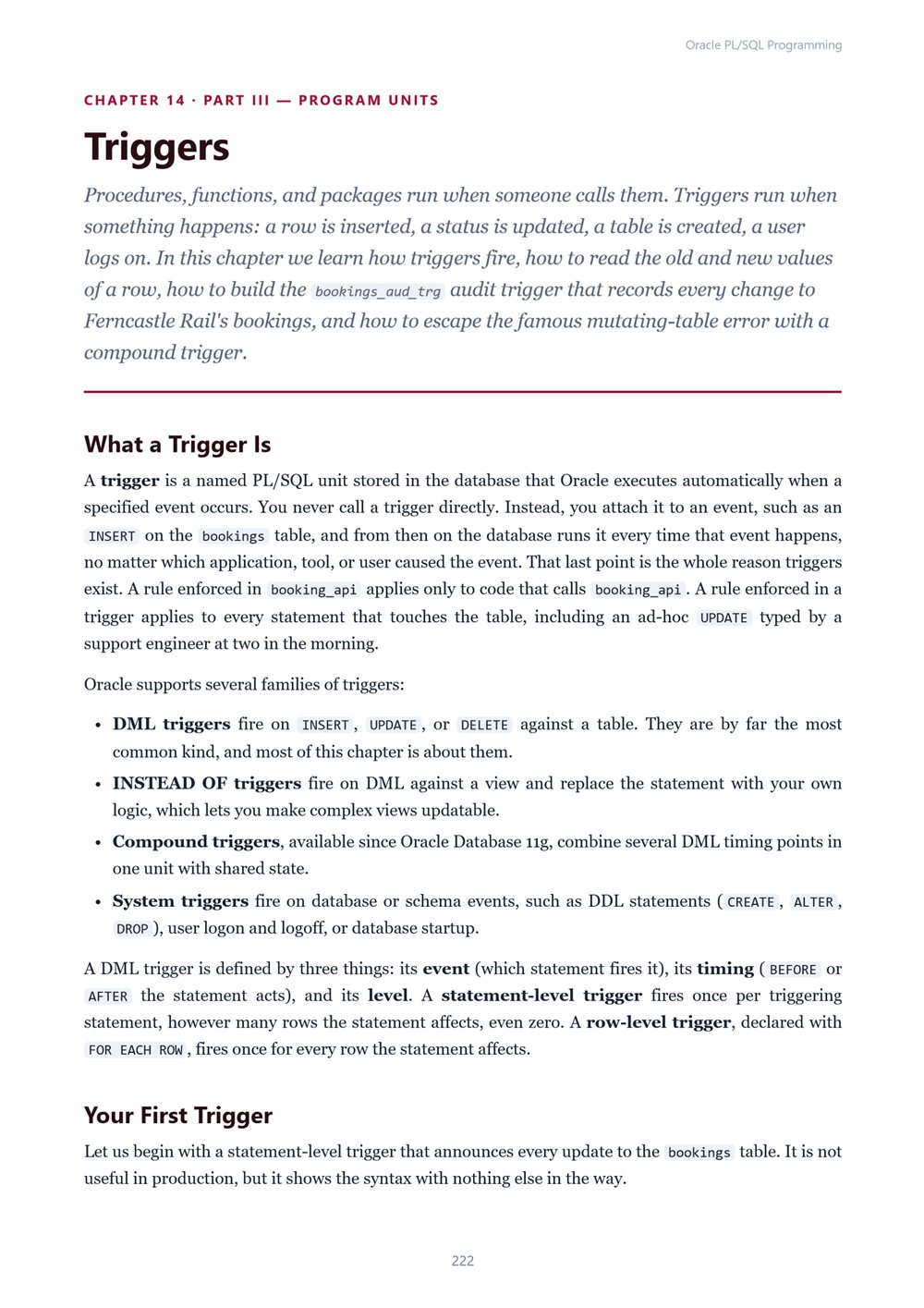
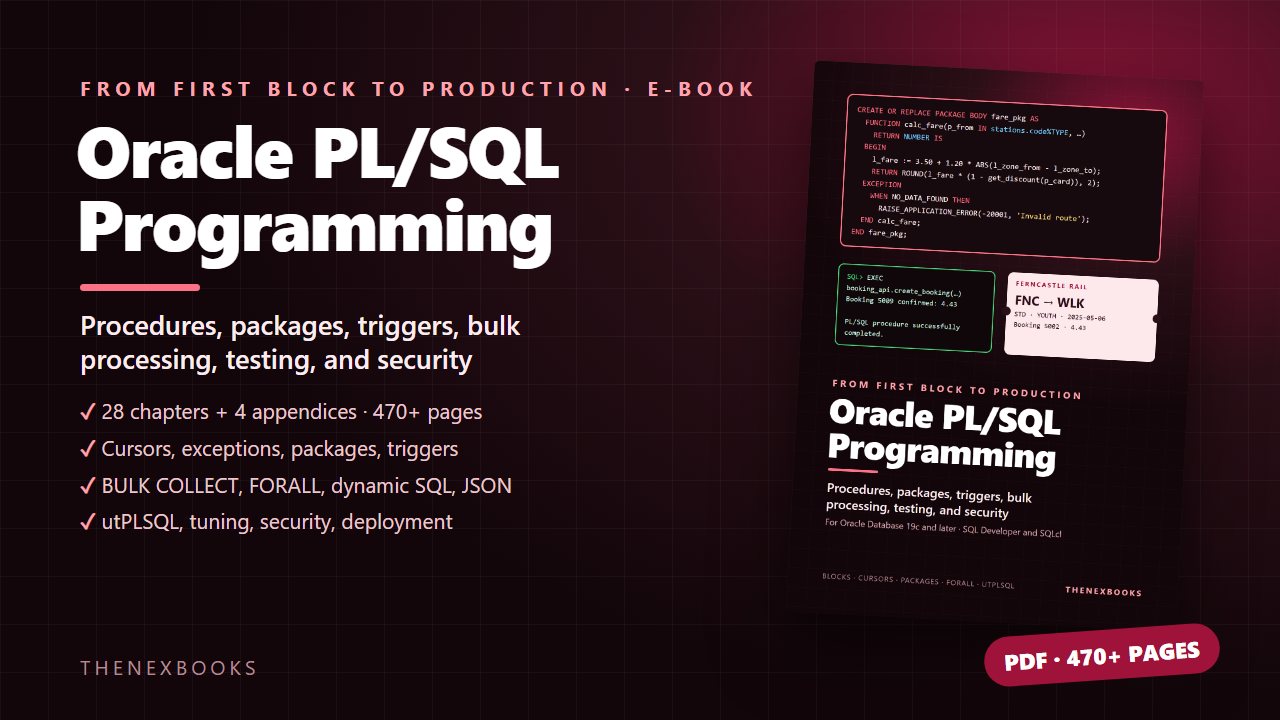
A 477-page practical guide to Oracle PL/SQL: blocks, cursors, exceptions, procedures, functions, packages, triggers, collections, bulk processing, dynamic SQL, testing, tuning, security, and deployment.
From Your First Block to Production-Grade Database Code
Read before you buy: the PDF here is a free sample — the first 20 pages of the 477-page book (payments, sales and reviews on this demo site are sample data). Get the full e-book at thenexbooks on Gumroad.
Some of the most important code in the world runs right next to the data. In Oracle Database, that code is PL/SQL.
PL/SQL rewards developers who understand it: a few well-designed packages can enforce business rules for every application, process millions of rows efficiently, and keep data consistent through failures. Written poorly, it becomes slow row-by-row loops, swallowed exceptions, injection holes, and triggers nobody understands.
This book teaches PL/SQL the way well-run teams use it — from the structure of a block to production-grade packages, bulk processing, tests, and secure APIs. One realistic running example ties it together: the booking engine of Ferncastle Rail, a fictional regional railway with zone fares, railcard discounts, first-class upgrades, cancellations, and an audit trail. The data is small enough to check every result by hand.
- 477 pages · 28 chapters + 4 appendices
- A free Oracle development setup with SQL Developer and SQLcl, plus the Oracle SQL you need
- Blocks, variables, %TYPE and %ROWTYPE, IF and CASE, and every kind of loop
- SELECT INTO, DML, transaction control, and implicit, explicit, and cursor-variable cursors
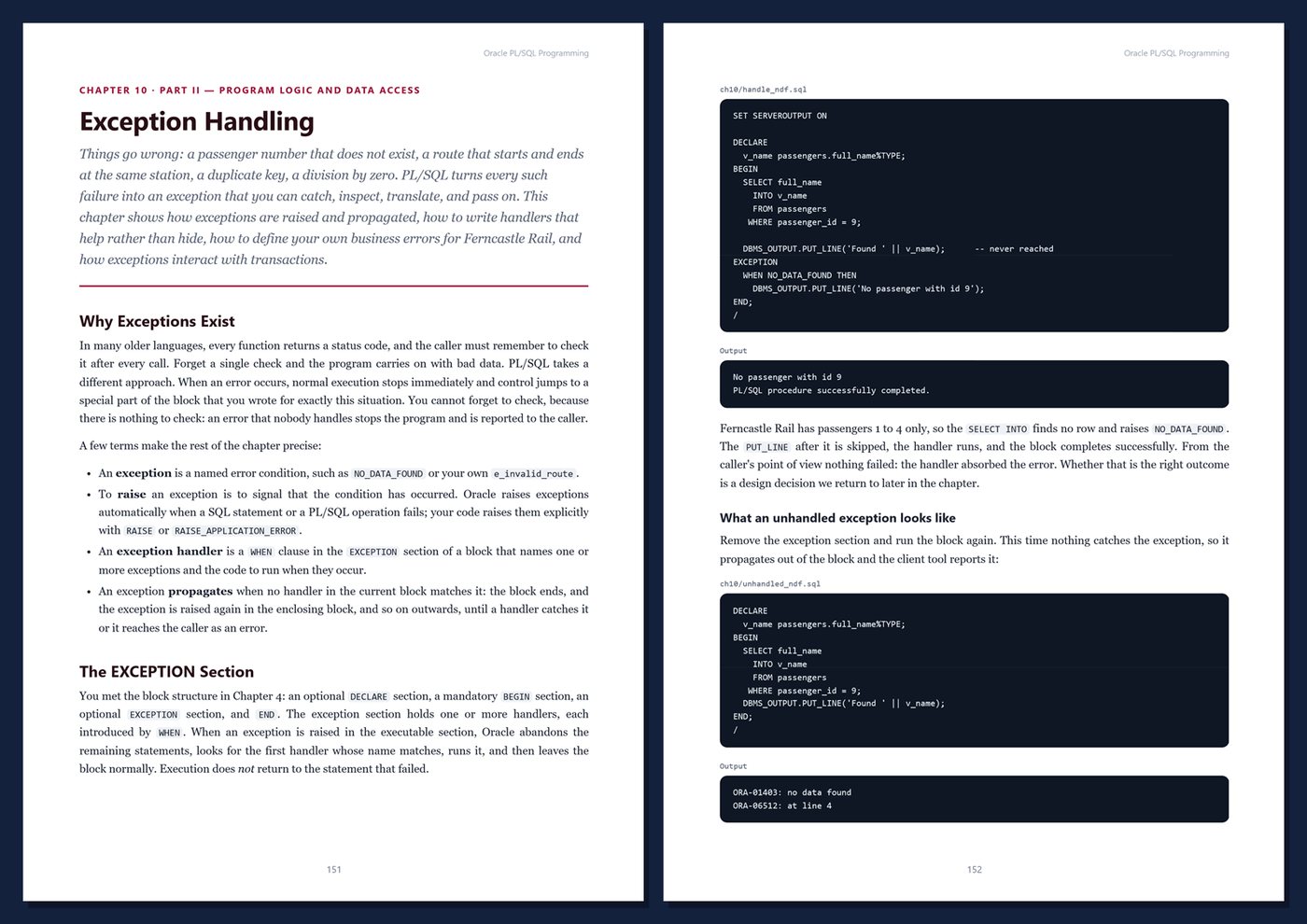
- Robust exception handling with custom errors and proper propagation
- Procedures, functions, packages, and triggers — including compound triggers
- Dependencies, compilation, and the data dictionary
- Collections, records, object types, BULK COLLECT, FORALL, and safe dynamic SQL
- Dates, strings, LOBs, and JSON in PL/SQL
- Unit testing with utPLSQL, logging and instrumentation, performance tuning, and SQL injection defense
- DBMS_SCHEDULER jobs, calling PL/SQL from Java, Python, and REST (ORDS), and edition-based redefinition
- A complete case study, a cheat sheet, templates, and a production checklist
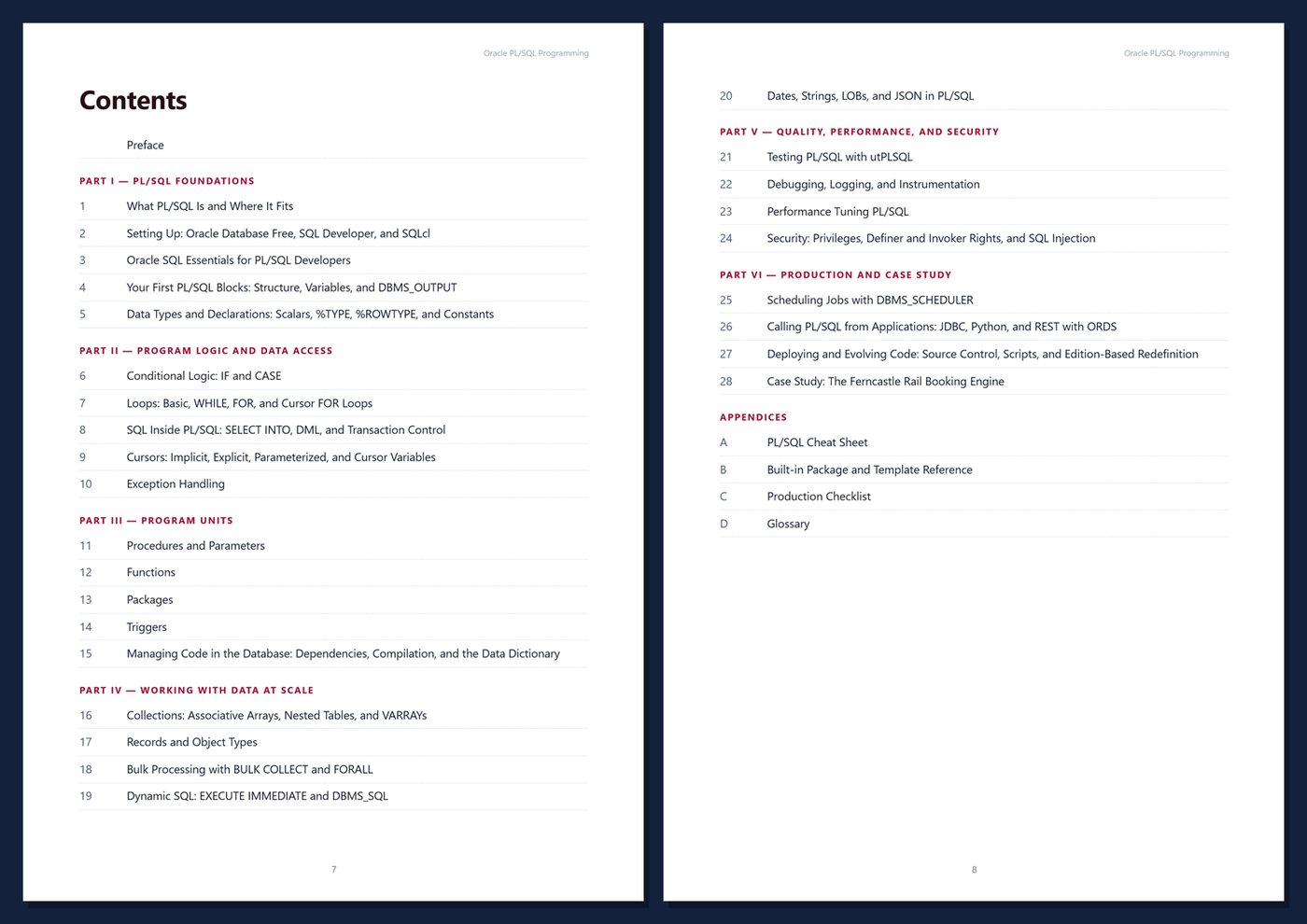
Table Of Contents
Part I — PL/SQL Foundations
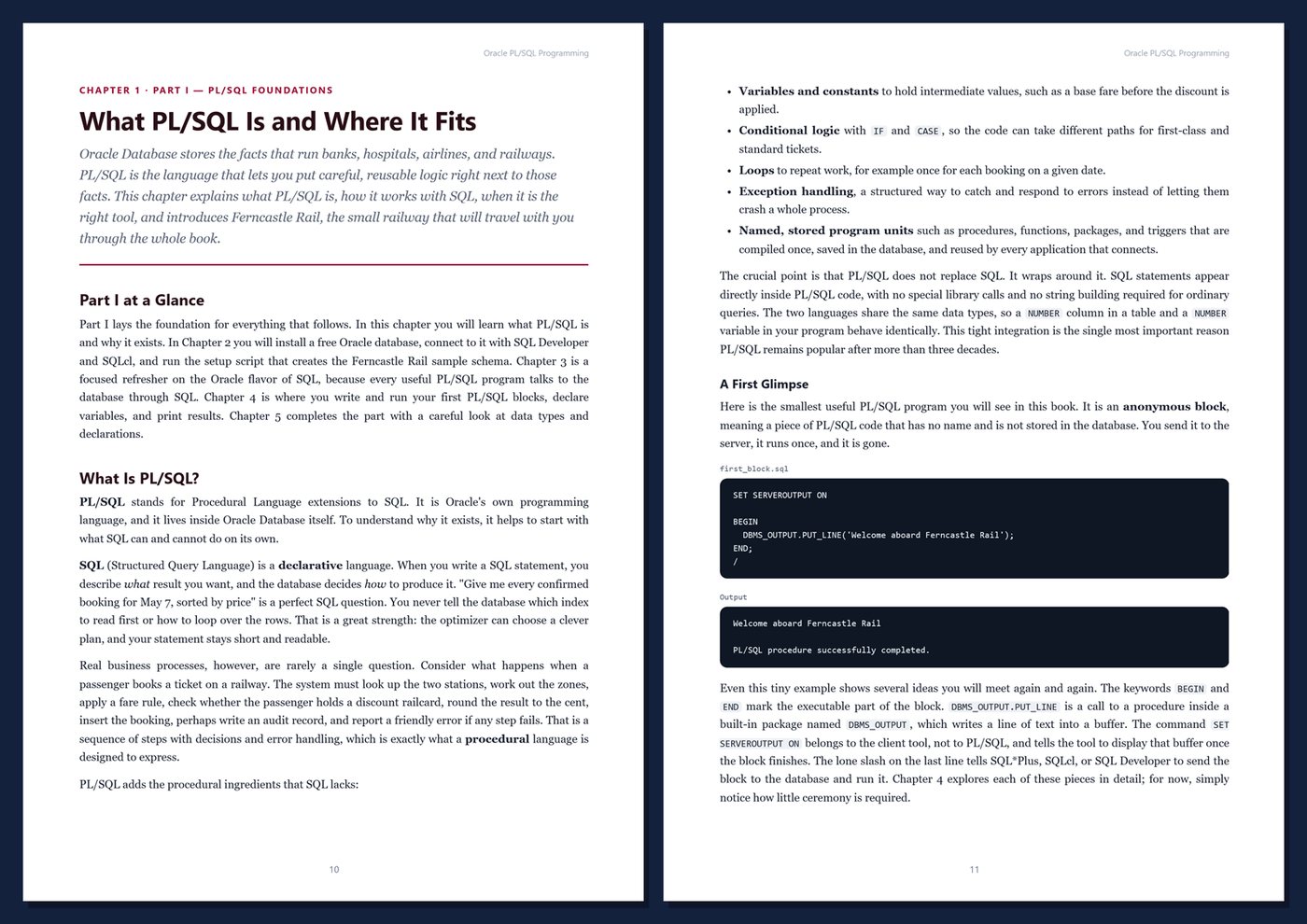
- Ch 1 · What PL/SQL Is and Where It Fits
- Ch 2 · Setting Up: Oracle Database Free, SQL Developer, and SQLcl
- Ch 3 · Oracle SQL Essentials for PL/SQL Developers
- Ch 4 · Your First PL/SQL Blocks: Structure, Variables, and DBMS_OUTPUT
- Ch 5 · Data Types and Declarations: Scalars, %TYPE, %ROWTYPE, and Constants
Part II — Program Logic and Data Access
- Ch 6 · Conditional Logic: IF and CASE
- Ch 7 · Loops: Basic, WHILE, FOR, and Cursor FOR Loops
- Ch 8 · SQL Inside PL/SQL: SELECT INTO, DML, and Transaction Control
- Ch 9 · Cursors: Implicit, Explicit, Parameterized, and Cursor Variables
- Ch 10 · Exception Handling
Part III — Program Units
- Ch 11 · Procedures and Parameters
- Ch 12 · Functions
- Ch 13 · Packages
- Ch 14 · Triggers
- Ch 15 · Managing Code in the Database: Dependencies, Compilation, and the Data Dictionary
Part IV — Working with Data at Scale
- Ch 16 · Collections: Associative Arrays, Nested Tables, and VARRAYs
- Ch 17 · Records and Object Types
- Ch 18 · Bulk Processing with BULK COLLECT and FORALL
- Ch 19 · Dynamic SQL: EXECUTE IMMEDIATE and DBMS_SQL
- Ch 20 · Dates, Strings, LOBs, and JSON in PL/SQL
Part V — Quality, Performance, and Security
- Ch 21 · Testing PL/SQL with utPLSQL
- Ch 22 · Debugging, Logging, and Instrumentation
- Ch 23 · Performance Tuning PL/SQL
- Ch 24 · Security: Privileges, Definer and Invoker Rights, and SQL Injection
Part VI — Production and Case Study
- Ch 25 · Scheduling Jobs with DBMS_SCHEDULER
- Ch 26 · Calling PL/SQL from Applications: JDBC, Python, and REST with ORDS
- Ch 27 · Deploying and Evolving Code: Source Control, Scripts, and Edition-Based Redefinition
- Ch 28 · Case Study: The Ferncastle Rail Booking Engine
Appendices
- App A · PL/SQL Cheat Sheet
- App B · Built-in Package and Template Reference
- App C · Production Checklist
- App D · Glossary
WHO IT IS FOR
Developers new to Oracle who need to read, write, and maintain PL/SQL; application developers who call PL/SQL from Java, Python, .NET, or JavaScript; database developers and DBAs who want modern professional habits; and students and career changers preparing for Oracle roles.
FORMAT
PDF (A4), 477 pages, English, clickable table of contents and PDF bookmarks. Targets Oracle Database 19c and later, with newer features labeled. 1st Edition, 2026. Published by thenexbooks.
This book is independent and is not affiliated with or endorsed by Oracle Corporation. Oracle and Java are registered trademarks of Oracle and/or its affiliates.
Book details
| Detail | |
|---|---|
| Pages | 477 |
| Format | PDF (A4) |
| Language | English |
| Level | Beginner to Advanced |
| Edition | 1st Edition, 2026 |
| Download on this site | Free sample, first 20 pages (PDF) |
| Publisher | thenexbooks |
ไฟล์ที่คุณจะได้รับ
ยังไม่มีรีวิว เฉพาะผู้ซื้อเท่านั้นที่รีวิวได้
สินค้าอื่นจาก thenexbooks